
When a bedroom feels cramped or a living room is constantly buzzing, the quiet of a closet can become an unexpected sanctuary. Transforming an unused wardrobe or a narrow hallway closet into a personal reading retreat lets you step away from daily demands without sacrificing valuable floor space. Below are seven distinct approaches that balance comfort, style, and practicality, so you can curate a nook that feels both intimate and inviting.
Shop the Look
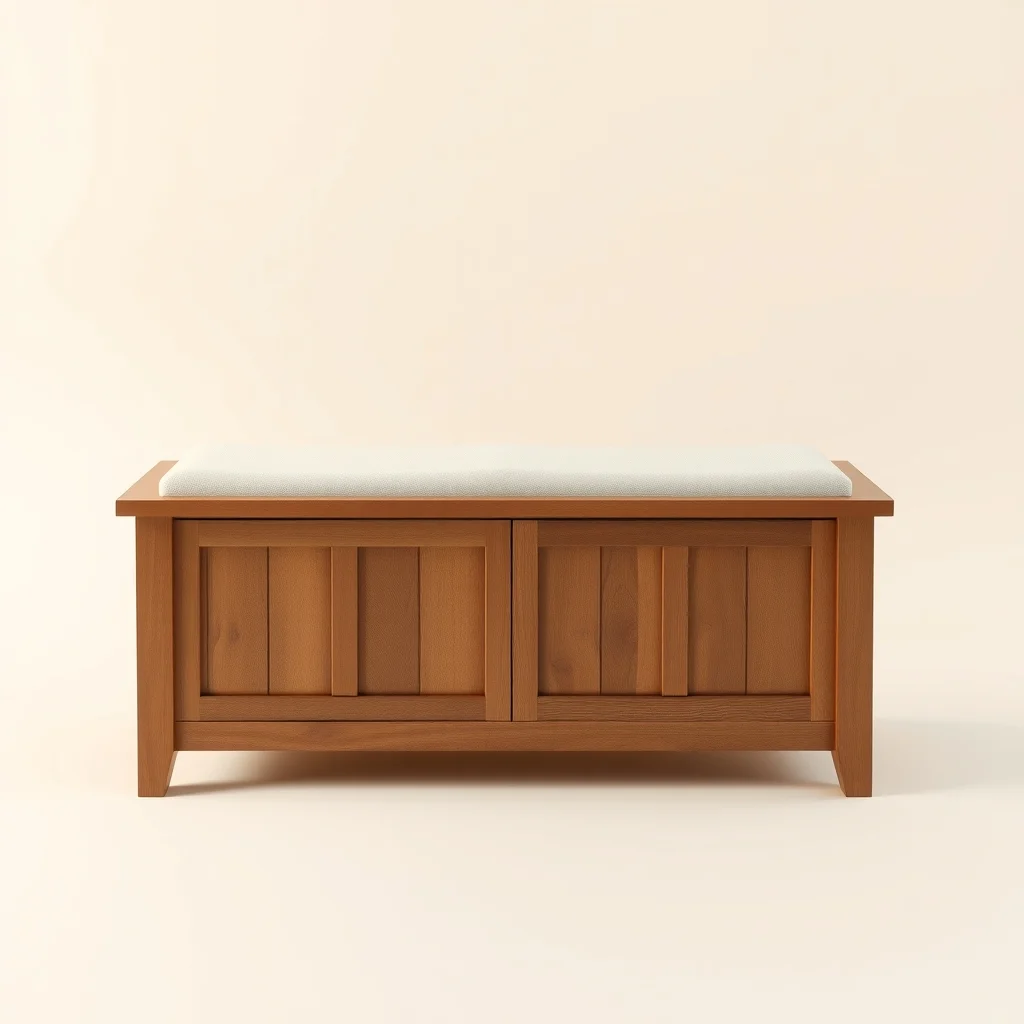
Wooden storage bench with cushion
Provides the built‑in bench seating and hidden storage described in section 1.
Beautiful Homes Don't Happen by Accident.
Turn your home inspiration into action with practical decorating guides, organization planners and digital resources.
A Fresh Start for Your Home
Get helpful resources to plan your rooms, organize your spaces and make decorating decisions with more confidence.
Your first purchase
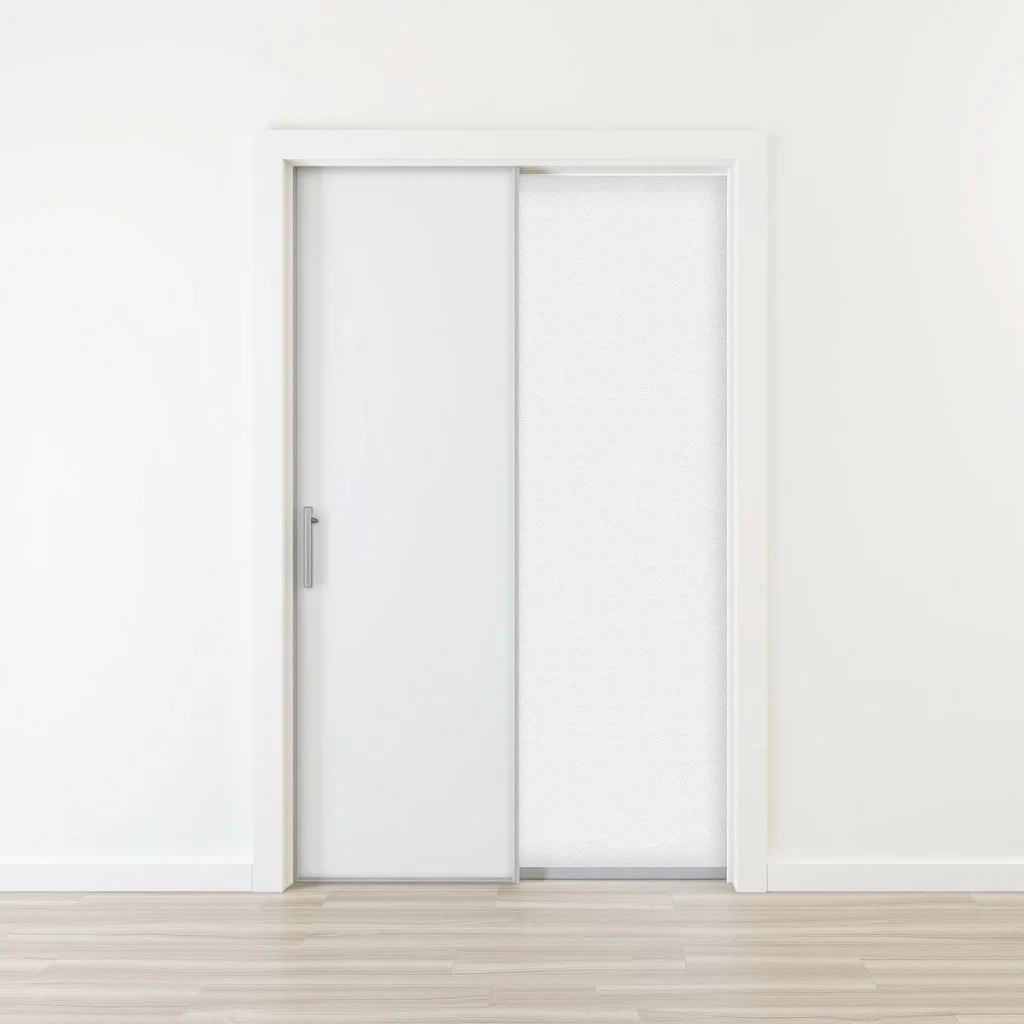
Frosted sliding door fabric panel
Transforms a closet’s sliding doors into soft, light‑filtering panels for a cozy nook.

LED strip light kit with remote
Integrates subtle illumination into a pocket‑door or shelving as suggested in section 4.
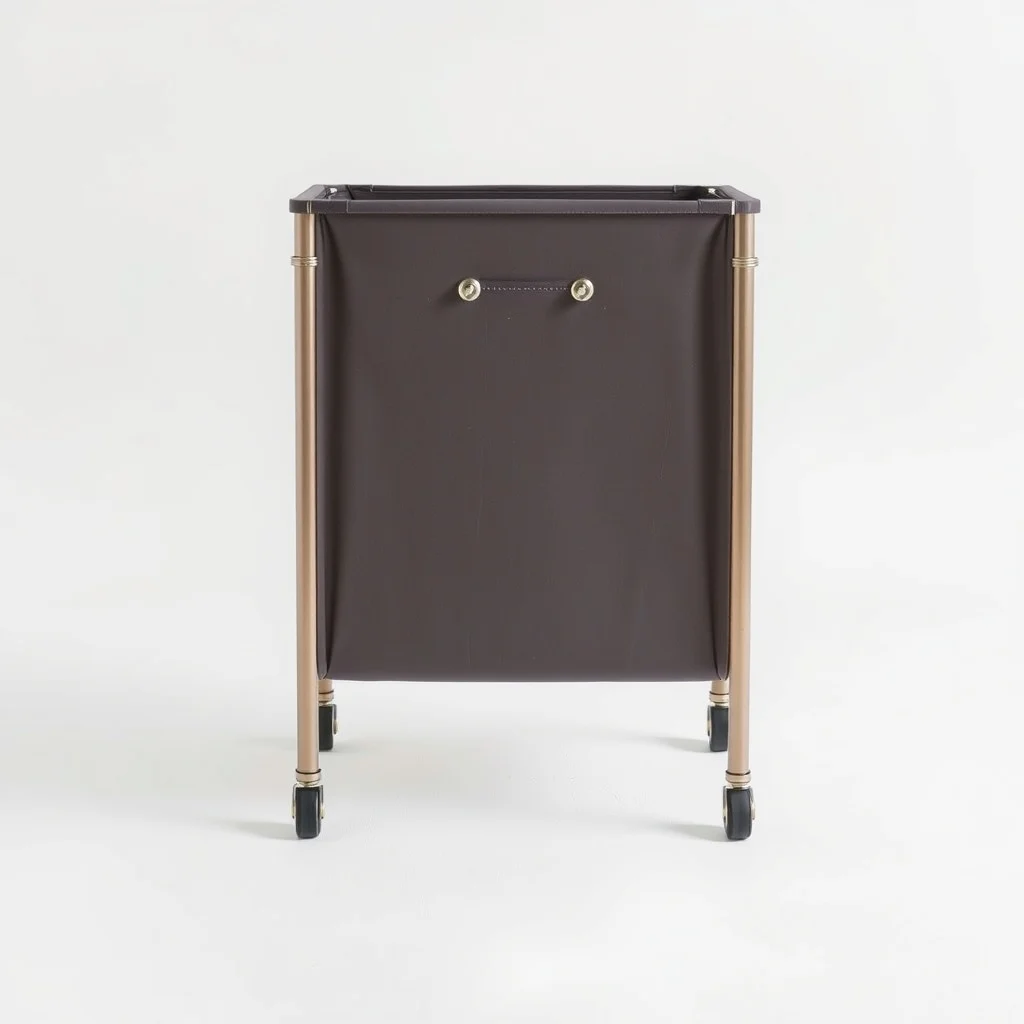
Portable rolling storage cart
Offers flexible storage and a surface for books, matching the portable cart idea in section 7.
Images are example styles; the products on Amazon may look different.
As an Amazon Associate I earn from qualifying purchases. This post contains affiliate links at no extra cost to you.
1. The Built‑In Bench with Hidden Shelves
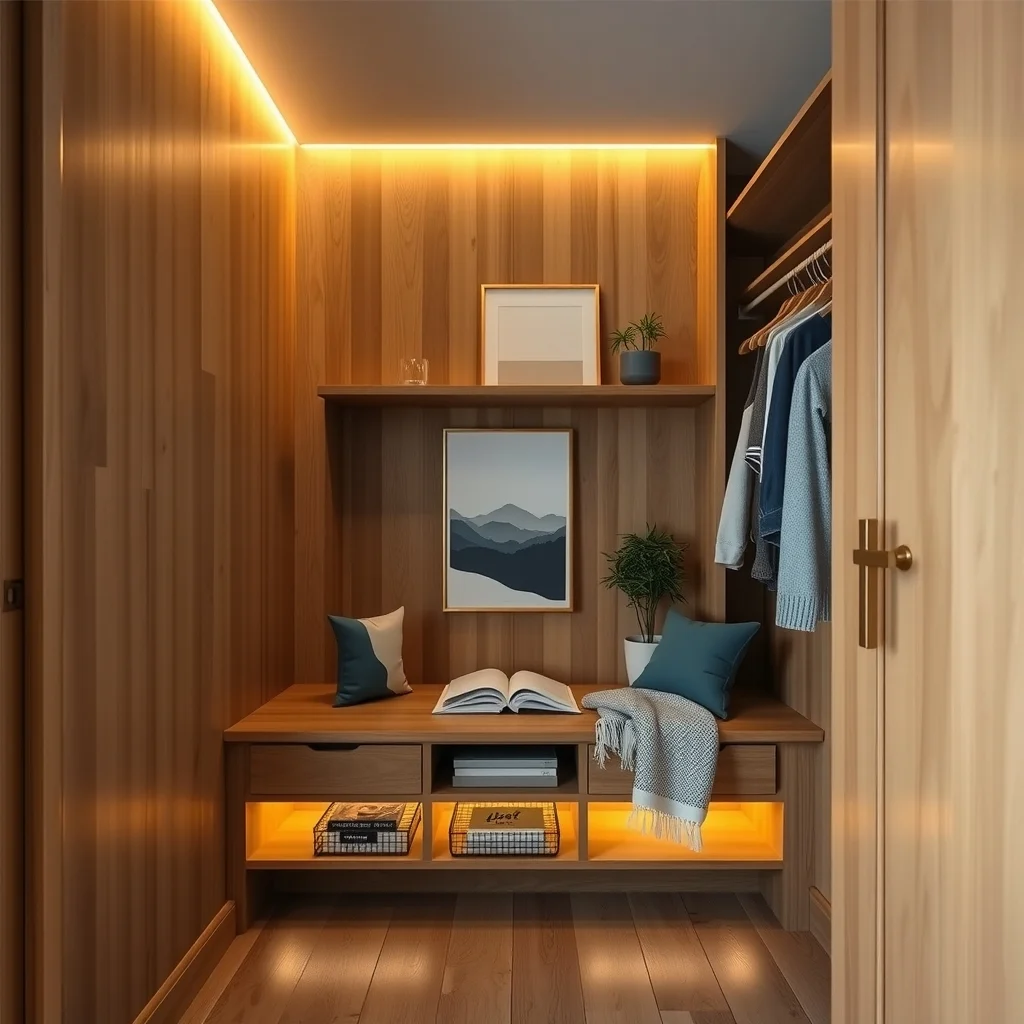
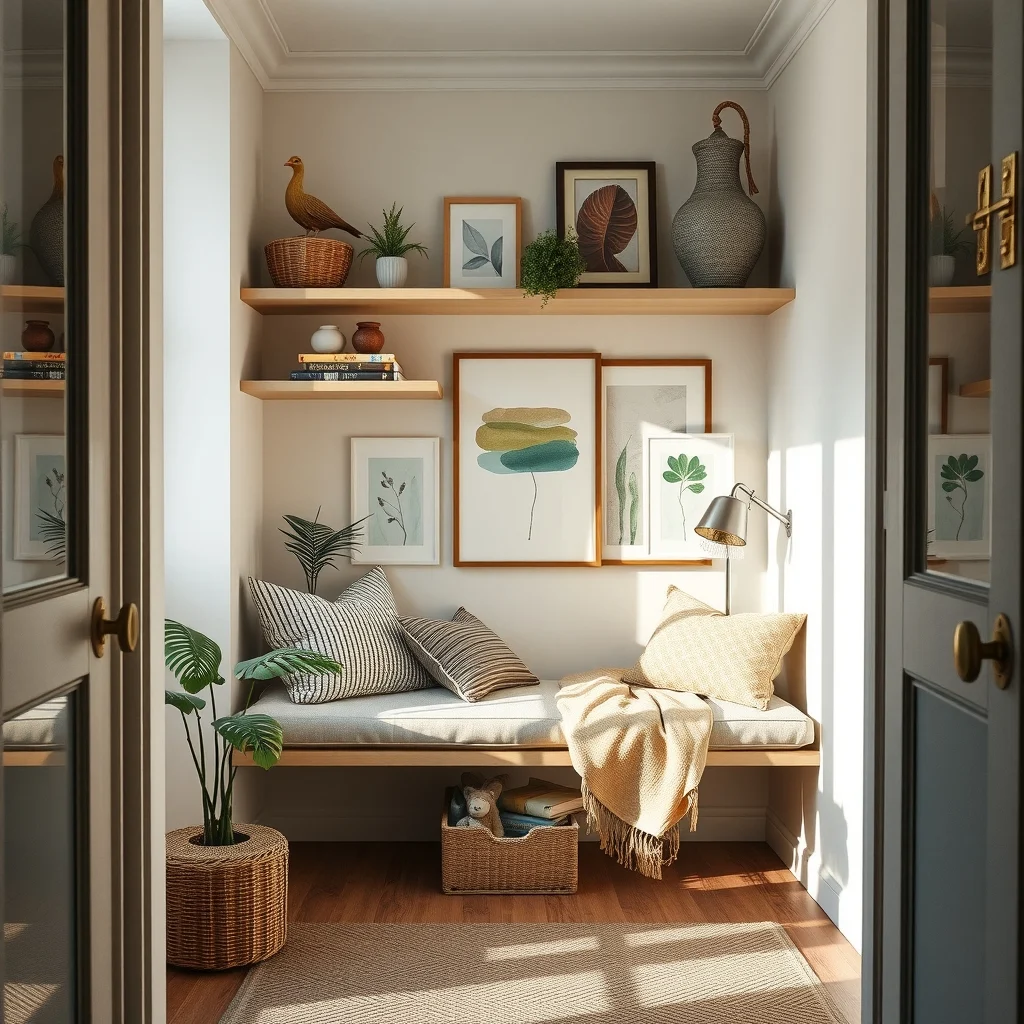
A low, built‑in bench that runs the length of the closet creates a natural seat while also providing concealed storage beneath. Choose a sturdy hardwood such as oak or walnut, then finish it with a matte polyurethane to protect against spills from tea or coffee. Adding a thin cushion in a soft linen in a muted sage or warm greige invites you to settle in for longer reading sessions. Behind the bench, install shallow floating shelves that hold your current novels, a small lamp, and a few decorative objects like a ceramic vase or a potted succulents. The bench’s depth should not exceed the closet’s interior width, allowing the doors to close fully without obstruction. While the built‑in offers a seamless look, it does require some carpentry skill; if you’re not comfortable with framing, a prefabricated bench can be retrofitted with the same storage concept.
2. A Sliding Door Conversion with Soft Fabrics
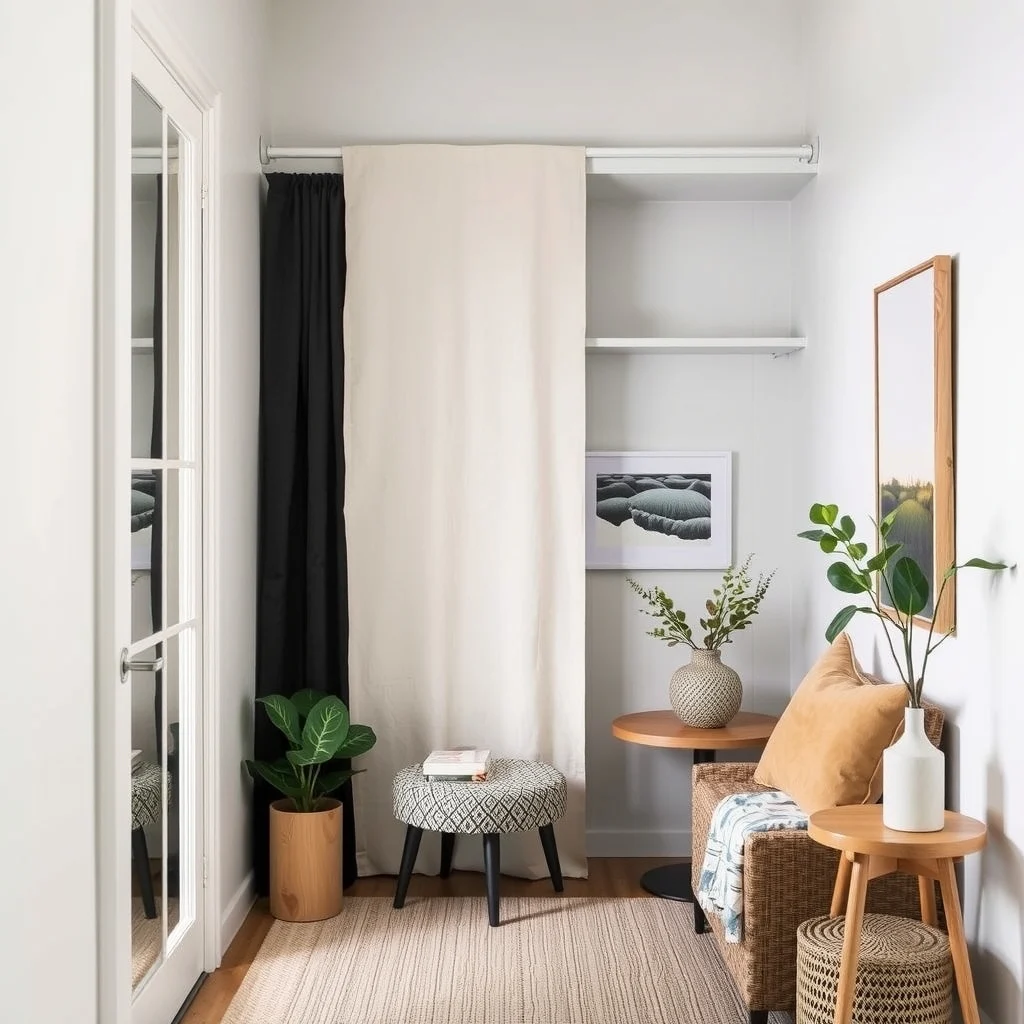
If your closet features sliding doors, replace the opaque panels with frosted glass or a fabric‑covered panel that still offers privacy but lets diffused light filter in. Choose a natural linen in a deep charcoal or muted navy to create a cozy backdrop that reduces glare on the pages. Pair the door with a compact floor cushion—think a Japanese‑style zabuton covered in soft boucle—and a lightweight, portable floor lamp that can be tucked away when not in use. The sliding mechanism stays functional, so you can still store seasonal items on the opposite side of the closet. One trade‑off is that the fabric panel may need occasional cleaning; a removable cover makes this task easier.
3. A Ladder Shelf System Over a Cozy Chair
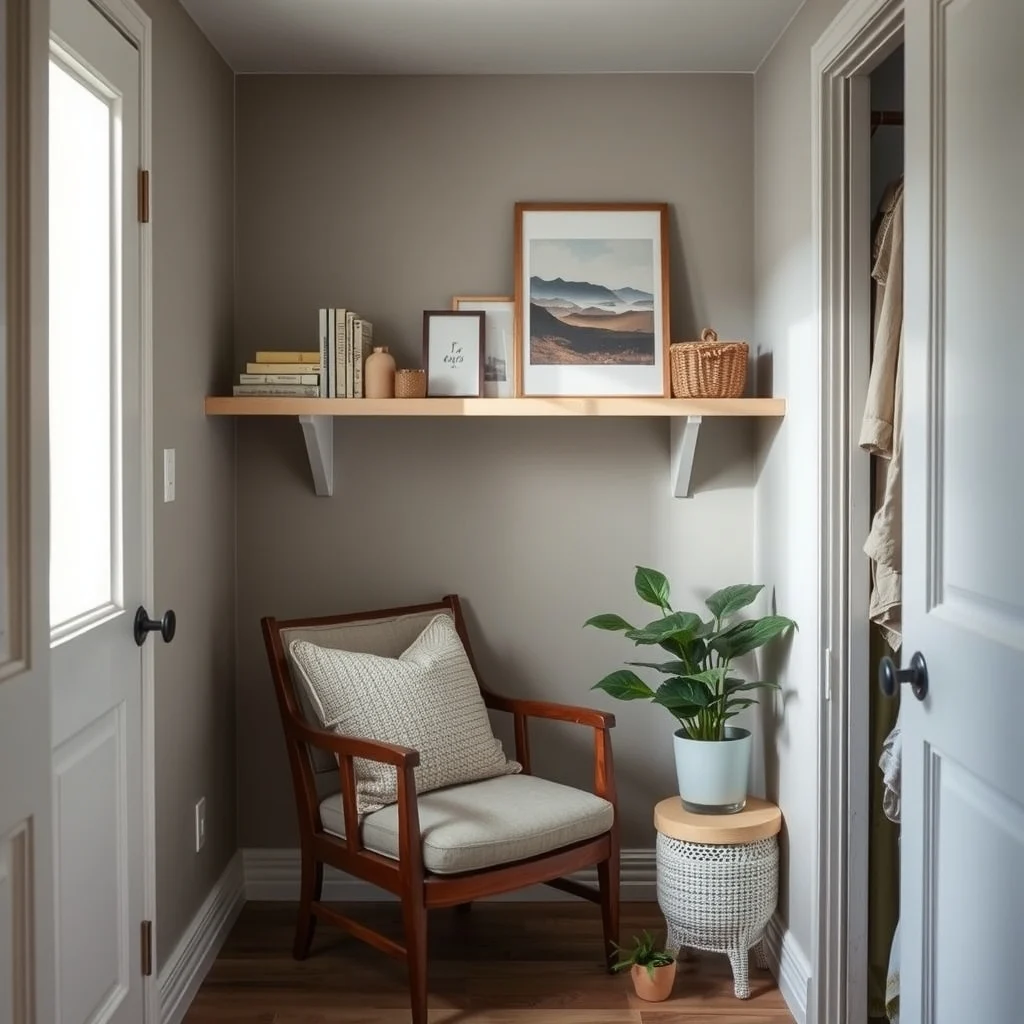
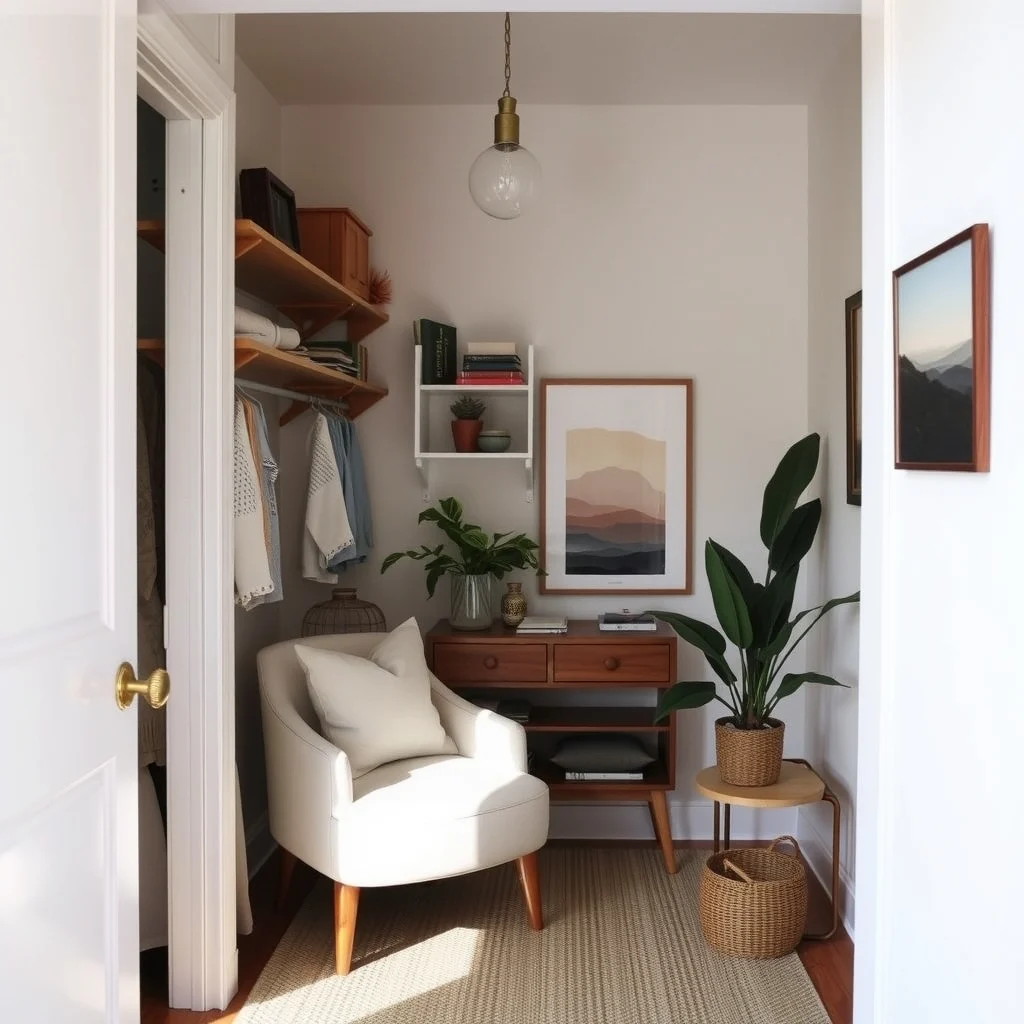
Installing a narrow ladder shelf along one side of the closet maximizes vertical space without crowding the floor. The ladder can be made of reclaimed pine, finished in a light wash to keep the room feeling airy. Position a single, plush armchair—perhaps an upholstered slipcovered piece in a soft terracotta—directly beneath the top rung. The upper shelves become a perfect place for a stack of books, a small stack of journals, and a decorative tray for a tea kettle and mug. Because the ladder is open‑backed, it does not impede the closet door swing. The main consideration is ensuring the ladder is securely anchored to the wall studs; otherwise, it could wobble under the weight of heavier volumes.
4. A Pocket Door with Integrated LED Strip
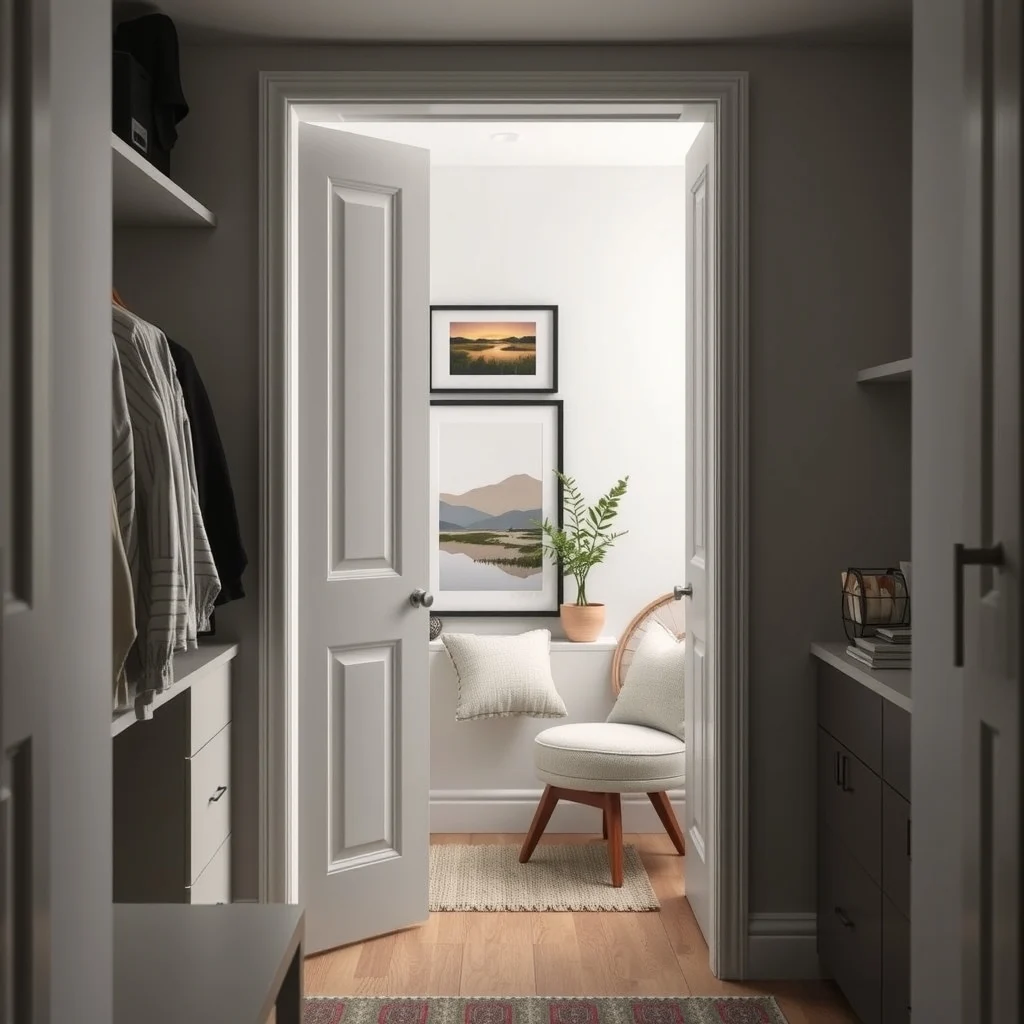
A pocket door that slides into the wall frees up the entire closet opening, creating a seamless transition between the nook and the rest of the room. Mount a thin LED strip along the inner edge of the pocket frame, set to a warm 2700‑kelvin tone. The gentle illumination highlights the texture of a woven rug placed beneath a low, rounded ottoman upholstered in soft velvet. Adding a small side table made of brushed brass gives a spot for a reading lamp and a cup of herbal tea. The pocket door’s hidden nature preserves the visual simplicity of the space, but installing one may involve cutting into existing drywall, which is best handled by a professional.
5. A Fold‑Down Desk That Doubles as a Reading Surface
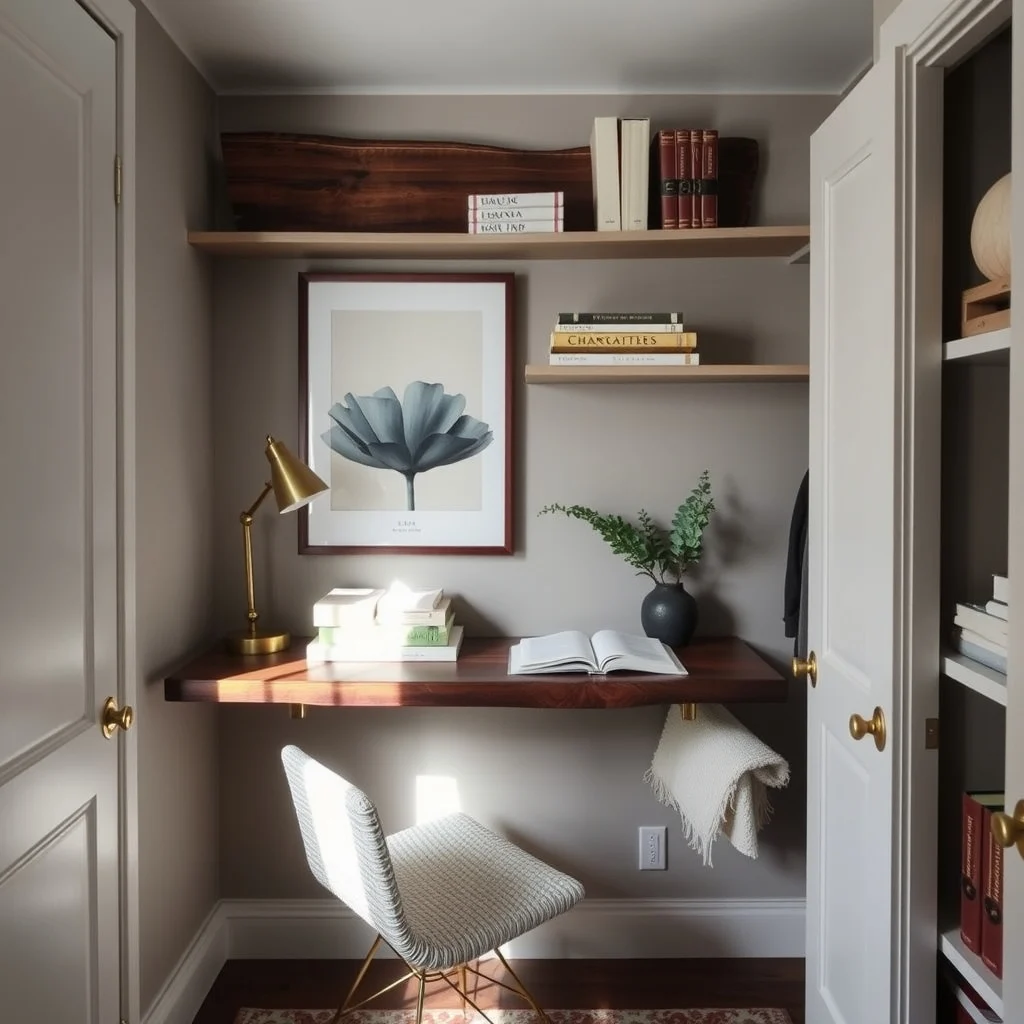
For those who like to annotate or write notes while reading, a wall‑mounted fold‑down desk offers a dual purpose. Choose a desk slab of reclaimed walnut with a natural edge, and pair it with brass hinges that allow the surface to fold flat against the wall when not in use. When opened, the desk provides a sturdy platform for a slim reading lamp and a cup of tea, while a narrow, upholstered backrest folds down to become a comfortable seat. The desk’s compact footprint means the closet can still hold a few seasonal items on the opposite side. Keep in mind that the folding mechanism must be sturdy enough to support the weight of a laptop if you occasionally work from the nook.
6. A Curated Gallery Wall with Soft Seating
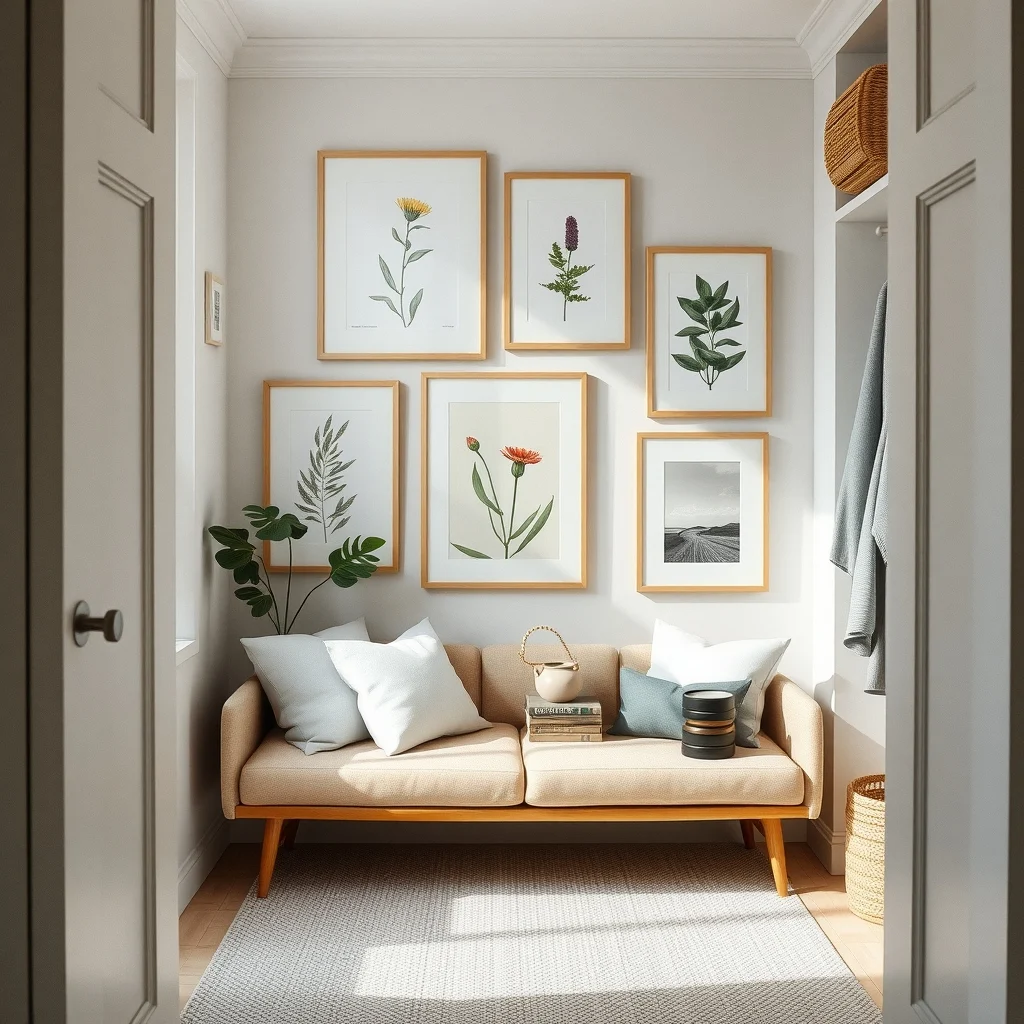
Turning the closet’s interior walls into a gallery creates visual interest that distracts from the limited dimensions. Hang a series of framed botanical prints—think muted eucalyptus or soft lavender—spaced evenly to avoid a cluttered feel. Below the artwork, place a low, tufted bench upholstered in a breathable cotton blend in a neutral taupe. Add a couple of oversized floor cushions in complementary shades for additional seating options. The gallery wall not only provides a calming backdrop but also encourages you to pause and linger over each piece, extending the reading experience. The main limitation is that heavy frames require proper anchoring; using picture‑hanging strips designed for drywall can mitigate wall damage.
7. A Portable Rolling Cart Paired with a Textured Rug
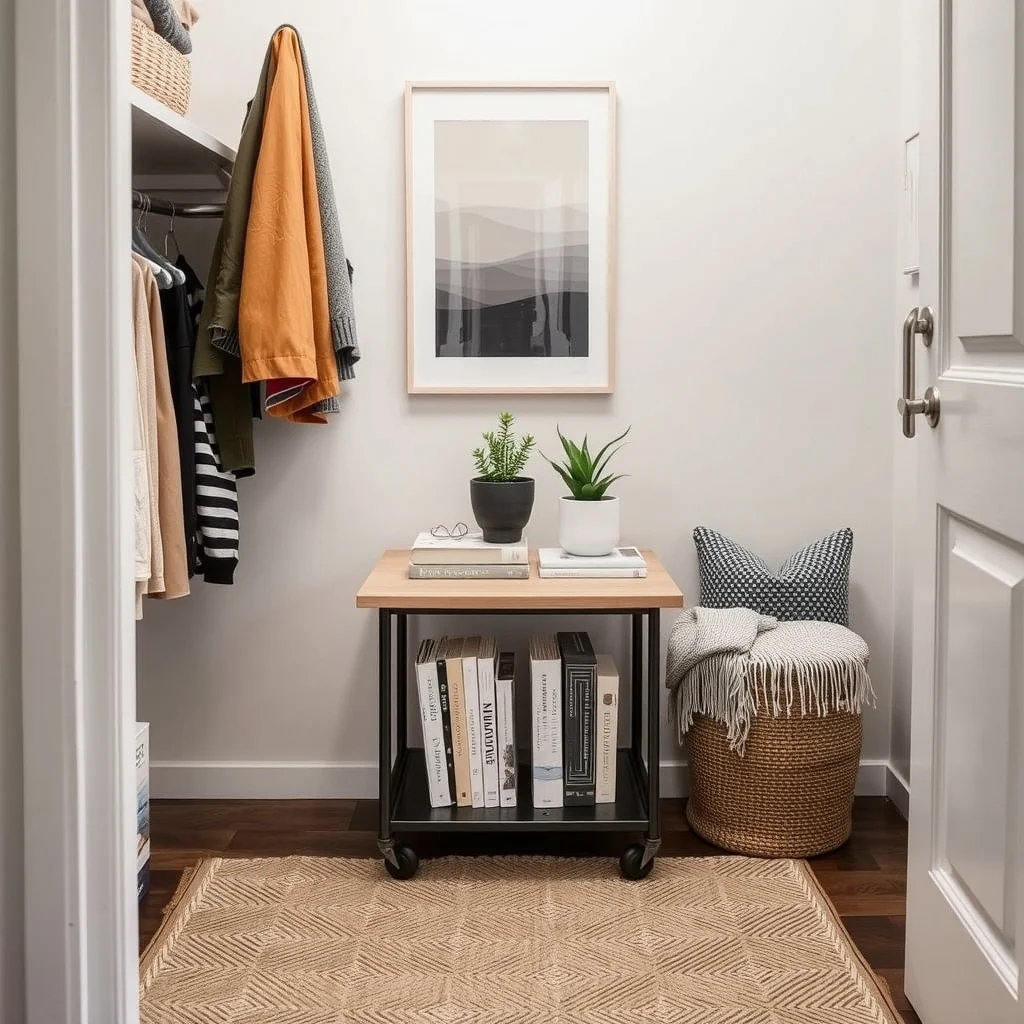
When the closet’s dimensions are too restrictive for permanent fixtures, a slim rolling cart on casters offers flexibility. Choose a metal frame with a wooden top finished in a light ash tone, then load it with a stack of current reads, a small Bluetooth speaker for ambient music, and a decorative tray for a teapot. Position the cart against the closet wall and lay a textured jute rug beneath it to define the space. A plush floor pillow in a deep olive hue adds a comfortable spot for lounging. This arrangement can be easily moved if you need to reconfigure the room or store larger items elsewhere. The trade‑off is that the cart’s wheels may roll on uneven flooring, so a rug with a low‑pile surface helps keep it stable.
FAQ
How do I keep my closet nook from feeling too cramped?
Maintain a sense of openness by selecting low‑profile furniture and limiting the number of decorative items; a single bench, a few shelves, and a soft rug are enough to create comfort without overcrowding.
Can I add a reading lamp without installing new wiring?
Yes, a battery‑operated LED lamp or a plug‑in floor lamp with a short cord works well; just ensure the cord is neatly tucked behind the bench or along the wall to avoid tripping hazards.
What flooring is best for a closet reading nook?
A low‑pile rug made of natural fibers such as jute or wool provides warmth and sound absorption while staying easy to clean; avoid thick shag rugs that can make the space feel heavier.
Is it safe to use a small heater in a closet nook?
Only use a certified, low‑wattage space heater that includes an automatic shut‑off feature; keep it at least a foot away from any fabric or paper to prevent fire risk.
How can I store extra blankets or seasonal items while keeping the nook functional?
Utilize the uppermost shelf of a ladder system or add a narrow fabric bin under the bench; these storage solutions keep items out of sight but readily accessible.
Final Thoughts
Turning a closet into a private reading retreat is less about the size of the space and more about thoughtful curation. By choosing furniture that fits the dimensions, layering lighting that respects the eye, and integrating storage that hides clutter, you create a nook that feels like a personal library, a quiet café, and a cozy hideaway all at once. Whether you opt for a built‑in bench, a sliding door, or a portable cart, each approach offers a way to step away from the bustle and lose yourself in a good book. Take one idea that resonates most, adapt it to your home’s constraints, and enjoy the simple pleasure of a dedicated escape right inside your own walls.