

There’s a reason designers keep coming back to white kitchens: they’re bright, timeless, and make even a tiny galley feel airier. But “white” doesn’t mean boring. With the right textures, finishes, and a few smart styling moves, your white kitchen can look custom—and stay fresh for years without chasing trends. Ready to make your space glow?
1. Layer Textures Like a Pro
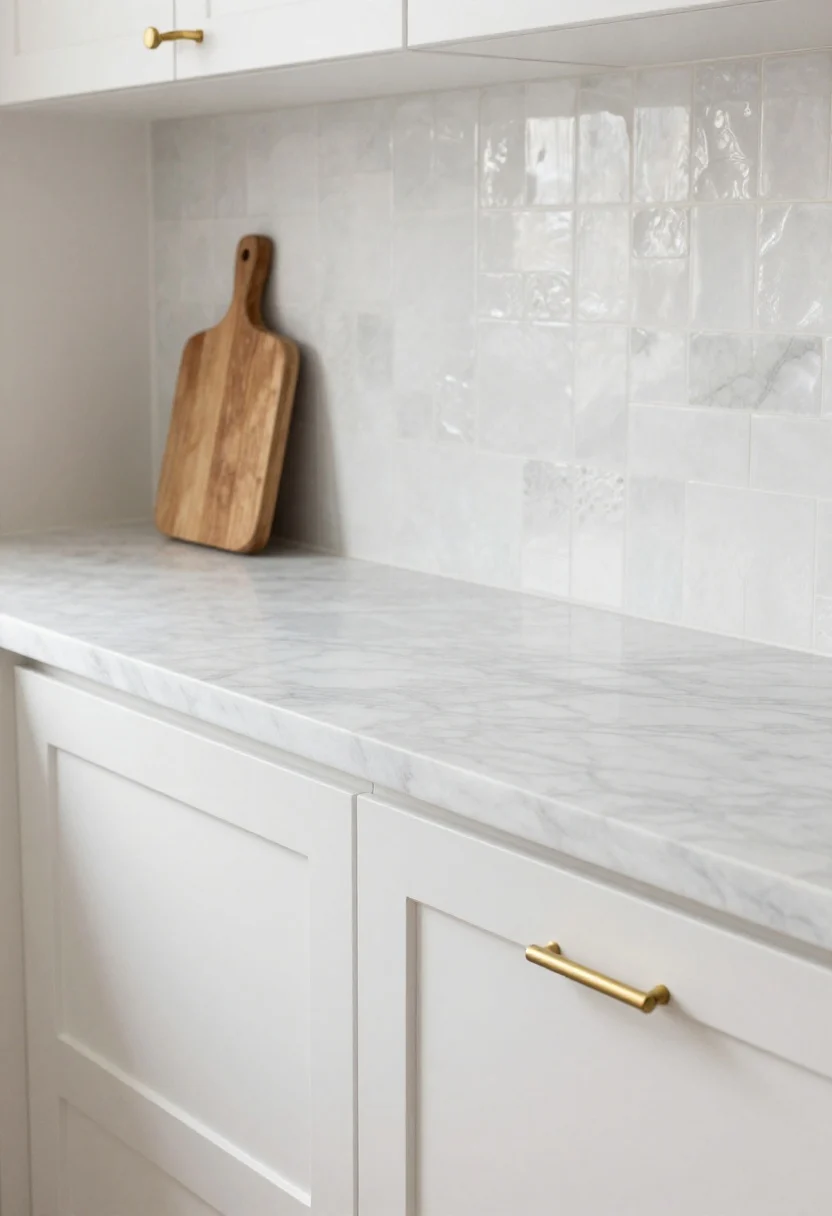
A white-on-white kitchen can feel flat without texture. The trick is mixing a few tactile moments so your eye keeps traveling—think smooth quartz, matte cabinets, and rustic wood accents.
Where Texture Works Best
- Backsplash: Try a hand-cut or zellige tile for soft, natural variation. It’s subtle but gives your walls that artisan vibe.
- Countertops: Honed marble or quartz adds a velvety finish that contrasts beautifully with glossy tile.
- Cabinet Finish: Matte or satin reads more elevated and hides fingerprints better than high gloss.
- Hardware & Accents: Brushed brass, oil-rubbed bronze, or black metal deliver warmth and depth.
Pro tip: Mix no more than three main textures so it looks intentional, not chaotic.
Beautiful Homes Don't Happen by Accident.
Turn your home inspiration into action with practical decorating guides, organization planners and digital resources.
A Fresh Start for Your Home
Get helpful resources to plan your rooms, organize your spaces and make decorating decisions with more confidence.
Your first purchase
What to shop for: Textured backsplash tile, honed countertops, matte cabinet paint, metal hardware sets.
2. Nail the Perfect White (Yes, There’s More Than One)
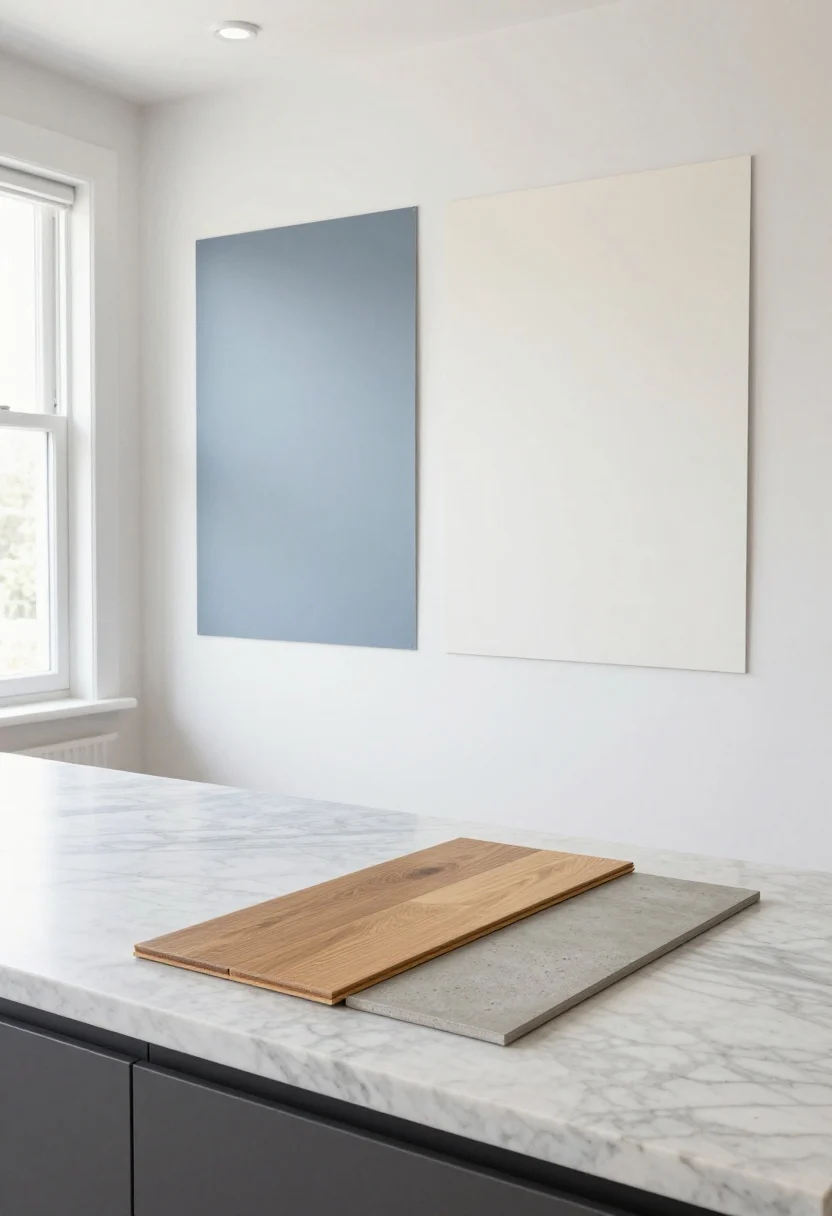
All whites are not created equal. Undertones matter. A cool white with blue or gray undertones looks crisp and modern; a warm white with yellow or red undertones feels cozy and classic.
How to Choose Your White
- Test Large Swatches: Paint big poster boards and move them around the kitchen. Light changes everything—especially under LEDs.
- Coordinate With Counters: Match your cabinet white to the veining of your countertops for a seamless look.
- Mind the Flooring: Warm wood floors usually pair better with warm whites; concrete or cool stone pairs with cooler whites.
FYI: Aim for slightly warmer whites in north-facing rooms to avoid that clinic-y vibe.
3. Elevate With Classic Details That Age Well
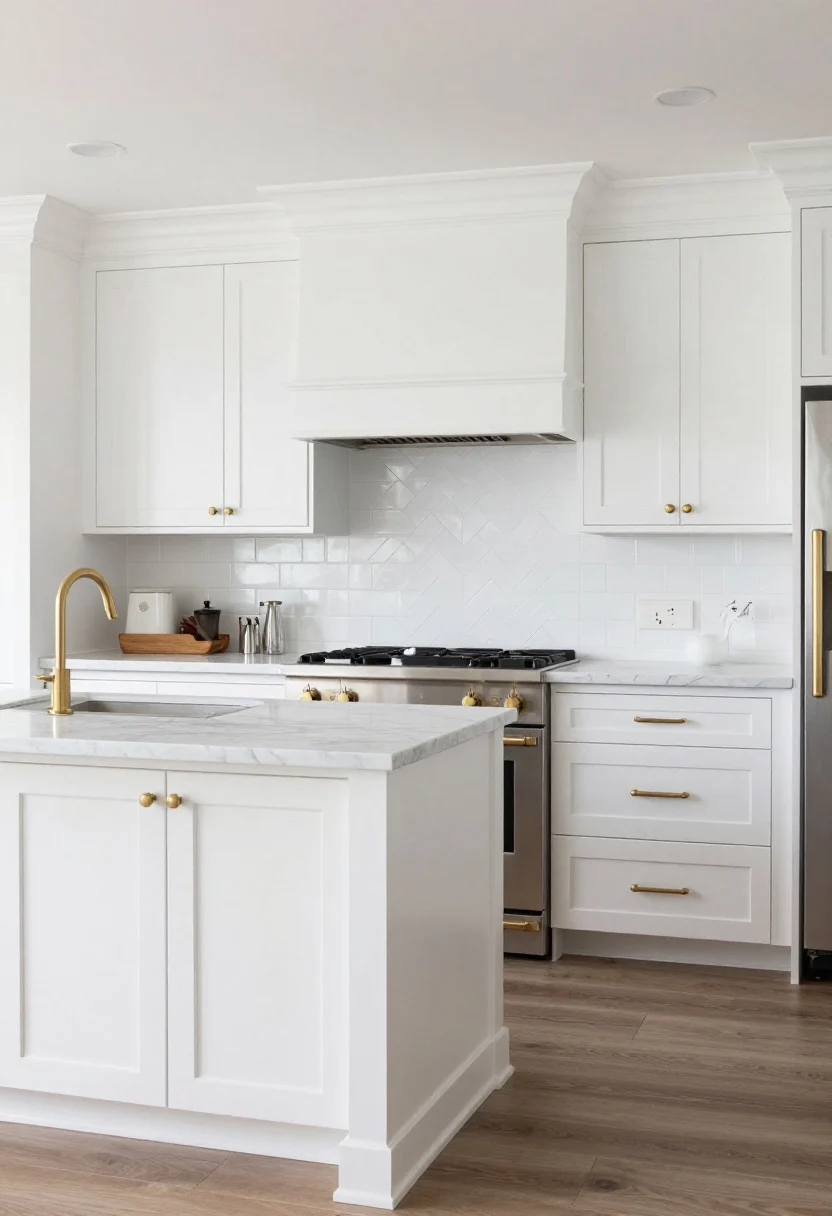
Trends come and go, but certain details are forever. Add a few traditional or transitional elements that anchor your white kitchen and give it a “built to last” feel.
Timeless Touches
- Shaker Cabinets: The gold standard. Clean, versatile, and never fussy.
- Marble or Marble-Look Quartz: Subtle veining adds movement and luxury without screaming for attention.
- Subway Tile: A classic, especially with a stacked or herringbone pattern for a modern twist.
- Inset Panels & Furniture-Style Islands: Give a bespoke, high-end look.
Pro tip: If you’re renovating in stages, start with cabinet fronts and hardware. They shift the vibe instantly.
What to shop for: Shaker door fronts, subway tile, marble-look quartz slabs, classic cabinet pulls and knobs.
4. Add Warmth With Wood (Without Losing the Clean Look)
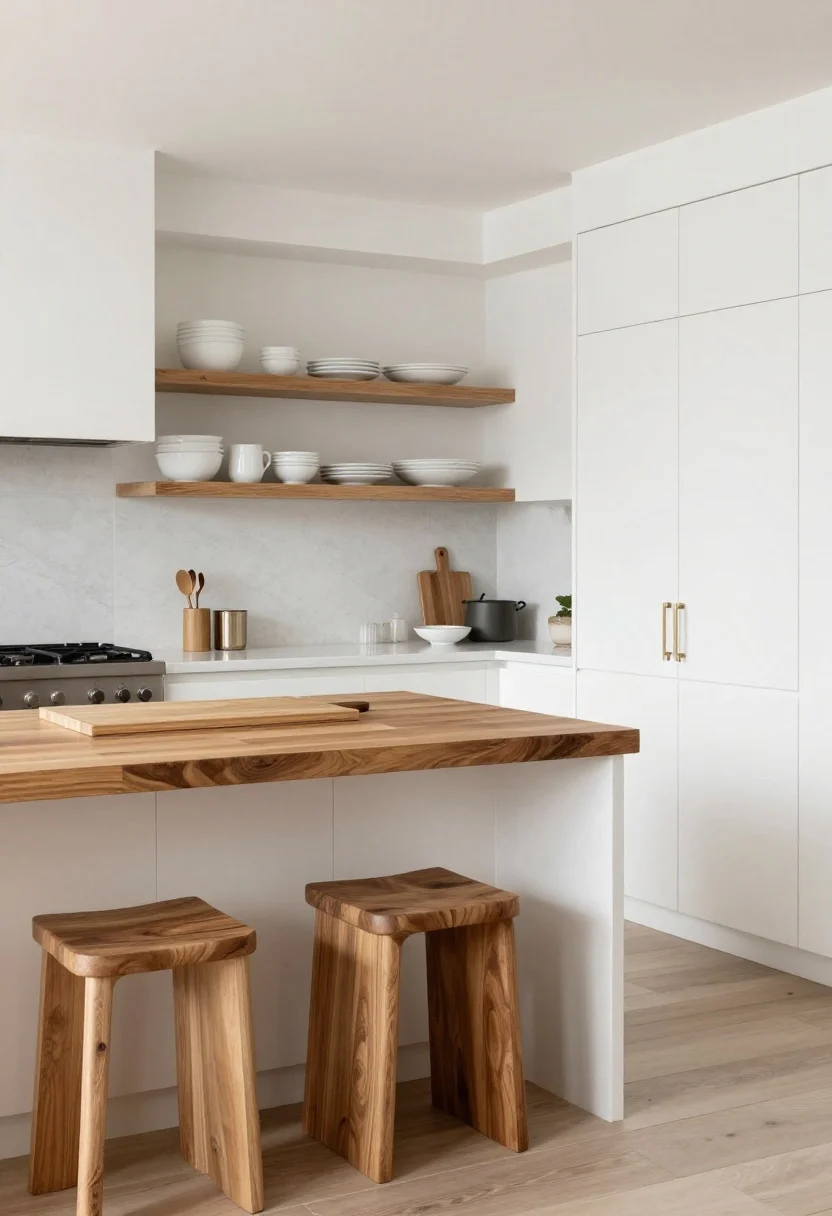
If your white kitchen feels a tad sterile, wood is your best friend. It instantly grounds the space and adds character—without making it feel dark.
Smart Wood Moments
- Open Shelves: A pair of oak or walnut shelves breaks up a long run of uppers and makes room for pretty essentials.
- Butcher-Block Accents: Try it on the island only, or as a chopping zone next to the stove.
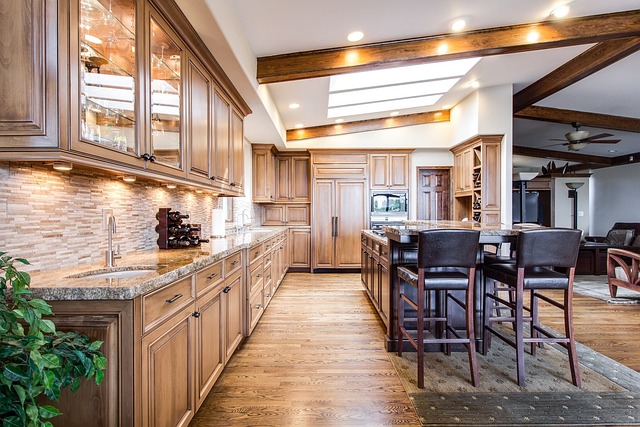
- Ceiling Beams or Stools: Lightly stained beams or sculptural wood stools keep things airy yet warm.
IMO: Keep wood tones cohesive—choose one dominant finish and echo it in 2–3 places.
What to shop for: Wood stools, floating shelves, butcher-block boards, wooden trays.
5. Play With Contrast: Metals, Black Accents, and Glass
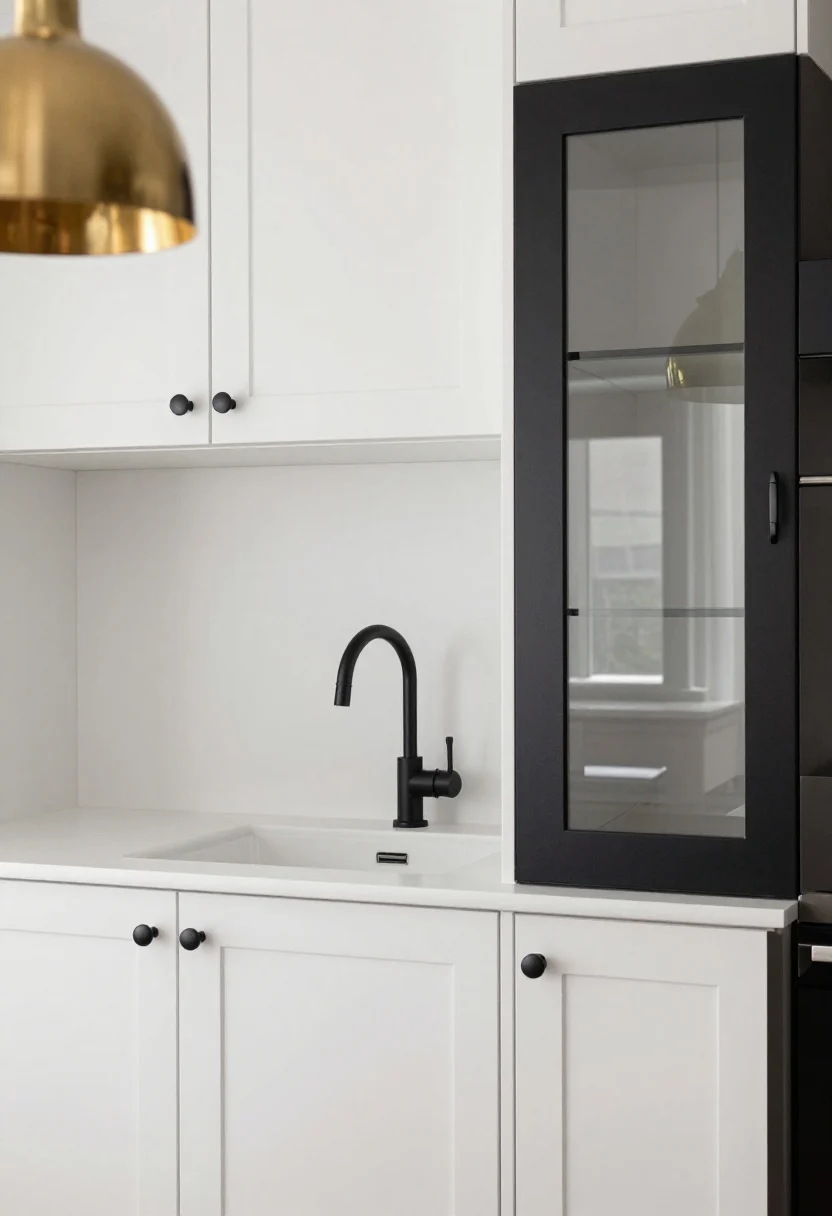
White needs contrast to pop. A few dark or reflective elements cut through the sameness and add dimension without clutter.
Contrast That Always Works
- Black Hardware: Cabinet pulls, knobs, or a matte black faucet give clean, graphic lines.
- Metal Lighting: Brass or polished nickel pendants above the island deliver a glow and a little glam.
- Framed Glass: Black steel or black-framed cabinet doors (even just one section) feel modern-classic.
- Appliance Strategy: Stainless blends; panel-ready appliances keep the look calm and custom.
Pro tip: Repeat your chosen metal in at least three spots for cohesion—think faucet, lights, and hardware.
What to shop for: Pendant lights, matte black faucets, cabinet hardware sets, glass-front cabinets.
6. Style the Surfaces (But Keep Counters Clutter-Free)
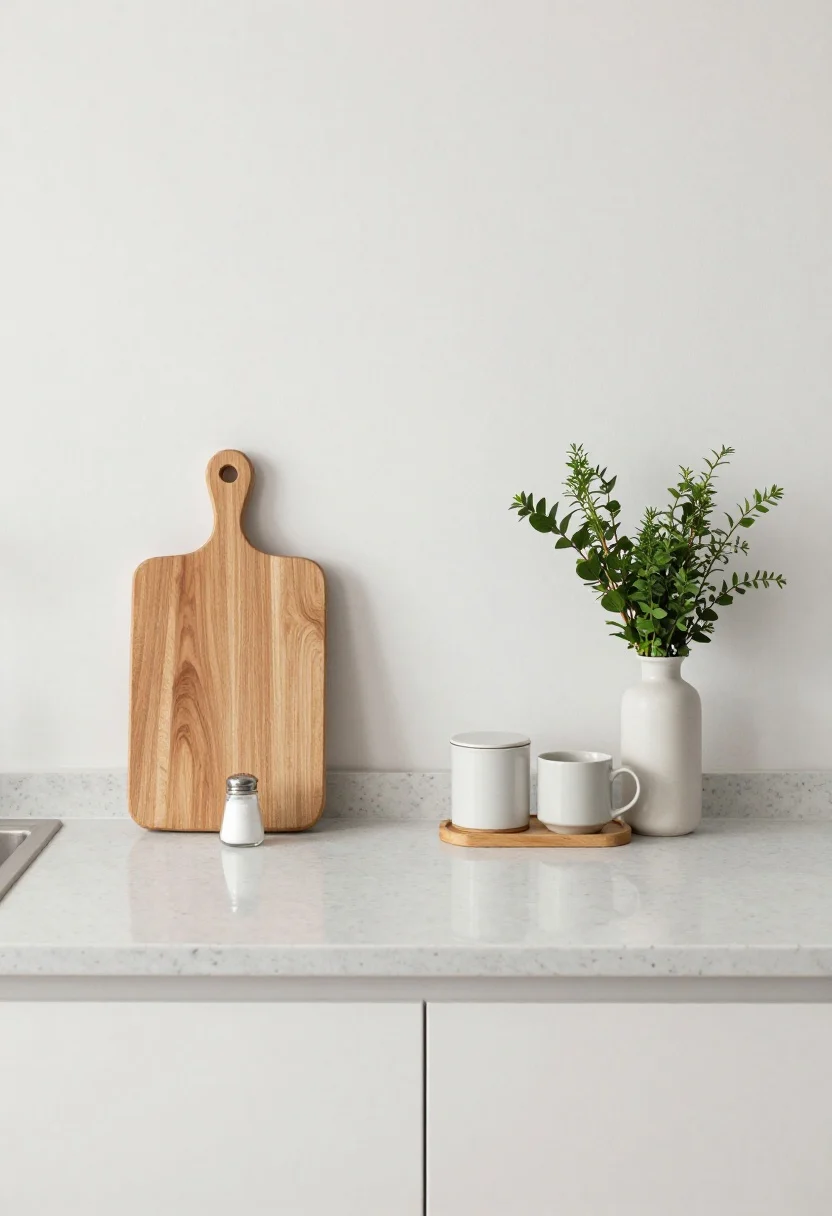
White kitchens show everything—good and bad. Keep counters edited, then style a few focal points so the room feels lived-in, not sterile.
Styling That’s Functional and Pretty
- Zones, Not Piles: Create micro-displays: a cutting board vignette near the range, a coffee station, a fruit bowl by the sink.
- One Organic Element: Fresh herbs, a big leafy plant, or a vase with branches warms up the whites instantly.
- Mix Heights: Stack boards, add a tall utensil crock, then a small salt cellar. Visual rhythm = chef’s kiss.
FYI: If you can’t commit to minimalism, add a few woven baskets to hide the daily chaos. Out of sight, out of mind.
What to shop for: Cutting boards, ceramic crocks, woven baskets, countertop canisters, planters.
7. Light It Right: The Secret Sauce of Every White Kitchen
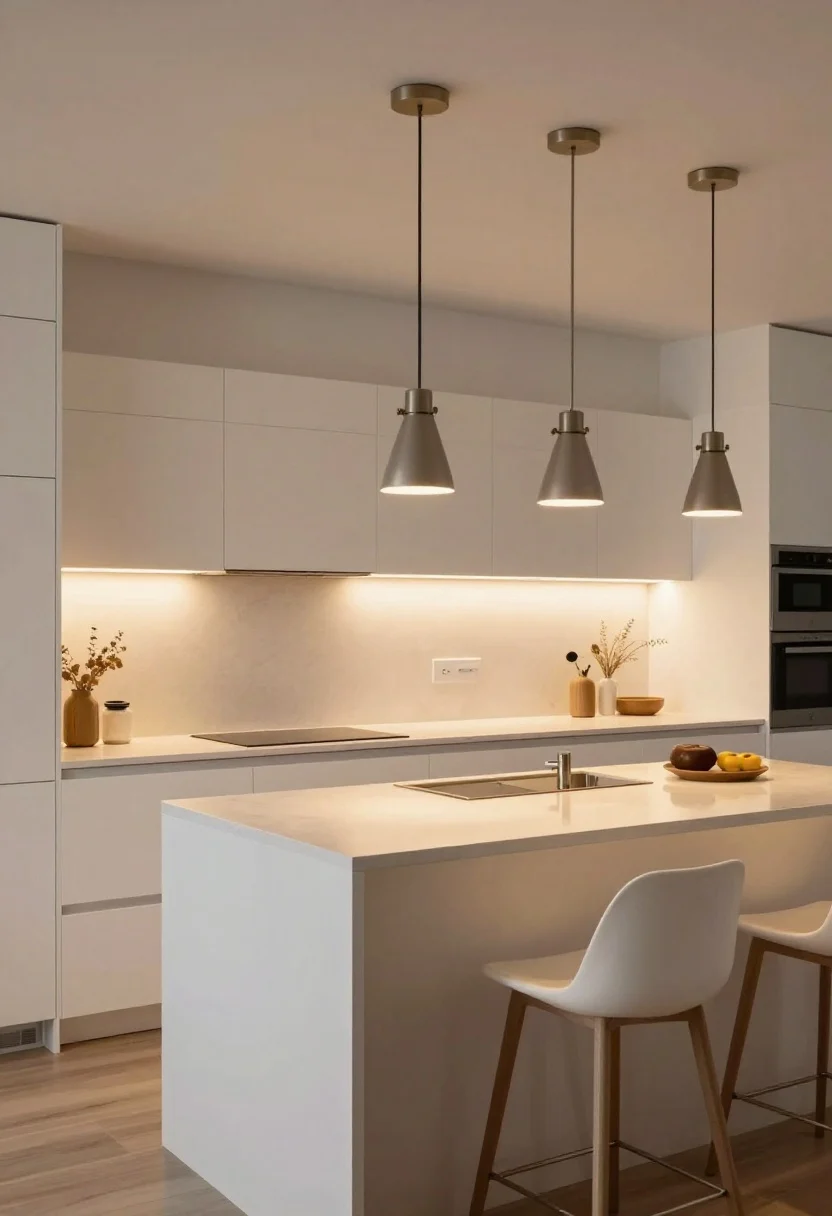
Light makes or breaks a white kitchen. The right layers bring out textures, keep it welcoming at night, and prevent that “overexposed” look.
The Three-Layer Lighting Plan
- Ambient: Recessed or a central fixture for overall glow—dim on a switch for mood shifts.
- Task: Under-cabinet LEDs so you can actually see those onions you’re chopping.
- Accent: Pendants over the island or sconces over shelves to highlight your best angles (and your dishes).
Bulb Basics: Aim for 2700–3000K for warmth, 90+ CRI for accurate color, and dimmable across the board.
What to shop for: Dimmable LED bulbs, under-cabinet light bars, statement pendants, wall sconces.
Quick Maintenance Tips So Your White Stays Bright
- Sealers Matter: If you’ve got natural stone, seal it and re-seal per manufacturer’s timeline.
- Microfiber > Paper Towels: For glossy surfaces and steel, microfiber wins every time.
- Warm Soapy Water: Daily wipe-downs beat harsh cleaners that can yellow paint or dull finishes.
Conclusion
A white kitchen is the ultimate blank canvas. Keep it timeless with texture, a carefully chosen white, classic details, strategic contrast, edited styling, and layered lighting—and you’ll have a space that looks effortless year after year. Start small, choose one upgrade at a time, and let your kitchen quietly flex its style.
FAQ
Q: How do I keep a white kitchen from feeling cold?
A: Layer warmth with wood accents, warm metal finishes, soft textiles (rugs, runners), and warm-temperature lighting (2700–3000K). Add greenery for life and color.
Q: Are white cabinets hard to maintain?
A: Not if you choose the right finish. Satin or matte hides smudges better than gloss. Wipe weekly with mild soap and water, and spot-clean handles more often.
Q: What backsplash looks best with white cabinets?
A: You can’t go wrong with classic subway tile, zellige for texture, or a marble/quartz slab for a seamless, luxe look. Match undertones to your cabinets and counters for a cohesive result.
Shop the Look on Amazon
Disclosure: As an Amazon Associate, this site may earn from qualifying purchases.
These product categories fit this article and give readers an easy next step when they are ready to shop.
- Tile & Backsplash — Adds subtle texture and artisan variation to white kitchens.
- Cabinet Hardware — Brushed or black finishes add warmth and contrast.
- Kitchen Lighting — Delivers layered light and a timeless glow over islands.
- Wood Accents — Introduces warm wood moments without visual heaviness.
- Task Lighting — Brightens work zones and highlights textures and finishes.
Pingback: Kitchen Lighting Ideas to Elevate Your Space and Mood
Pingback: Paris Apartment Style: Quiet Luxury for Your Home