

Advertisement
Your kitchen deserves better than a single sad ceiling dome. Great lighting doesn’t just help you chop onions without tears—it sets the vibe, makes surfaces sparkle, and turns every Tuesday night into “wow, who lives here?” energy. Let’s layer, dim, and glow our way to a kitchen that looks custom—even if you DIY’d half of it last weekend.
1. Layer Your Lights Like A Stylist, Not A Contractor
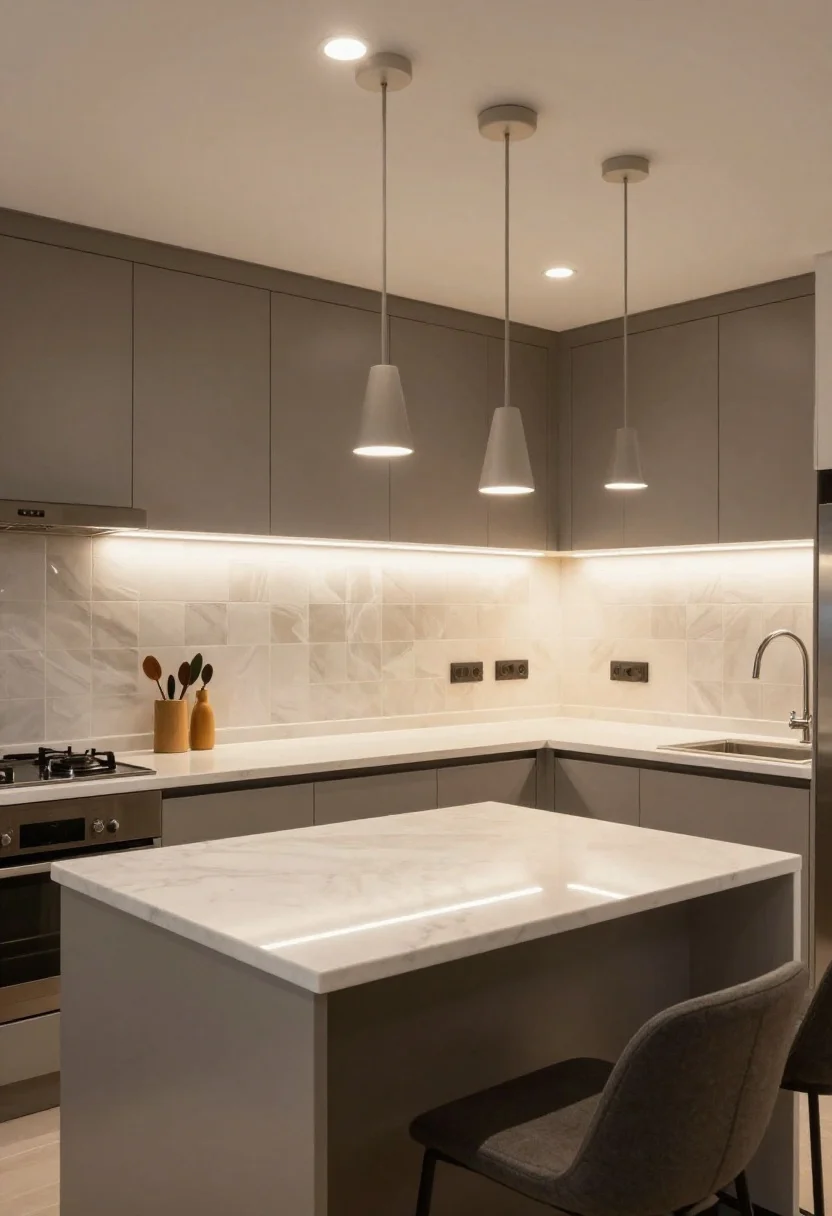
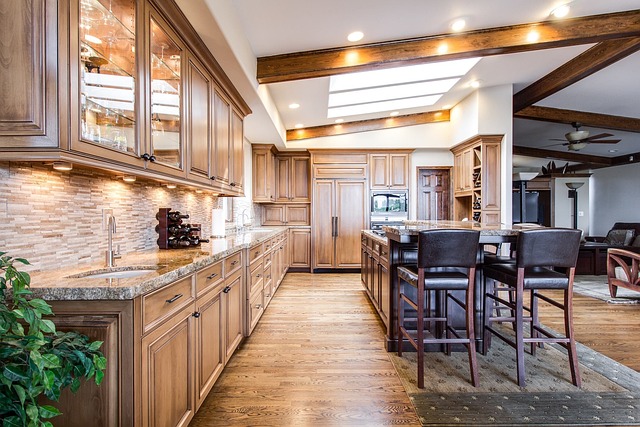
The secret sauce? Layered lighting. Think of your kitchen like a stage: you need ambient light to see the room, task light to see the cutting board, and accent light to make the backsplash slay.
Build Your Three Layers
- Ambient: Ceiling fixtures or recessed cans to evenly light the room.
- Task: Under-cabinet strips, pendants over islands, and focused spotlights.
- Accent: Toe-kick LEDs, cabinet interior lighting, and wall sconces for drama.
Put each layer on separate dimmers. Morning coffee? Brighter task, softer ambient. Dinner party? Dim the ambient, pop the accent. Mood: curated.
What to shop for: Slim LED under-cabinet bars, dimmable recessed lights, island pendants, and LED tape for toe-kicks.
2. Pendant Trios That Flatter, Not Fight
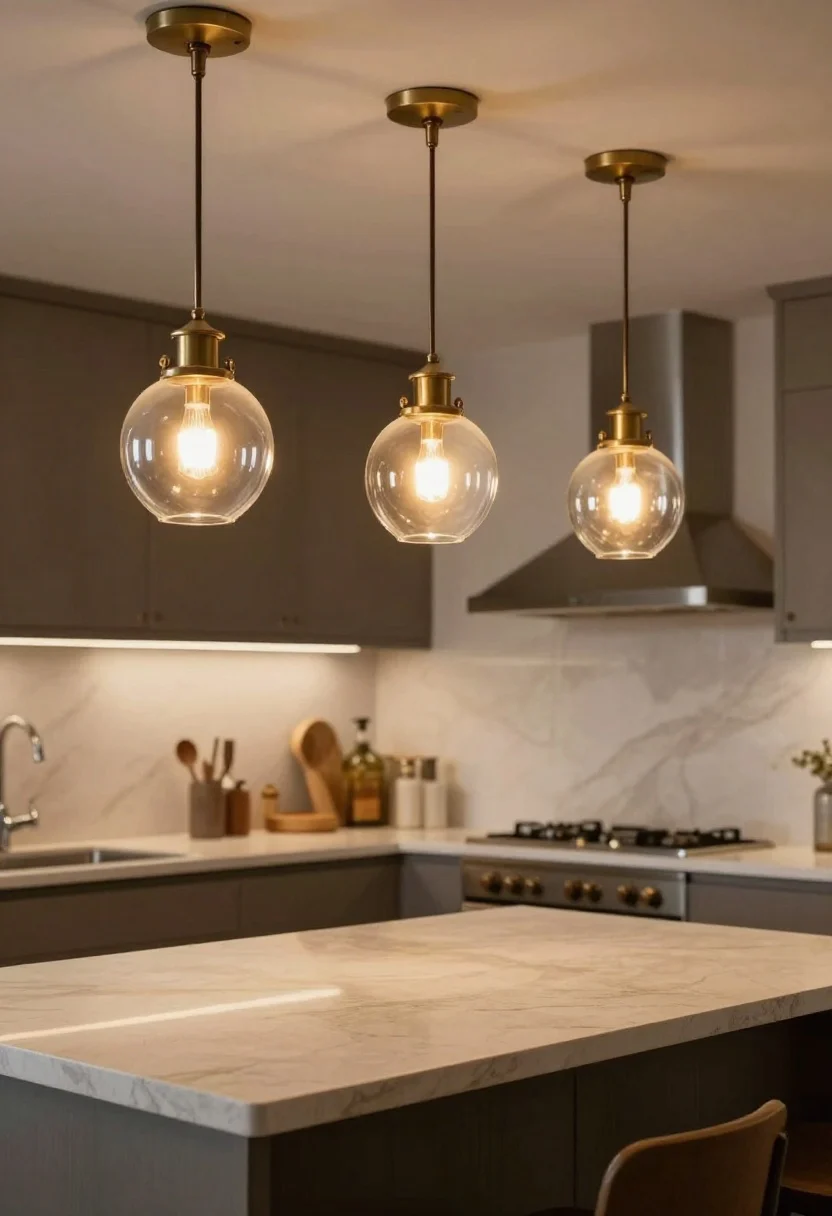
Pendants are the kitchen’s jewelry—gorgeous, but they need scale and spacing. Rule of thumb: choose fixtures that are one-third the island width for a single pendant, or go with two to three smaller pendants spaced evenly.
Size, Height, and Spacing
- Diameter: 10–14 inches for small islands; 14–20 inches for long ones. Oversized is trendy, but not if it blocks your sightlines.
- Height: Bottom of the pendant should sit about 30–34 inches above the countertop.
- Spacing: If using multiples, leave roughly 24–30 inches between edges. Visual breathing room keeps it luxe.
Mixed materials—like a smoked glass shade with aged brass hardware—bring that designer finish without a designer invoice, FYI.
What to shop for: Clear or opal glass pendants, linen drum shades, sculptural metal domes, adjustable downrods.
3. Under-Cabinet Glow That Makes You Feel Like a Pro Chef
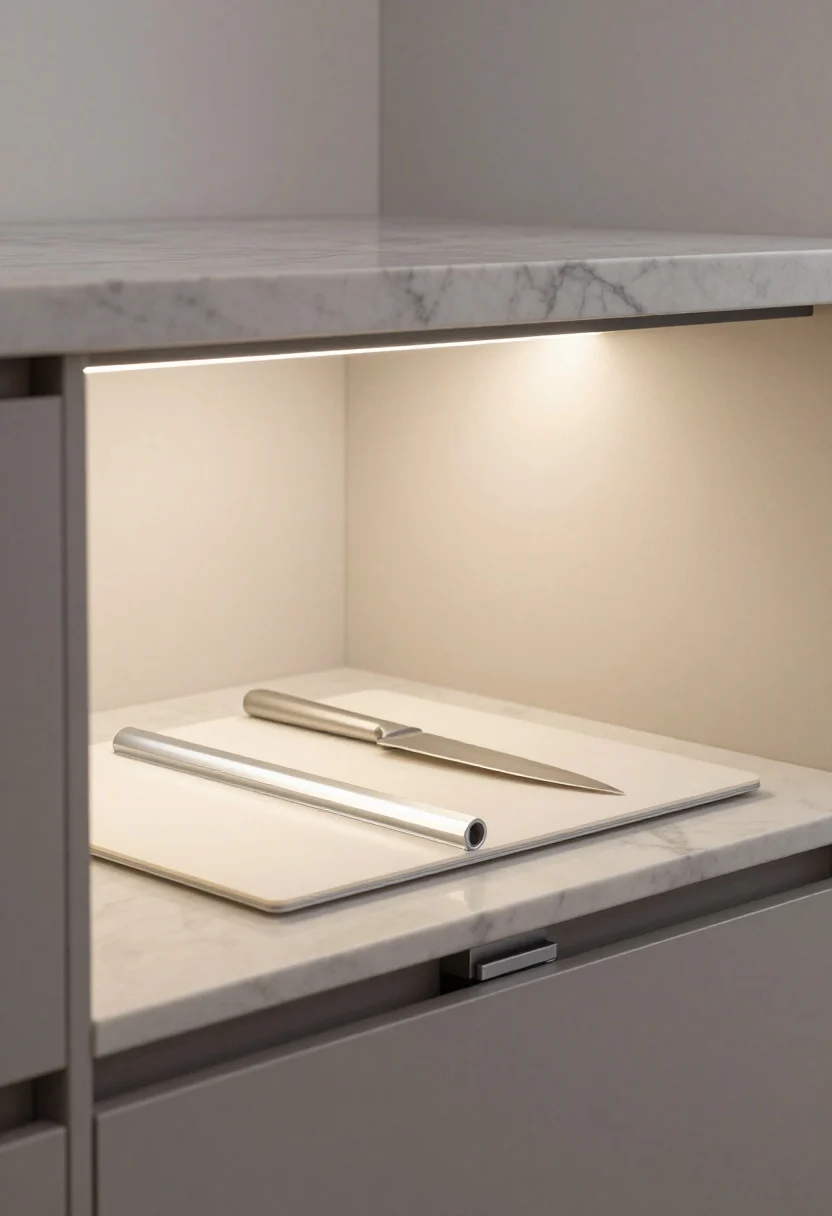
Under-cabinet lighting is the difference between “where’s the garlic?” and “oh hello, Mise en Place.” It delivers crisp, shadow-free illumination right where you chop and stir.
LED Bars vs. Tape
- LED Bars: Even, bright output and great diffusion—perfect for work surfaces.
- LED Tape: Flexible, low-profile, and ideal for continuous runs or tricky corners. Use aluminum channels with diffusers for a polished look.
Install lights toward the front underside of the cabinet so the light falls onto the countertop, not the wall. Wire them to a dedicated dimmer so you can swing from prep-bright to midnight-snack soft.
What to shop for: 3000K–3500K LED bars or tape, aluminum channels with diffusers, low-profile switches or smart dimmers.
4. Warmth, Color Temperature, And CRI: Make Food Look Delicious
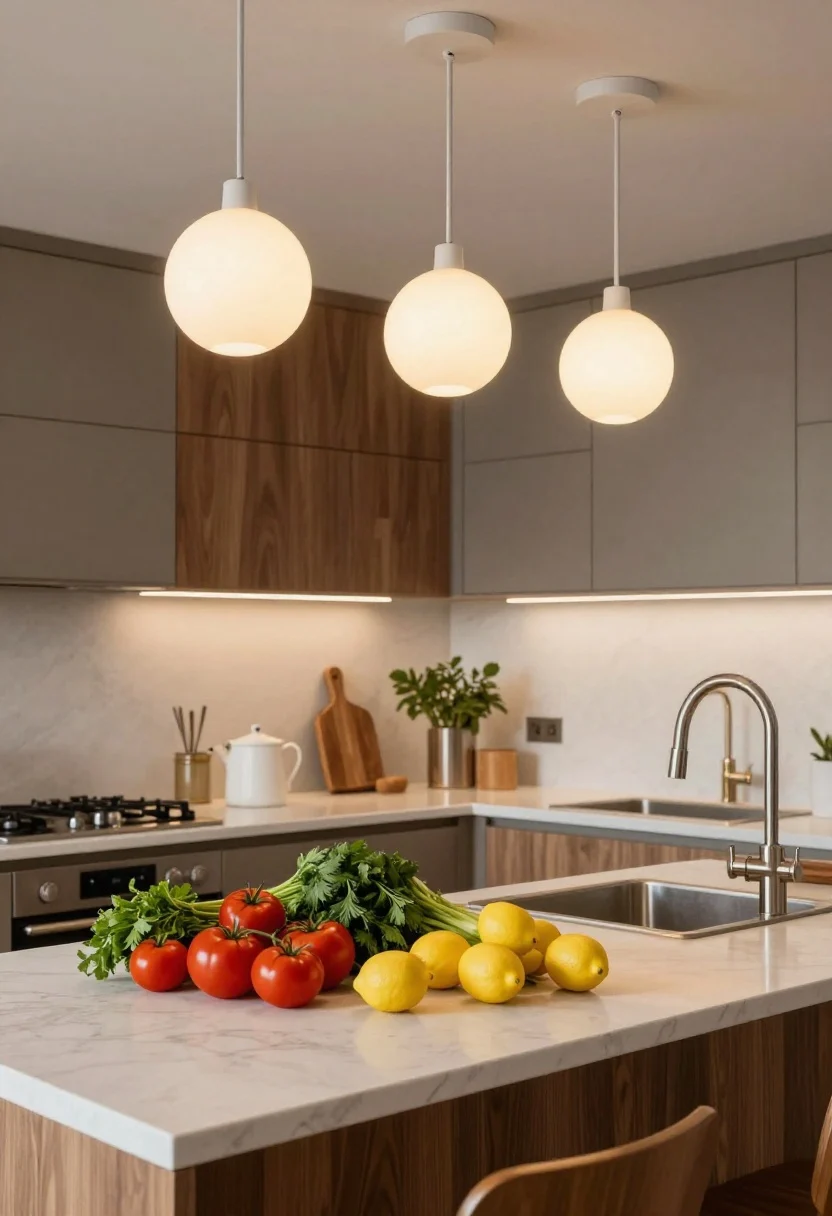
You know when a kitchen feels a little… hospital? That’s the wrong color temperature. Aim for a warm-white 2700K–3000K for pendants and ambient lights, and a slightly brighter 3000K–3500K for task lighting.
Why CRI Matters
- CRI (Color Rendering Index): Look for 90+ CRI so reds are juicy, greens are vibrant, and your walnut cabinets don’t look muddy.
- Lumen Targets: About 30–50 lumens per square foot for work zones. Islands and sinks get priority.
Match temperatures across fixtures so you don’t mix candlelight with spaceship beams. Consistency = instant sophistication.
5. Sconces, Shelves, And Backsplash Brights For Quiet Drama
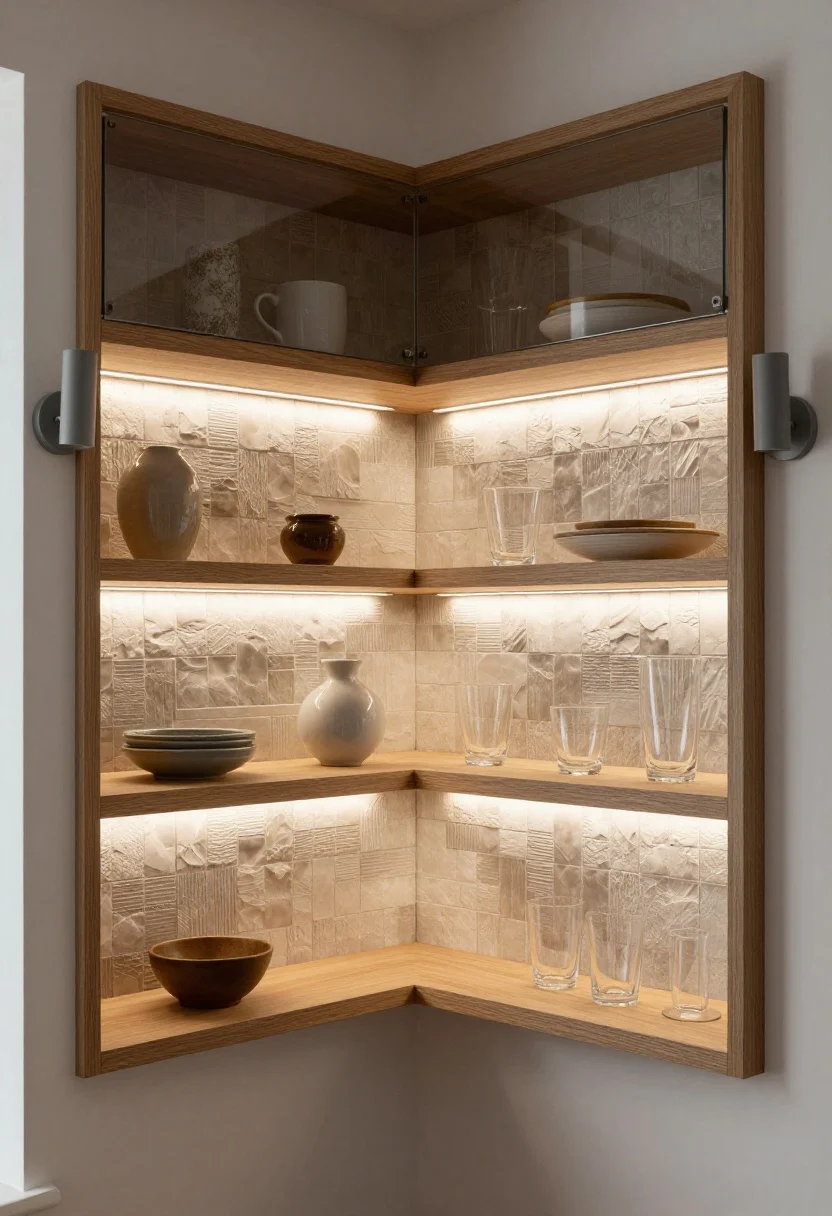
If your kitchen has open shelving, a gorgeous tile, or an arched niche—light it up like it deserves. Sconces add character, especially flanking a window or range hood. They’re basically skincare for walls.
Accent Moves That Look Custom
- Shelf Lighting: Mini puck lights or concealed LED tape under shelves to highlight ceramics and glassware.
- Backsplash Wash: Slim, low-glare linear fixtures beneath upper cabinets to graze tile textures.
- Cabinet Interiors: Glass-front uppers with interior LEDs = instant boutique vibe.
Choose matte finishes to cut glare on glossy tiles. And keep accent lights on a separate circuit—so they can do their moody little thing without competing with task lights.
What to shop for: Plug-in or hardwired sconces, micro puck lights, linear grazers, glass-front cabinet LEDs.
6. Smart Controls, Dimmers, And Zones—Because You’re Busy
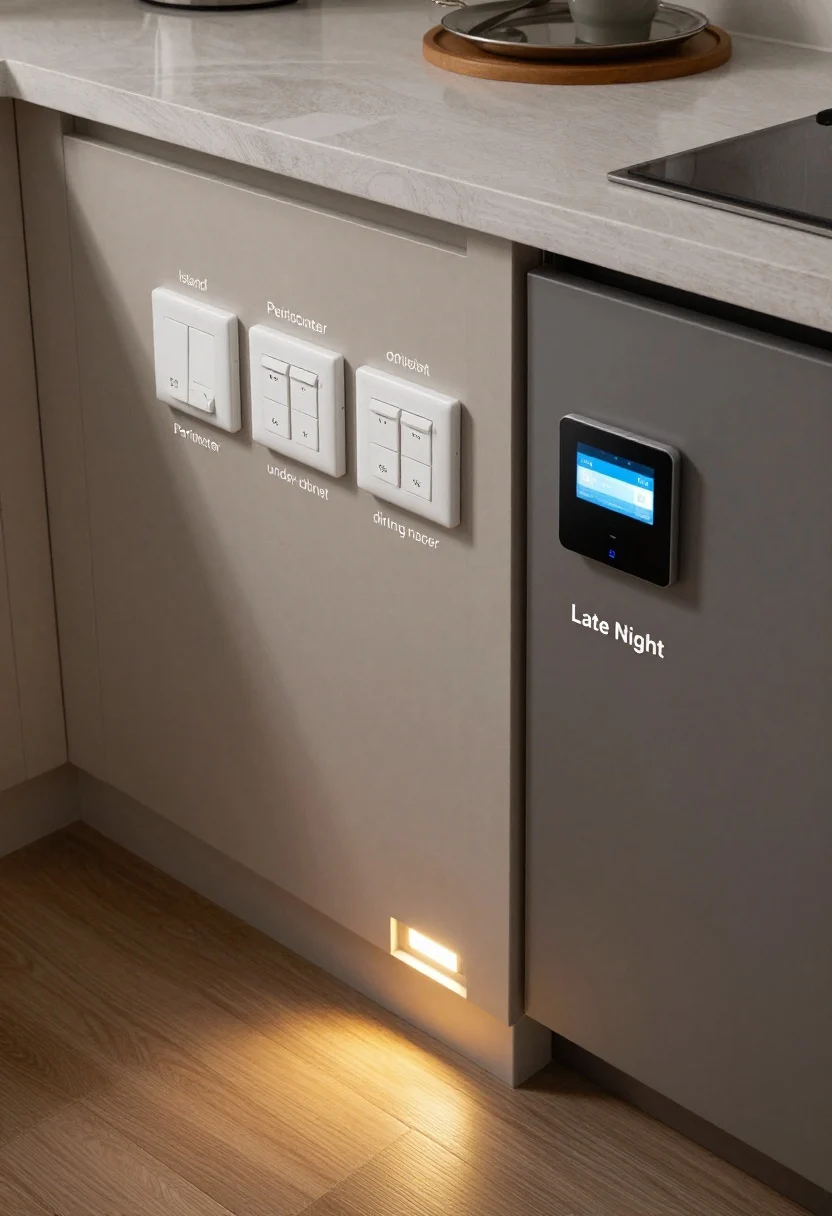
Lighting without controls is like a range without knobs. Break your kitchen into zones—island, perimeter, under-cabinet, dining nook—and give each a dimmer or smart switch.
Set Scenes Like A Pro
- Prep: Task 100%, ambient 70%, accent 30%.
- Dinner: Ambient 40–50%, pendants glowing, accent 60%.
- Late Night: Toe-kick and under-cabinet at 10–20% as a nightlight.
Smart bulbs are fine, but smart switches keep everything consistent and renter-friendly if you move. Bonus: occupancy sensors in the pantry so it lights up hands-free when you’re juggling groceries.
What to shop for: Smart dimmer switches, multi-location dimmers for long runs, motion sensors for pantry and toe-kicks.
7. Style The Finish To Your Kitchen’s Personality
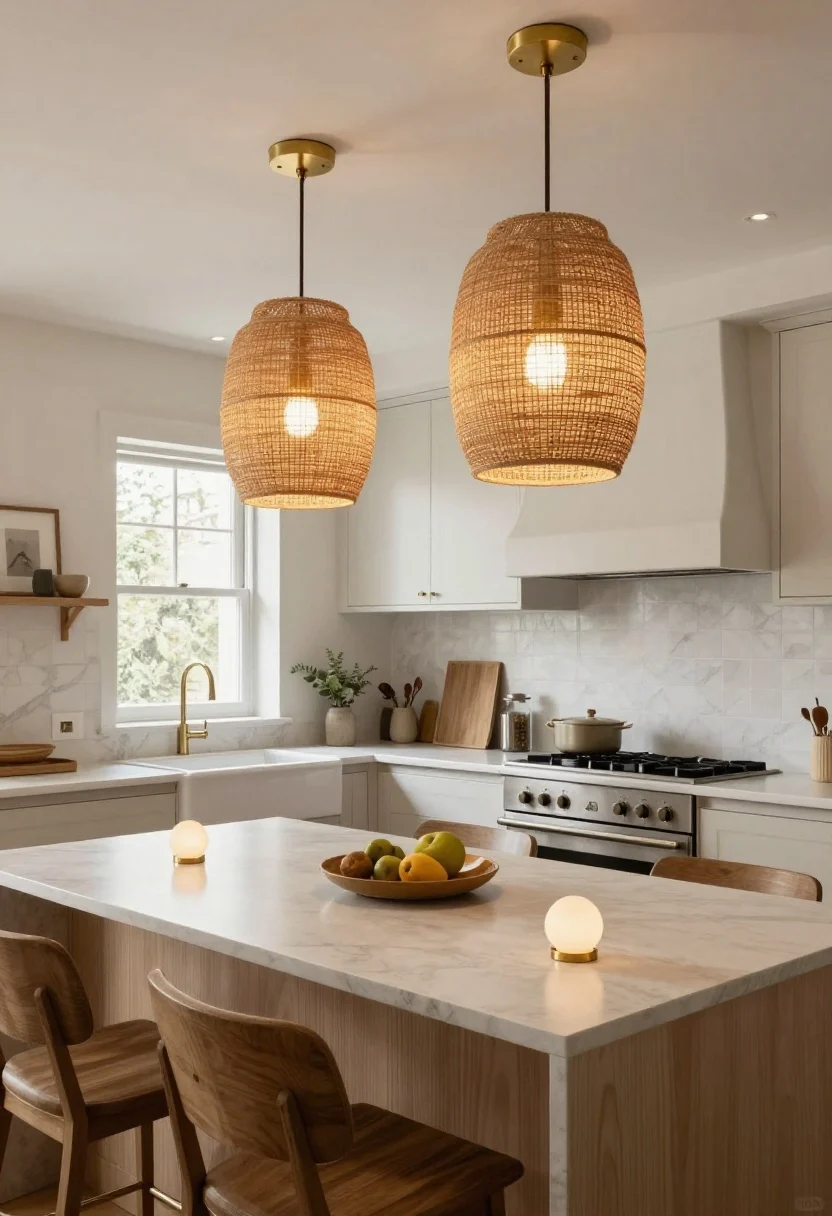
Yes, light quality matters—but so does the vibe. Tie your fixture finishes to your hardware or mix intentionally for a layered look.
Finish + Form Combos That Work
- Modern Organic: Linen or rattan pendants, warm brass accents, soft 2700K bulbs.
- Transitional: Opal glass globes with aged brass or polished nickel; clean lines and dimmable LEDs.
- Minimalist: Slim black linear pendants, recessed downlights with low-glare baffles.
- Industrial Cozy: Matte black domes, visible but warm filament-style LEDs (dimmable, of course).
Scale is your friend. Bigger fixtures feel custom, but keep sightlines clear—especially around a hood or sink window. IMO, one bold piece per zone is enough. Let it breathe.
What to shop for: Globe pendants, ribbed glass shades, matte black linear lights, brass or nickel hardware to coordinate.
Quick Installation And Safety Tips
- When in doubt, hire a licensed electrician. Hidden junction boxes are a no.
- Use UL-listed or equivalent rated fixtures, especially near sinks and ranges.
- Confirm CEC/Title 24 or local code requirements for high-efficacy lighting if you’re in a regulated area.
Room-By-Room Mini Playbook
- Small Galley: Continuous under-cabinet LEDs + two flush-mounts, all on dimmers. Light the toe-kick for night navigation.
- Open-Concept: Define the kitchen zone with a striking linear pendant over the island and softer cans on the perimeter.
- Eat-In Nook: Add a fabric drum pendant on a dimmer—cozier breakfasts, moodier dinners.
Bulb Basics (So You Don’t Return Them Twice)
- Base Type: Check if your fixture wants E26, GU10, or integrated LEDs.
- Dimmable: Not all LEDs dim well—match bulbs to your dimmer model.
- Color Temperature: Keep it consistent across zones for cohesion: 2700K–3000K for ambient/pendants, 3000K–3500K for task.
FAQ
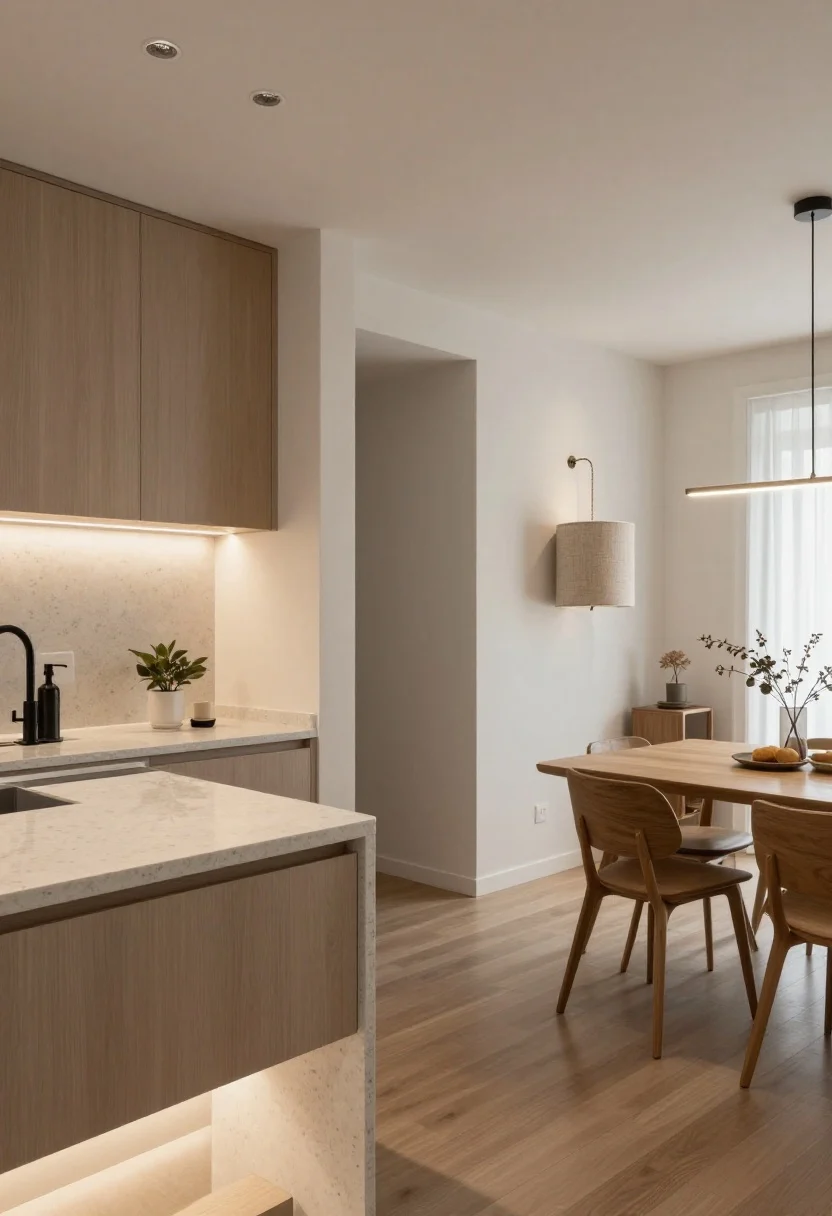
How many recessed lights do I actually need?
Start with one recessed light for every 4–6 feet of ceiling space, placing them about 24–30 inches out from the wall to wash countertops. Then fill gaps with pendants and under-cabinet lighting so you’re not relying on cans alone.
What’s the best lighting for renters?
Look for plug-in pendants with ceiling hooks, battery or plug-in under-cabinet strips, and smart bulbs or plug-in dimmers. Add peel-and-stick LED tape on shelves and toe-kicks for instant glow without drilling.
Are integrated LED fixtures worth it?
Yes if you want sleek profiles, excellent diffusion, and long life. Just choose reputable brands with replaceable drivers and good warranties. If flexibility matters, pick fixtures that accept standard dimmable bulbs.
Final Take
Great kitchen lighting is equal parts beauty and function. Layer your sources, dial in color temperature and CRI, and let dimmers do the heavy lifting. Do this right and every meal—yes, even Tuesday pasta—will feel like a moment. Now go make your backsplash famous.
Shop the Look on Amazon
Disclosure: As an Amazon Associate, this site may earn from qualifying purchases.
These product categories fit this article and give readers an easy next step when they are ready to shop.
- Task Lighting — Bright, shadow-free prep zones with dimmable control.
- Island Pendants — Scale and spacing elevate islands and sightlines.
- Ambient Layer — Even room lighting for daily use and scenes.
- Accent Tape — Toe-kick, shelf, and backsplash glow for drama.
- Lighting Controls — Create zones and scenes; keep temperatures consistent.
Pingback: Paris Apartment Style: Quiet Luxury for Your Home
Pingback: English Cottage Decor: Effortless, Cozy, Timeless Style