
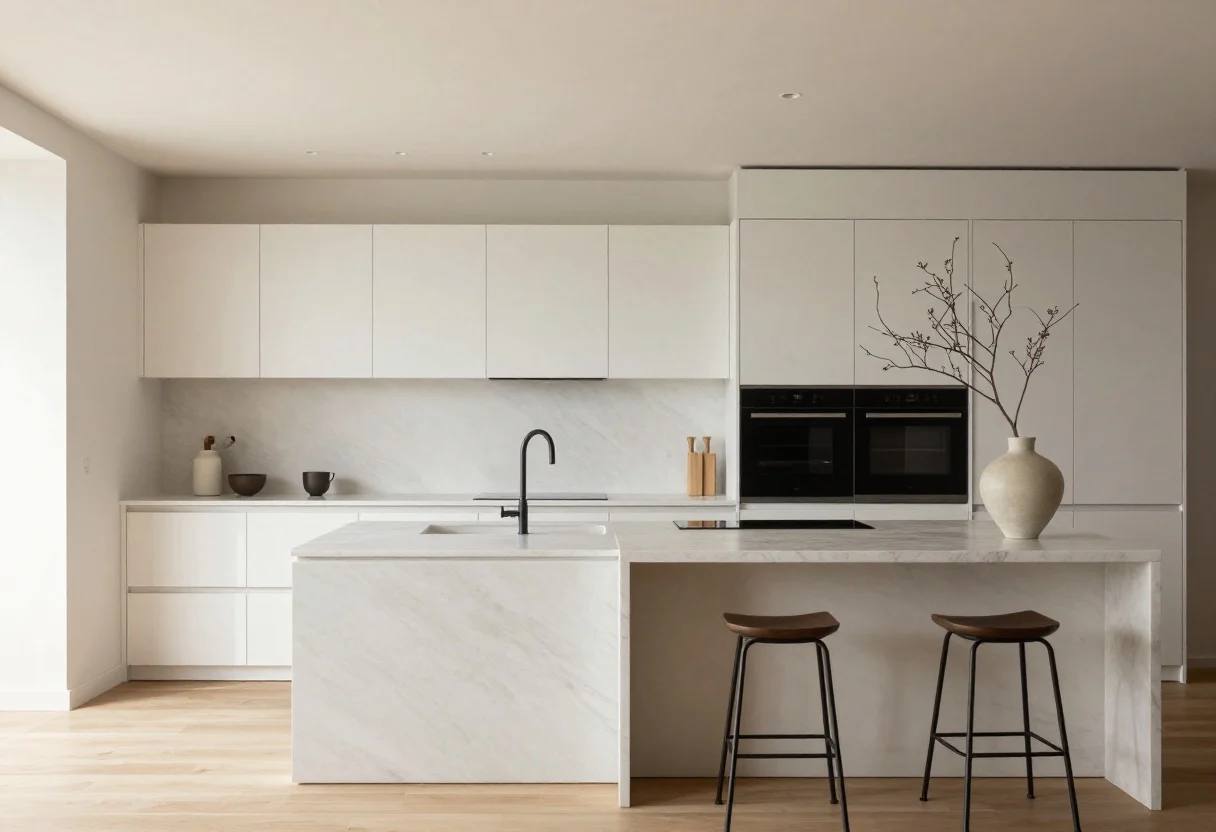
Minimalist Kitchen Design Ideas That Make Cooking Feel Effortless
Your kitchen should feel like a deep breath, not a juggling act. If cluttered counters and mismatched mugs are stressing you out, minimalist design is your new bestie. Let’s create a kitchen that looks chic, works hard, and doesn’t scream “Where does this go?!” every time you unload the dishwasher.
1. Edit Like a Designer: Curate What You Actually Use
© 2025 AI Illustrator — Inspiration Only
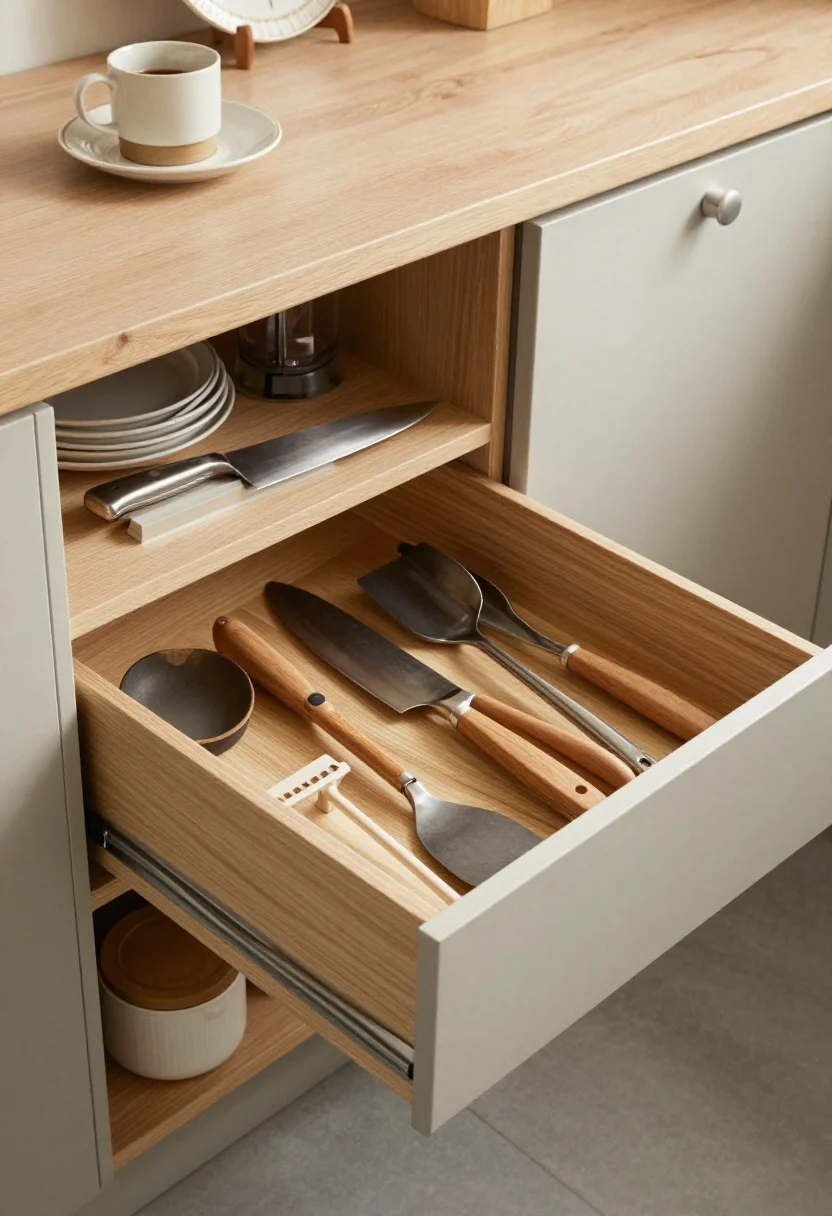
Minimalism starts with editing. It’s not about owning nothing—it’s about keeping the right things. Open your drawers and be brutally honest: are you really using three spatulas and a broken garlic press?
Which Home Style Fits Your Space?
Answer 5 quick questions to find your perfect interior style and inspiration.
Keep daily-use items accessible and stash specialty tools out of sight. When every object has a purpose, your kitchen immediately feels calmer and more intentional.
Quick declutter strategy
- Create three zones: Daily (coffee mug, chef’s knife), Weekly (sheet pans, blender), Occasional (holiday platters).
- Store by frequency: eye level for daily, lower cabinets for weekly, high shelves for occasional.
- Limit duplicates. FYI: one great knife beats five mediocre ones.
What to shop for: drawer organizers, lidded bins, a magnetic knife strip, shelf risers.
2. Set a Calm Color Story (And Stick to It)
© 2025 AI Illustrator — Inspiration Only
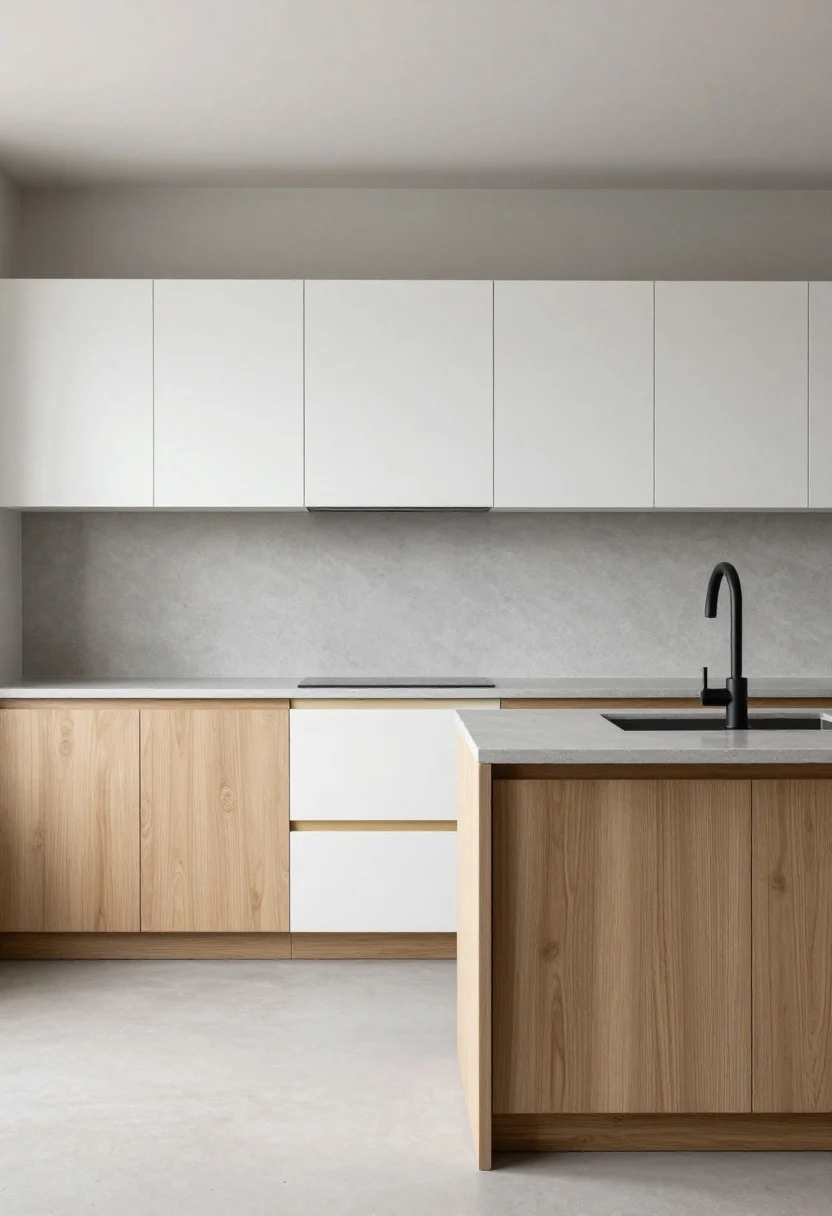
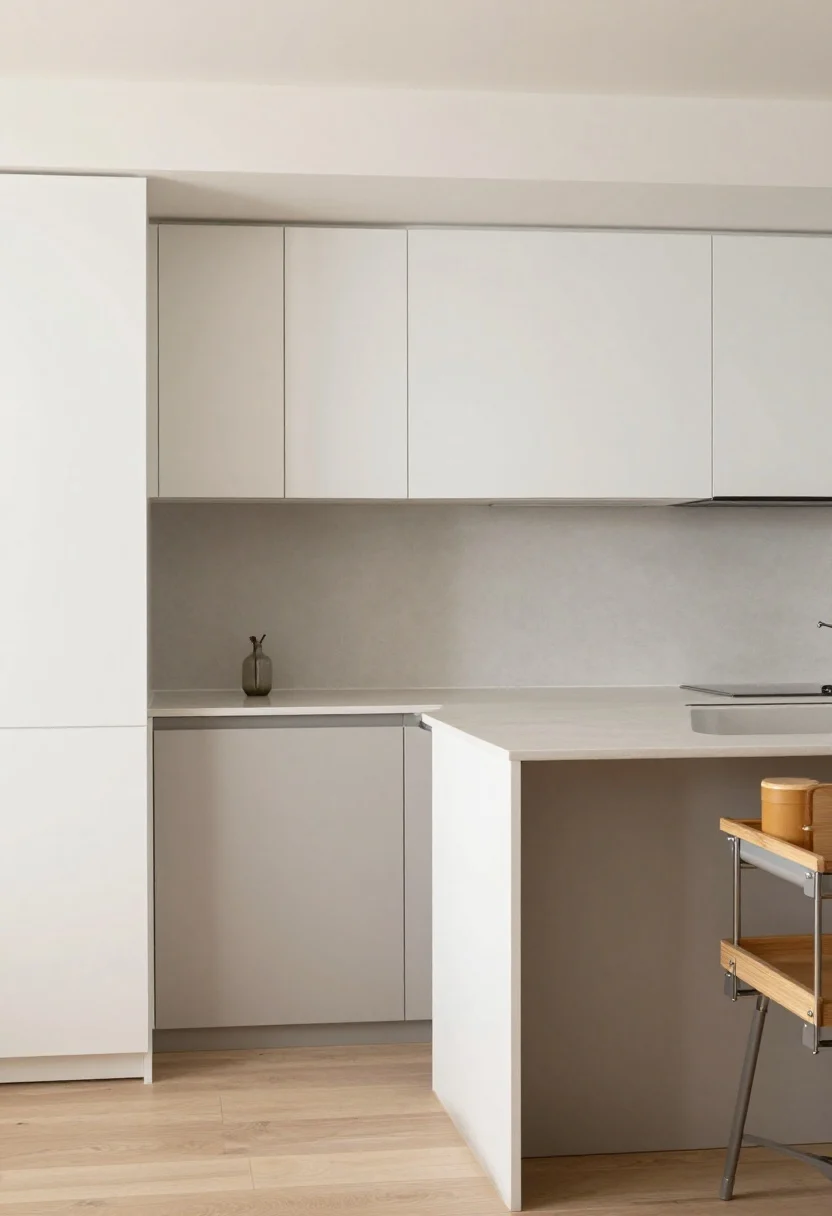
Color is the quickest way to make a kitchen feel minimalist and polished. Choose a tight palette—think warm whites, soft grays, muted greige, or natural wood tones—and repeat it across cabinets, counters, and backsplash.
Want contrast? Go for one statement element (matte black faucet, dark island) and keep everything else whisper-quiet. Consistency is your secret weapon.
Palette pro tips
- Match undertones: pair cool whites with cool grays; warm whites with oak or brass.
- Use texture, not color, for interest: fluted wood, honed stone, or vertical paneling.
- If you love color, anchor it: one muted hue on lower cabinets, neutral uppers, simple hardware.
What to shop for: paint samples, peel-and-stick backsplash, cabinet hardware in one finish.
3. Hide the Chaos: Storage That Works Overtime
© 2025 AI Illustrator — Inspiration Only
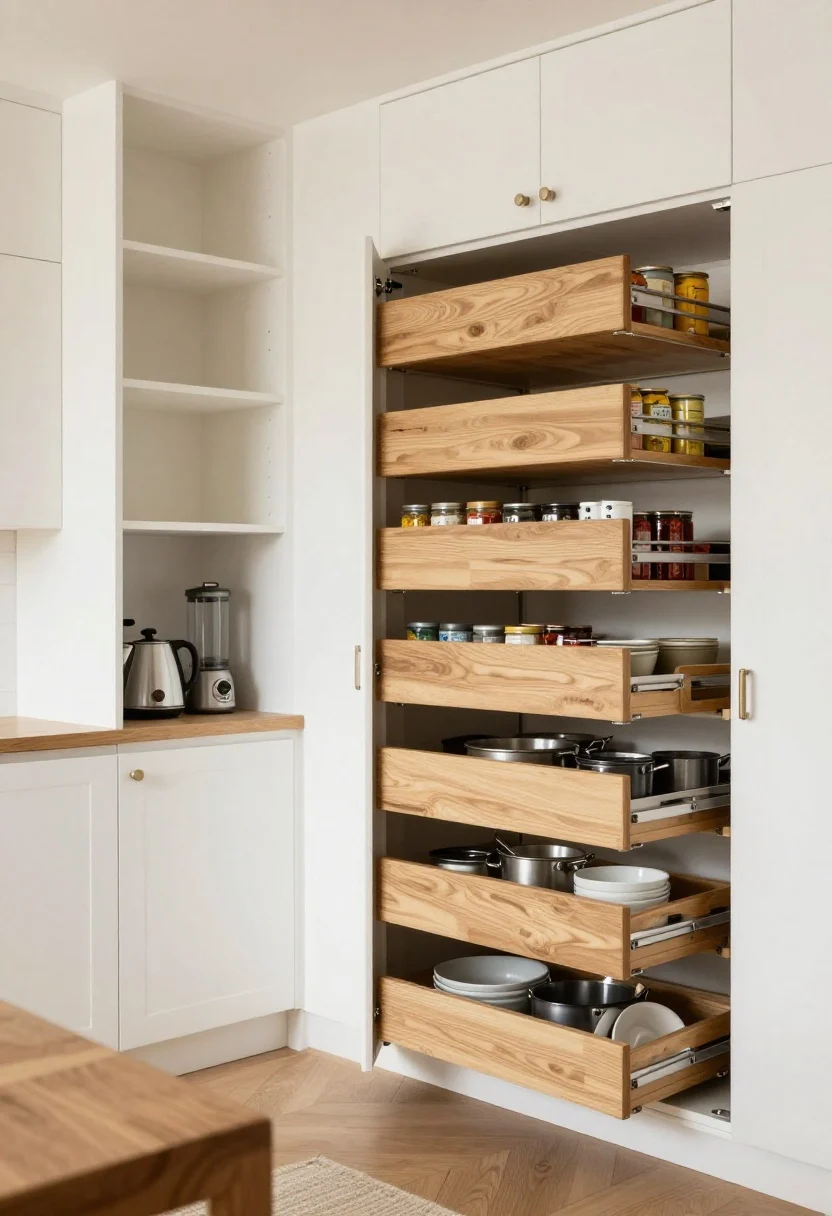
Minimalist kitchens look easy because the systems do the hard work. Prioritize storage that keeps visual noise out of sight—no more cereal boxes on top of the fridge.
Think full-height cabinets, deep drawers with dividers, and a dedicated zone for appliances you don’t want on the counter 24/7. Your future self will thank you.
Smart storage upgrades
- Deep drawers for pots, pans, and mixing bowls—plus peg dividers so nothing slides.
- Pull-out pantries for cans and spices; label shelves by category to keep it honest.
- Appliance garage with a lift-up door for toaster, kettle, and blender.
- Tray dividers vertical for sheet pans and cutting boards—zero stacking drama.
What to shop for: drawer inserts, pull-out shelves, lazy Susans, canisters with airtight lids.
4. Counters: Clear, But Not Clinical
© 2025 AI Illustrator — Inspiration Only
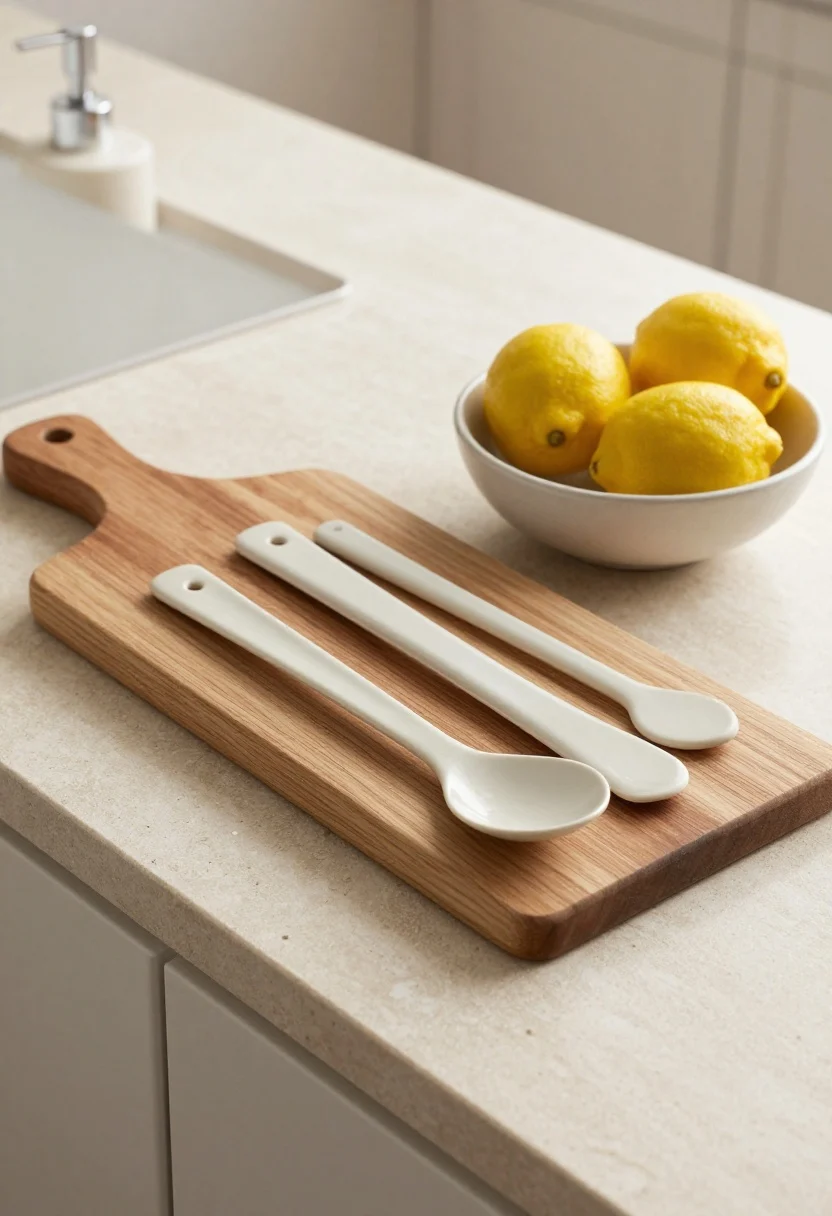
Minimalist doesn’t mean soulless. Keep counters mostly clear, then style one tight vignette: a wood board, a ceramic crock with three utensils, and a low bowl of lemons. Done. Chic.
Group items on a tray to reduce visual clutter and make cleaning simple. Bonus: your sink suddenly feels bigger and your prep space triples. Magic.
Countertop rules of thumb
- Only leave what you use daily: coffee maker, soap, and a board—maybe.
- One material, multiple finishes: wood board + matte crock + stone counter = quiet contrast.
- Corral small things on a tray so they read as one object, not five.
What to shop for: neutral trays, ceramic utensil crocks, wood cutting boards, simple soap dispensers.
5. Lighting With Intention: Layered, Warm, and Matte
© 2025 AI Illustrator — Inspiration Only
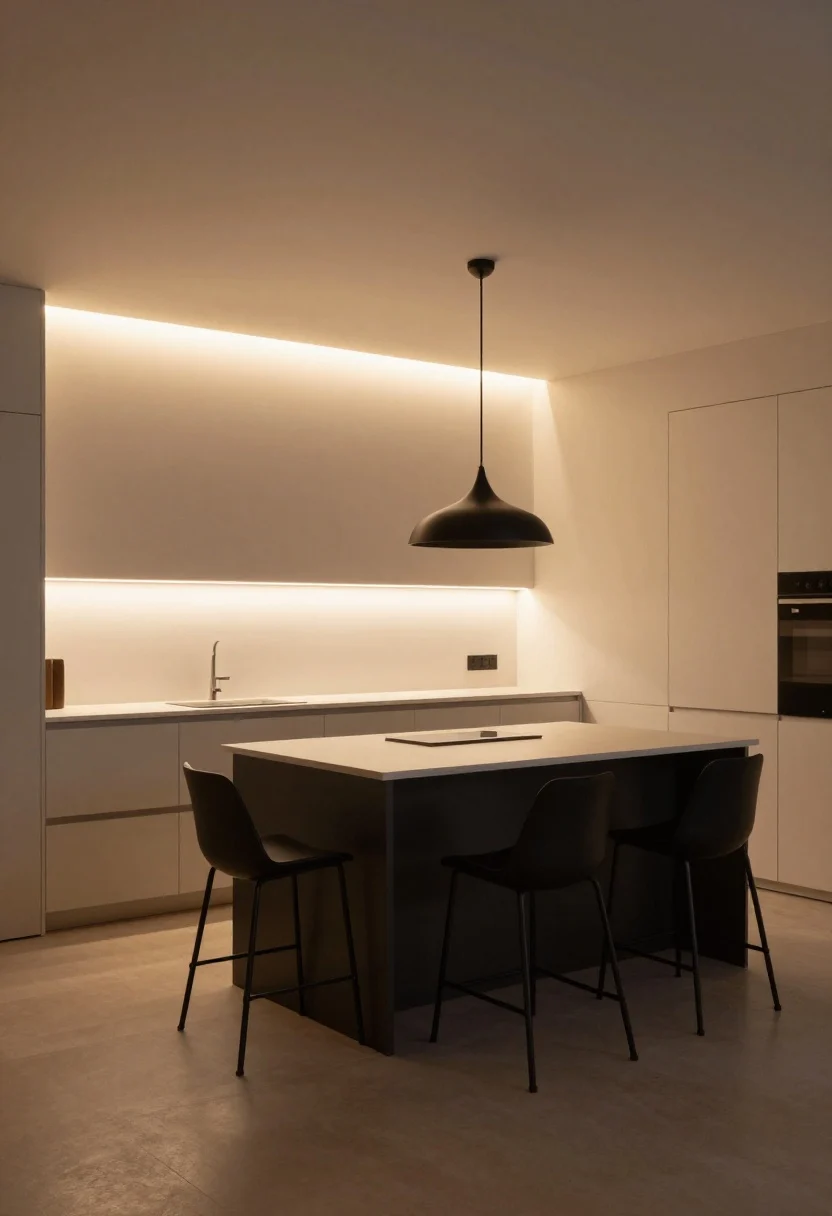
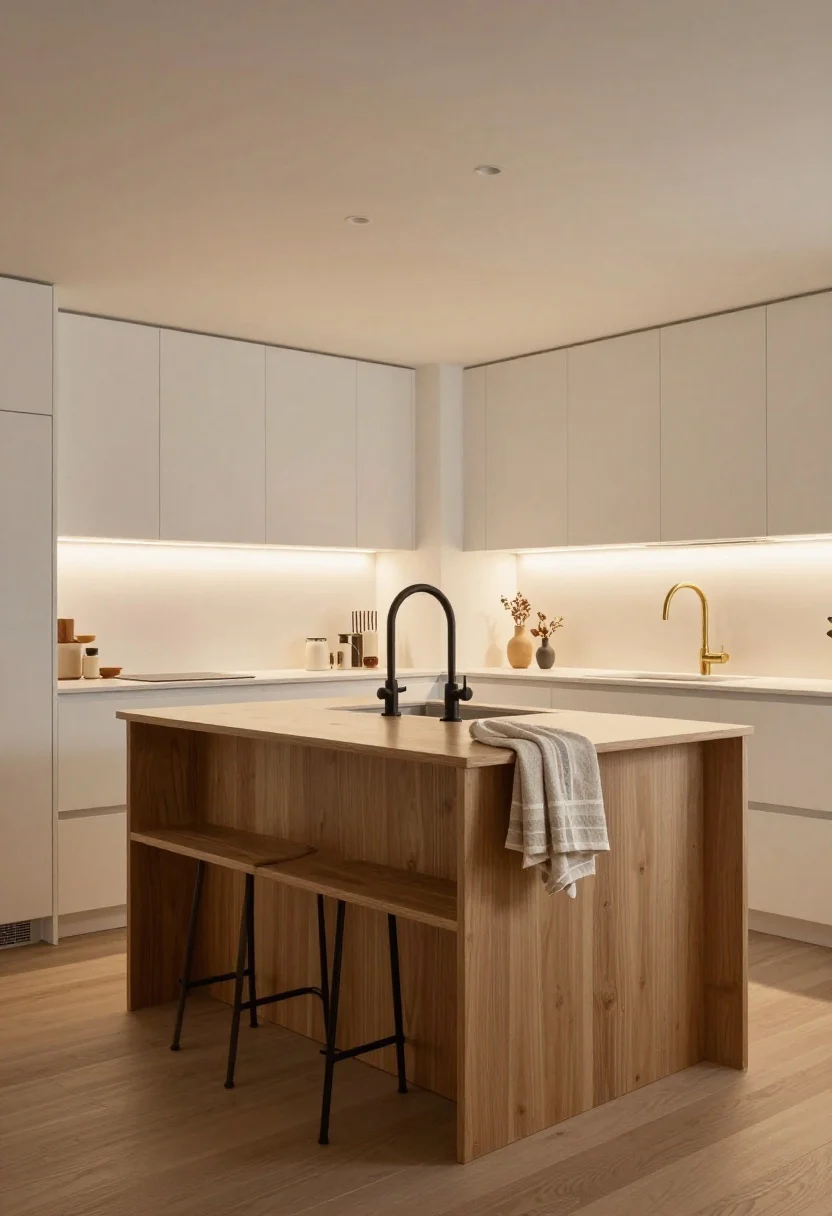
Lighting makes or breaks minimalism. You want layers: ambient (ceiling), task (under-cabinet), and accent (pendants or a small sconce). Aim for warm LEDs around 2700–3000K so your kitchen feels inviting, not clinical.
Keep fixtures streamlined—matte black, brushed brass, or soft white. If your pendant is sculptural, keep hardware quiet to avoid a visual food fight.
Which Living Room Color Palette Fits You Best?
Discover the palette that reflects your style — take our free quick quiz and get instant decor inspiration!
Take the Quiz NowLighting checklist
- Under-cabinet strips for shadow-free chopping. Hide the wiring—your future photos will thank you.
- A dimmer on everything, IMO. Morning coffee vs. dinner party mood, solved.
- One statement pendant over the island; avoid multiples if your space is small.
What to shop for: LED strips, low-profile flush mounts, minimalist pendants, dimmer switches.
6. Materials That Patina Gracefully
© 2025 AI Illustrator — Inspiration Only
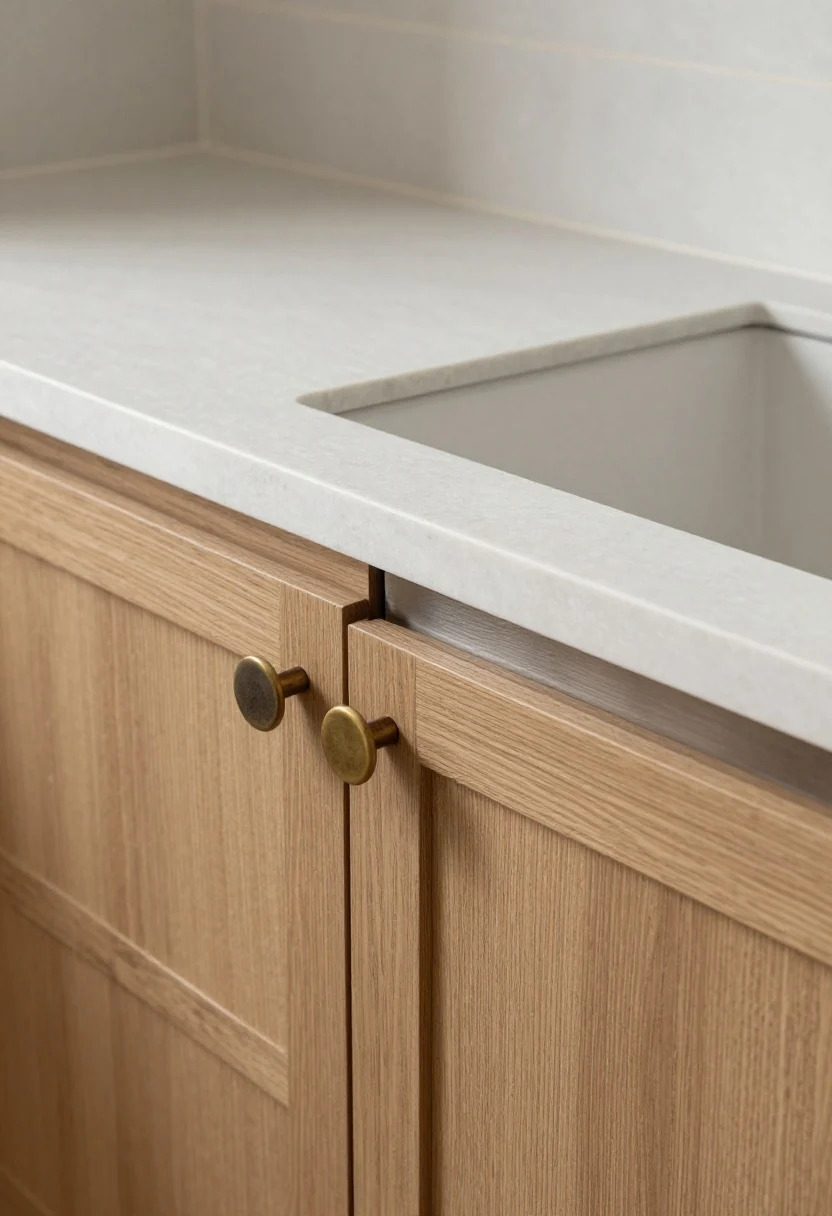
Minimalism loves materials that age well. Go for finishes that look good even when life happens: honed quartz or granite, soapstone, oak, birch, stainless, and unlacquered brass if you like a little patina.
Hardware should feel good in the hand and vanish visually. Flat-front or Shaker cabinets keep lines clean, and integrated handles or extended rails reduce clutter.
Finish strategies
- Matte beats glossy for a softer, high-end feel and fewer fingerprints.
- Choose one hero material—like a wood island—and let everything else support it.
- Backsplash: slab or tight-set tile with minimal grout. Yes to easy cleaning.
What to shop for: quartz or stone samples, matte cabinet pulls, wood finishes, simple slab backsplash materials.
7. Rituals and Zones: Design for How You Live
© 2025 AI Illustrator — Inspiration Only
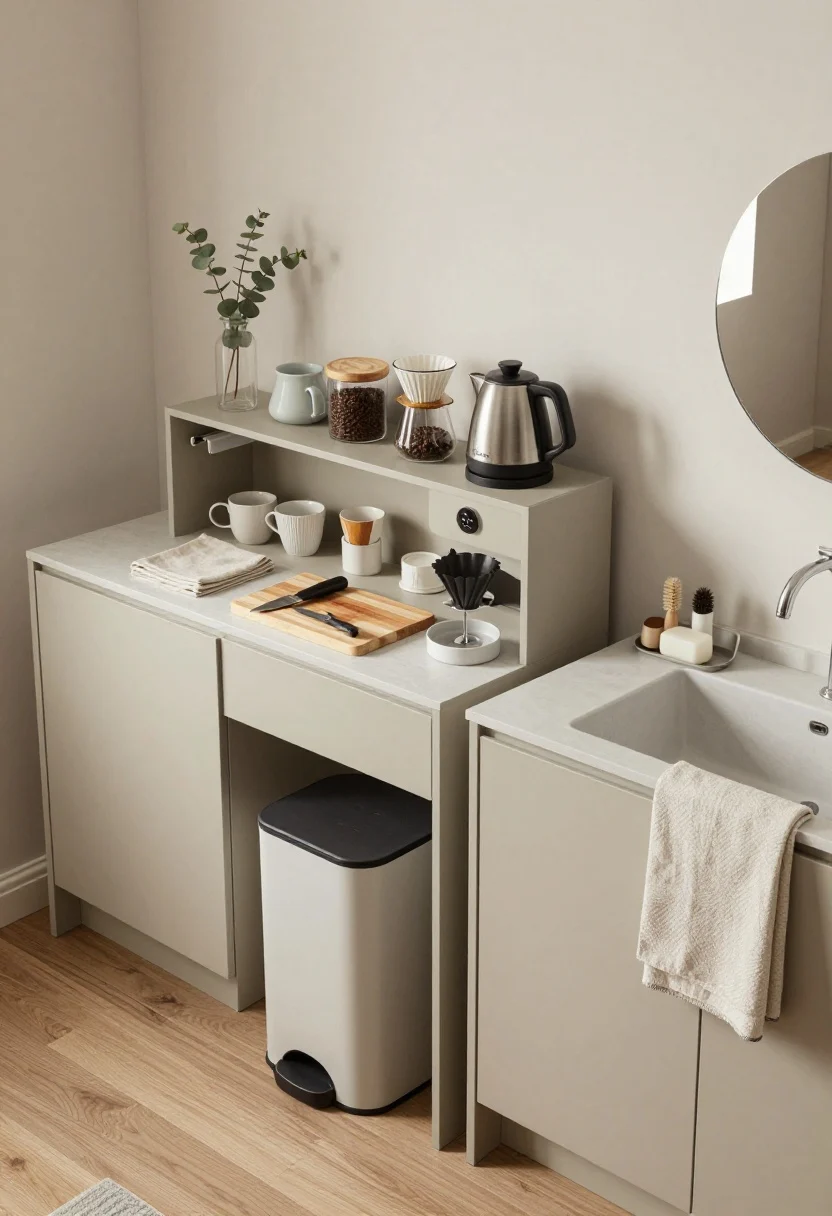
A minimalist kitchen works because it respects your routines. Build zones around daily rituals: coffee, prep, cook, clean. Keep everything for each task within arm’s reach. It’s not just tidy—it’s efficient.
Then layer in small rituals that make the space feel human: a stem of eucalyptus by the sink, a linen towel that matches your palette, a single open shelf with everyday bowls. Beautiful, but also useful.
Zone ideas
- Coffee station: mugs, beans, filters, kettle—all in one cabinet or drawer nearby.
- Prep hub: boards, knives, towels, trash access. No zig-zagging across the room.
- Clean zone: sink caddy with brush and soap, compost bin tucked but reachable.
What to shop for: lidded bins for coffee/tea, knife blocks or strips, linen towels, sink caddies.
FAQ
© 2025 AI Illustrator — Inspiration Only
How do I make a small kitchen feel minimalist without a renovation?
Declutter aggressively, switch to a tight color palette, add under-cabinet lighting, and install a few pull-out organizers. Clear the counters and limit decor to one simple vignette.
Can minimalist kitchens still feel warm and cozy?
Absolutely. Use warm whites, wood tones, matte finishes, and layered lighting. Add soft textures like linen towels and a small rug in a neutral stripe or solid.
What’s the best hardware finish for a minimalist look?
Matte black, brushed nickel, or soft brass all work. The key is consistency—pick one finish and repeat it across pulls, faucet, and lighting for a calm, unified feel.
Conclusion
© 2025 AI Illustrator — Inspiration Only
Minimalist kitchens aren’t about austerity—they’re about intention. Curate what you use, choose a soothing palette, layer smart storage and lighting, and let materials do the talking. Keep it simple, keep it beautiful, and make space for the good stuff—like late-night snacks and weekend pancakes.
Shop the Look on Amazon
Disclosure: As an Amazon Associate, this site may earn from qualifying purchases.
These product categories fit this article and give readers an easy next step when they are ready to shop.
- Declutter tools — Streamlines utensils and keeps daily items accessible.
- Easy updates — Sets a cohesive color story without renovation.
- Smart storage — Hides clutter and improves cabinet access.
- Task lighting — Adds warm layers and shadow-free prep zones.
- Counter styling — Keeps essentials visible while reducing visual noise.
2 Comments
Comments are closed.