
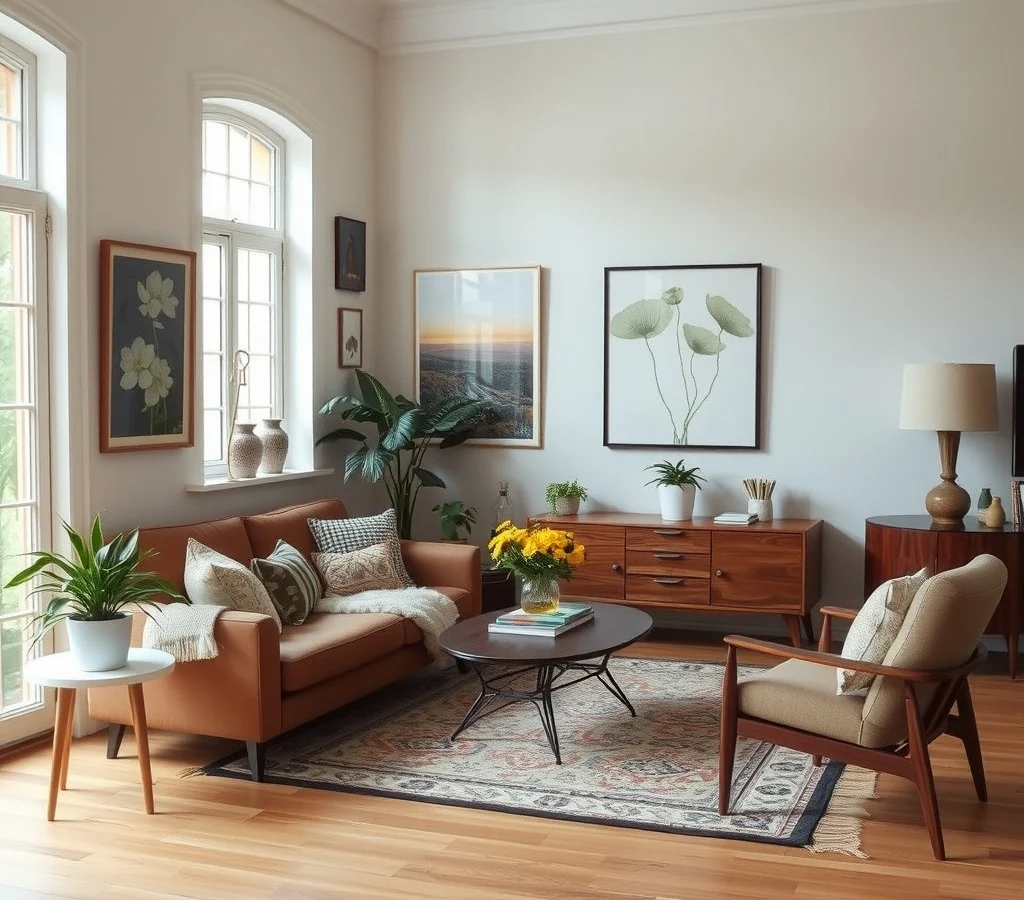
Vintage Modern Living Room Ideas That Mix Old Furniture With Clean Lines
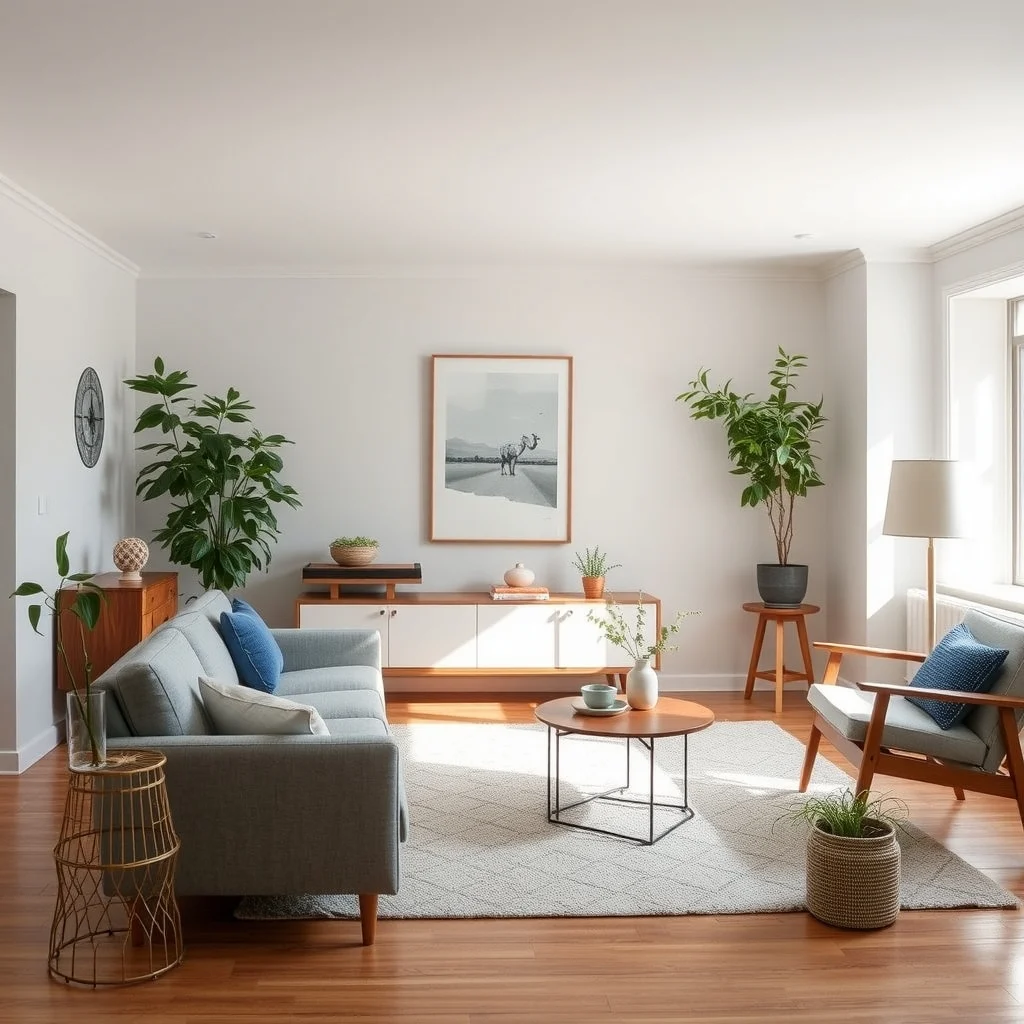
Many of us inherit a beloved armchair, a mid‑century coffee table, or a set of brass lamps that have been part of the family for decades. When those pieces sit beside sleek, contemporary sofas and minimalist shelving, the room can feel disjointed unless the elements are thoughtfully combined. In this article you’ll discover seven ways to bring together the charm of vintage items and the clarity of modern design, each explained with practical details about layout, material choices, lighting, and everyday use. By the end, you’ll have a roadmap for creating a living room that feels both lived‑in and deliberately curated.
1. Pair a classic wingback chair with a streamlined sectional
© 2026 AI Illustrator — Inspiration Only
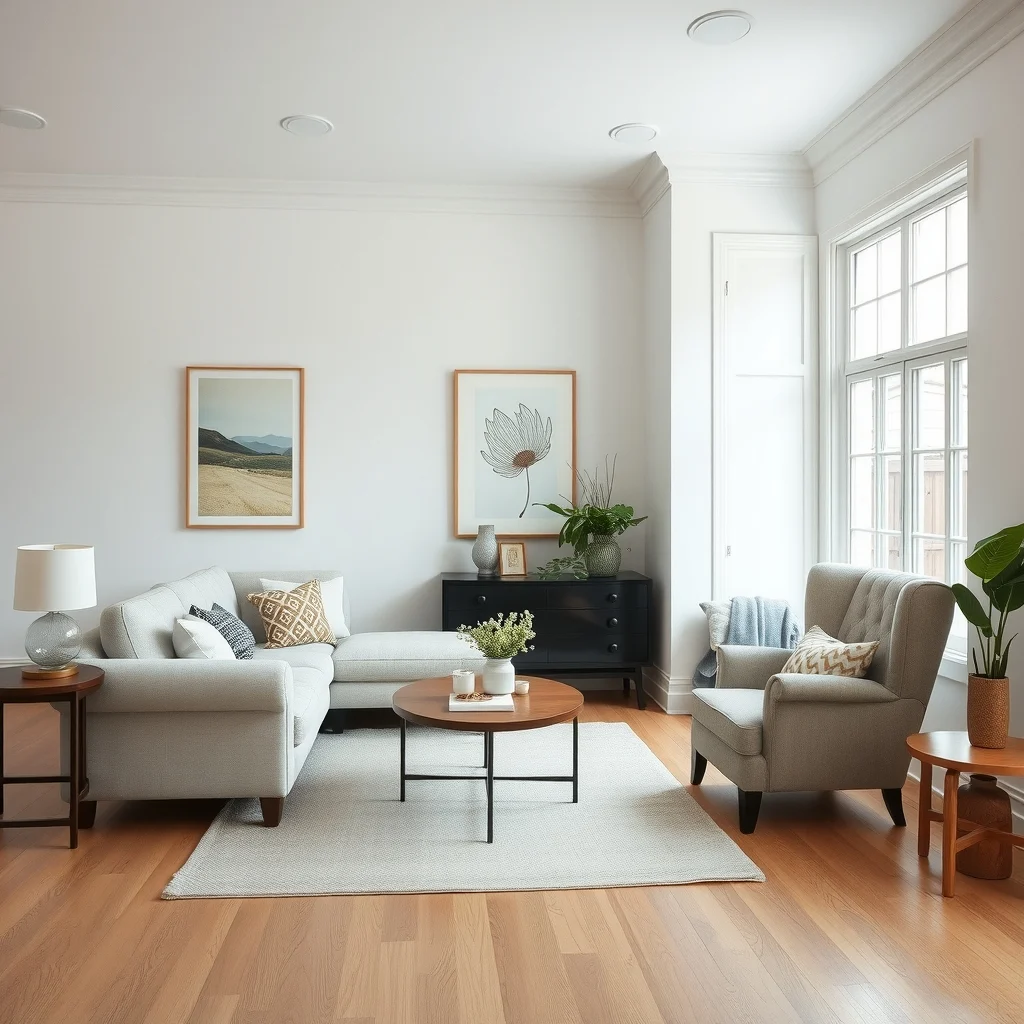
Imagine a low‑profile sectional in a soft, neutral linen, its clean silhouette anchored by a single wingback chair rescued from a thrift shop. The chair’s rolled arms and tufted back introduce a sense of history, while the sectional’s straight lines keep the overall feel airy. Position the wingback near a side table with a brushed‑brass base; the metal finish echoes the brass hardware often found on vintage pieces, creating a subtle visual link. Because the chair occupies less floor space than a matching sofa, you maintain an open plan without sacrificing seating. The trade‑off is that the wingback’s deep cushioning can feel firmer than the sectional’s plush cushions, so consider adding a thin throw in a muted teal to soften the contrast. This arrangement works especially well in rooms with ample natural light, as the daylight highlights the chair’s fabric texture without overwhelming the modern palette.
Which Home Style Fits Your Space?
Answer 5 quick questions to find your perfect interior style and inspiration.
2. Use reclaimed wood as a bridge between eras
© 2026 AI Illustrator — Inspiration Only
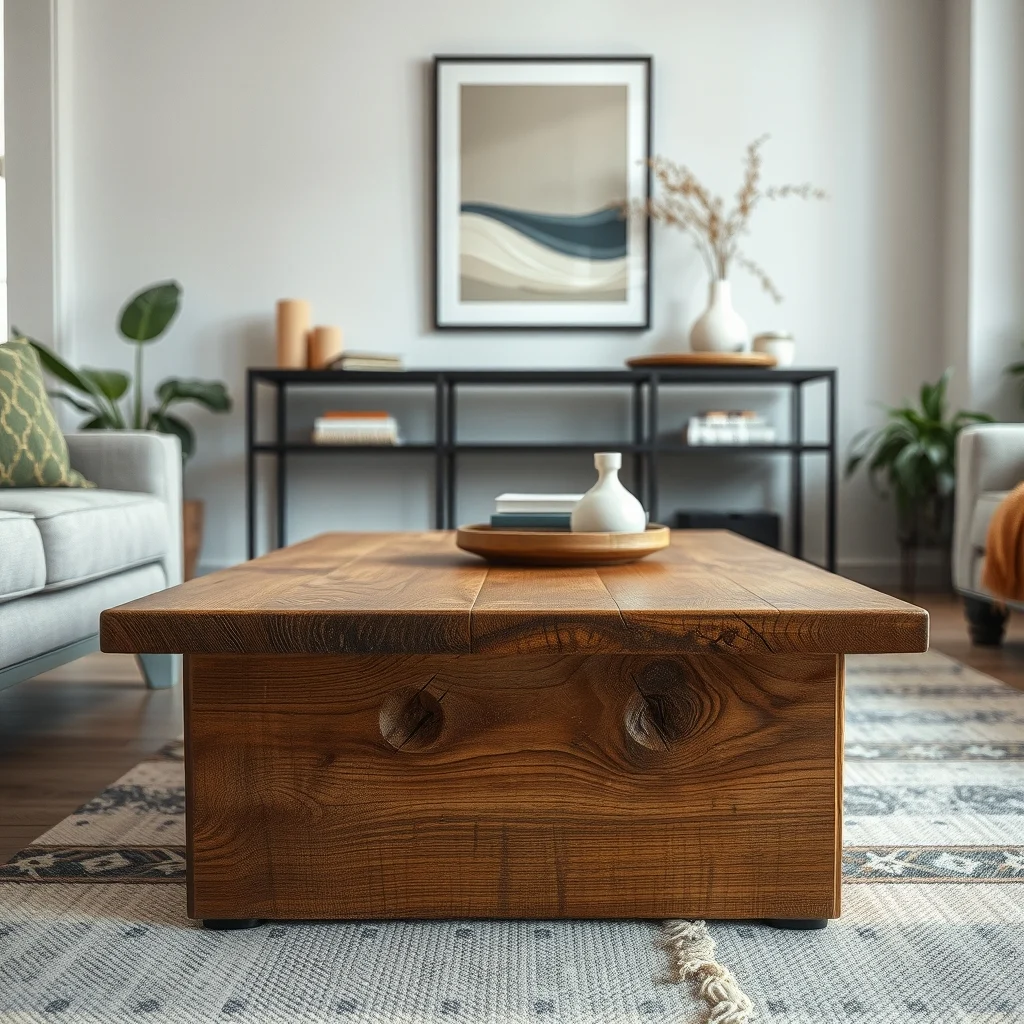
A reclaimed oak coffee table with a raw edge can sit comfortably beneath a glass‑top modern console. The table’s patina and occasional nail holes speak to its past life, while the glass surface preserves the sense of spaciousness prized in contemporary interiors. When you place a few curated objects—perhaps a ceramic vase in soft terracotta and a stack of contemporary design books—on the surface, the juxtaposition feels intentional rather than accidental. Reclaimed wood tends to darken over time, so choose a finish that stabilizes the surface if you plan to use it for everyday items like remote controls or coasters. The downside is that heavy foot traffic can reveal scratches more readily than a sealed modern table, so a protective pad under high‑use areas can extend its life.
3. Introduce a vintage rug under a minimalist floating floor
© 2026 AI Illustrator — Inspiration Only
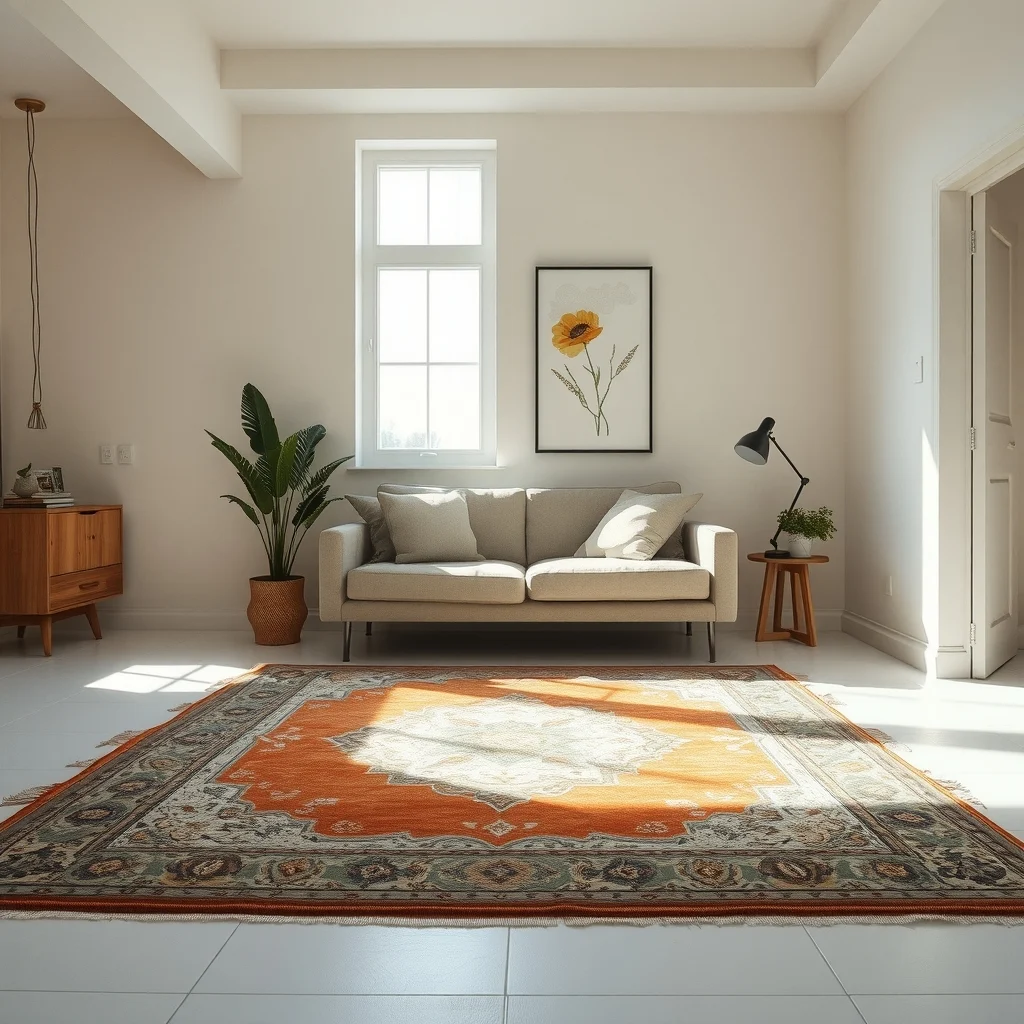
Placing a Persian‑style rug with muted amber and sage tones under a floating laminate floor creates a tactile foundation that grounds the room. The rug’s intricate pattern adds depth without competing with the clean lines of the surrounding furniture. Because the rug is anchored to the floor, you avoid the visual clutter that can result from hanging wall art directly above it. When selecting a rug, look for a lower pile that resists matting; this keeps the modern aesthetic crisp while still offering the comfort of a soft surface underfoot. One consideration is that rugs can trap dust, so a regular vacuum with a gentle brush attachment will keep both the rug and the modern floor looking fresh.
4. Combine brass lighting fixtures with matte finishes
© 2026 AI Illustrator — Inspiration Only
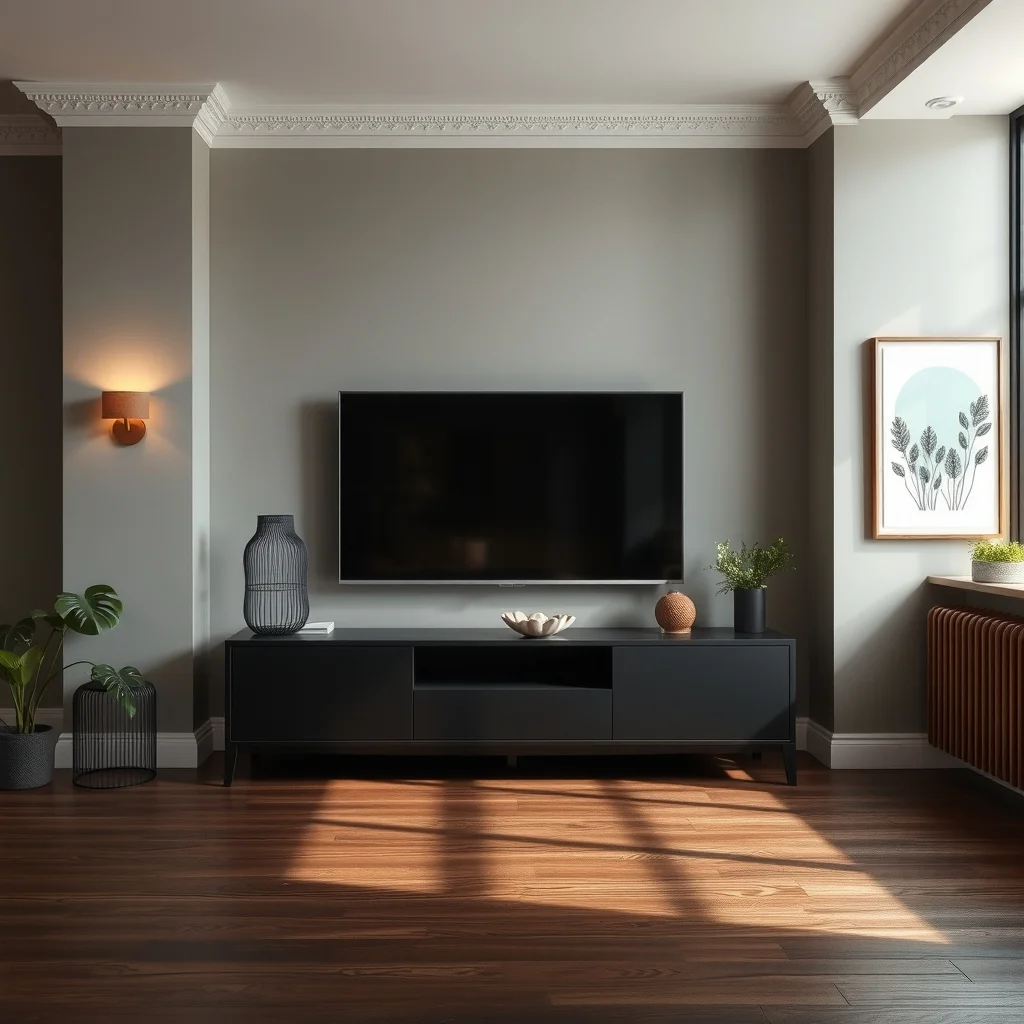
A pair of vintage brass sconces flanking a sleek, matte‑black TV console introduces a warm glow that balances the room’s cooler tones. The brass’s aged patina reflects light differently than a contemporary chrome lamp, adding visual interest without overwhelming the space. Position the sconces at eye level to create layered illumination that highlights artwork or a gallery wall of black‑and‑white photographs. While brass ages gracefully, it can develop a greenish hue if exposed to high humidity; placing a small humidity‑absorbing tray nearby helps preserve the original finish. This lighting strategy works well in evenings when the warm light softens the clean lines of modern furniture, making the room feel inviting.
5. Curate a gallery wall with vintage frames and contemporary prints
© 2026 AI Illustrator — Inspiration Only
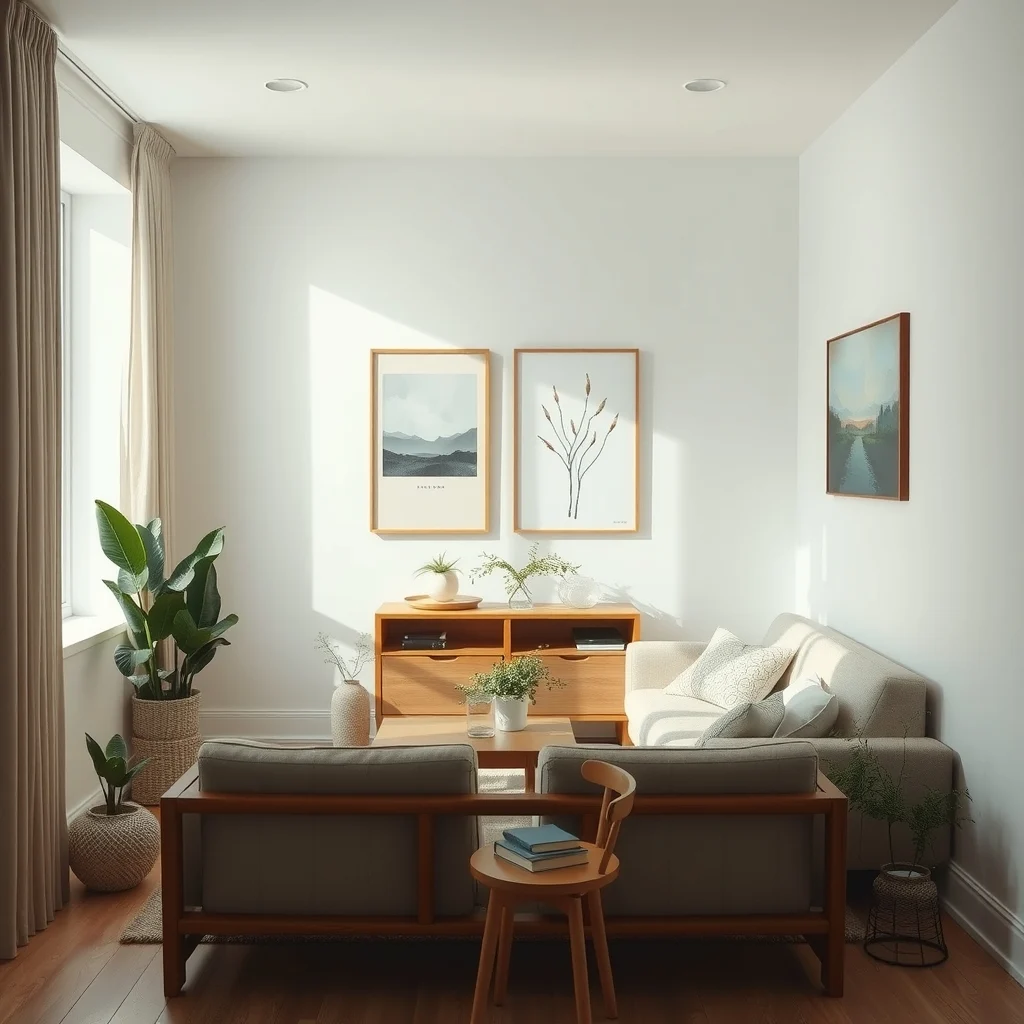
Mixing a set of 1930s walnut picture frames with modern abstract prints yields a wall that feels both personal and curated. The frames’ deep grain and slightly rounded corners contrast nicely with the crisp edges of the new artwork, creating a rhythm that draws the eye across the display. To keep the arrangement from feeling chaotic, limit the color palette of the prints to two or three shades that echo the room’s neutral sofa and the warm tones of the vintage frames. When hanging, start with the largest piece at eye level and fill in surrounding spaces, allowing the frames to act as visual anchors. Be aware that older frames may have loose backing; reinforcing them with small nails or museum‑grade adhesives ensures they stay secure over time.
6. Incorporate a vintage storage chest as a coffee table
© 2026 AI Illustrator — Inspiration Only
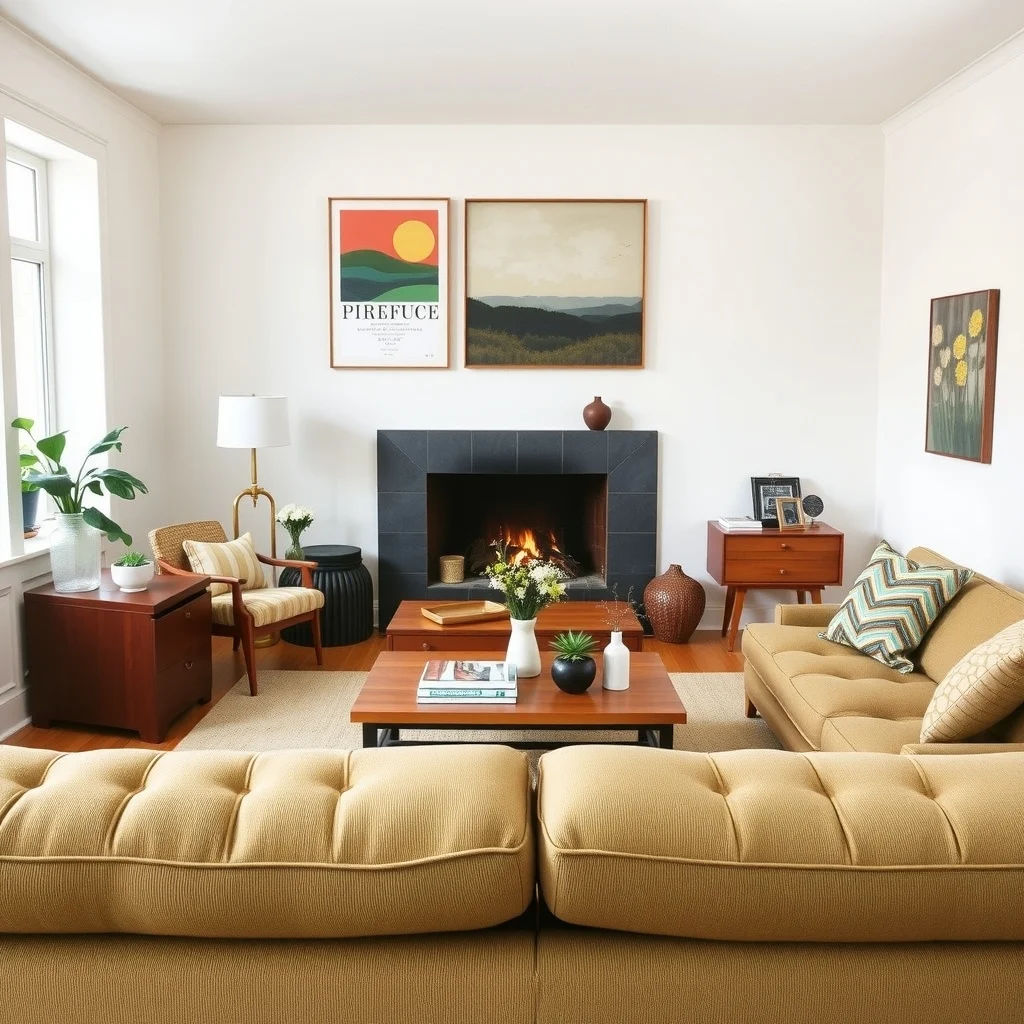
A sturdy cedar chest from the 1970s can double as a coffee table while providing hidden storage for blankets, magazines, or board games. Its solid construction and natural scent bring an organic element that softens the sleekness of a glass‑top coffee table. Position the chest on a rug that complements its warm hue, and add a low‑profile tray made of recycled acrylic to hold remote controls and coasters, keeping the surface tidy. The chest’s height often sits slightly higher than a standard coffee table, so pairing it with low‑backed seating ensures a comfortable reach. A potential drawback is the chest’s weight; moving it for cleaning or rearranging may require a second pair of hands.
7. Choose a muted color palette that unites old and new
© 2026 AI Illustrator — Inspiration Only
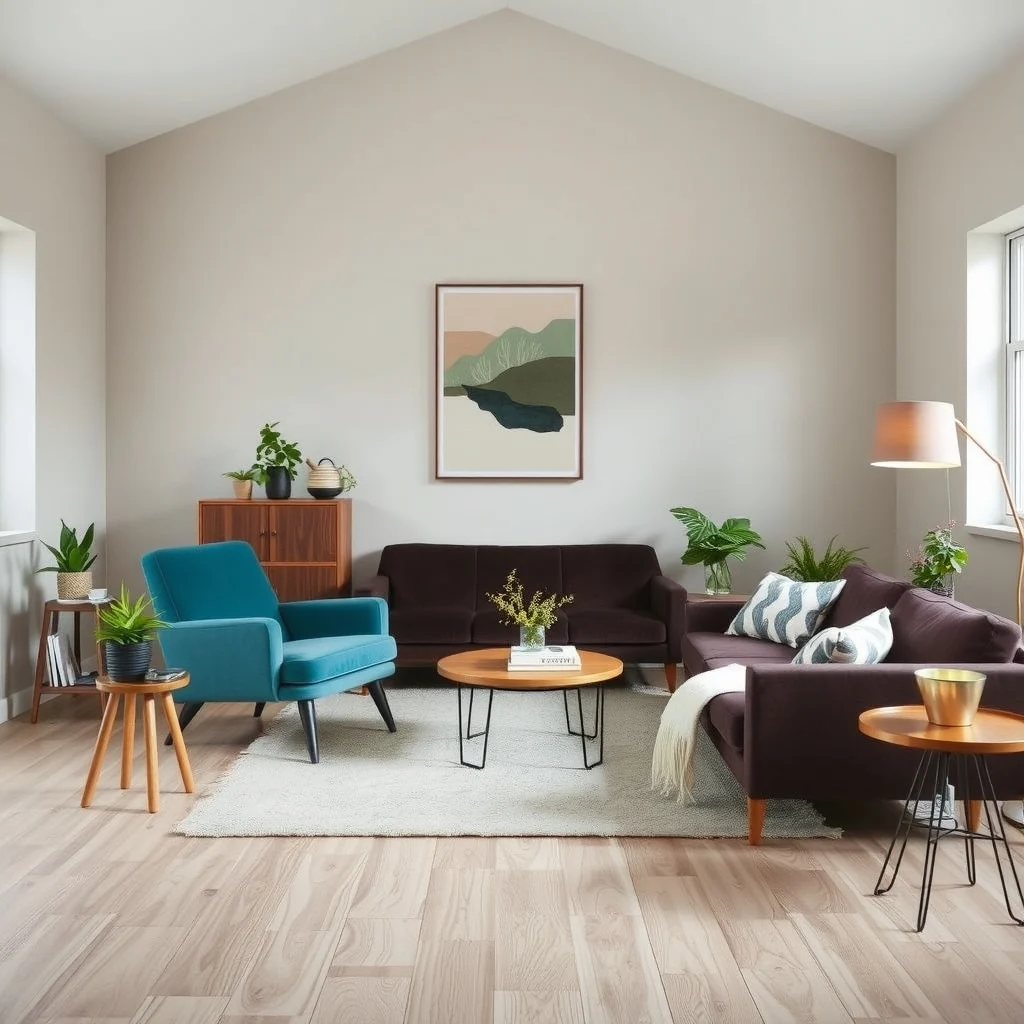
When the walls are painted in a soft greige, both vintage wood tones and contemporary steel accents find a common backdrop. This neutral canvas allows a teal velvet armchair from the 1960s to coexist with a minimalist white bookshelf without clashing. Add subtle pops of color through accessories—a mustard pillow, a deep olive plant pot, or a rust‑colored ceramic bowl—so the room feels lively yet cohesive. The advantage of a muted palette is its flexibility; you can swap out decorative items seasonally without redoing major paint work. However, if the space receives limited natural light, very light walls can feel washed out, so consider a warm undertone in the greige to retain a sense of comfort.
FAQ
© 2026 AI Illustrator — Inspiration Only
How can I protect vintage furniture from damage in a high‑traffic living room?
Use protective pads under legs and coasters, and keep a soft rug in front of frequently used pieces. Regular dusting with a microfiber cloth reduces grit that can scratch surfaces.
Is it okay to mix different metal finishes, like brass and matte black?
Yes, mixing metals works when they share a common visual weight. Pair them with neutral fabrics and wood tones to keep the overall look balanced.
What’s the best way to keep a reclaimed wood table looking fresh?
Apply a natural oil finish that penetrates the wood rather than a surface sealant. Re‑oil the table once or twice a year, depending on usage, to maintain its depth and protect against moisture.
Can I use a vintage rug on a heated floor?
A low‑pile rug with a breathable backing can sit on a heated floor without hindering heat distribution. Avoid thick, densely woven rugs that may trap heat and create uneven warmth.
Which Living Room Color Palette Fits You Best?
Discover the palette that reflects your style — take our free quick quiz and get instant decor inspiration!
Take the Quiz NowDo I need professional help to install vintage wall sconces?
Because sconces involve electrical wiring, it’s safest to hire a qualified electrician if you’re not comfortable working with circuits. This ensures the fixtures are securely mounted and meet local codes.
Final Thoughts
© 2026 AI Illustrator — Inspiration Only
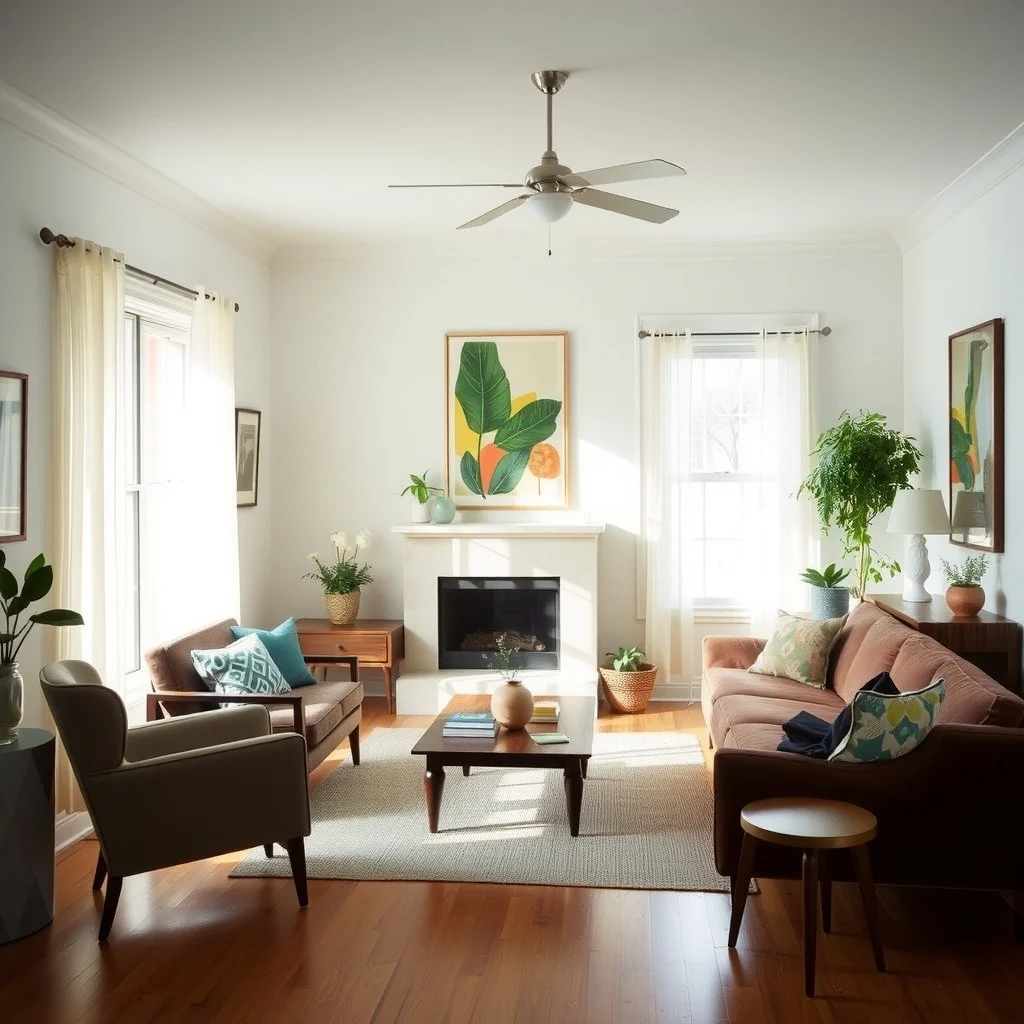
Blending vintage pieces with modern design is less about forcing contrast and more about finding points of connection—whether through material, color, or proportion. By selecting a few key items—such as a wingback chair, reclaimed wood table, or brass sconce—and pairing them with clean‑line furniture, you create a living room that feels both anchored in history and firmly of its time. Remember to consider the practical aspects of each choice, from maintenance to traffic flow, and you’ll enjoy a space that welcomes both daily life and occasional admiration.