
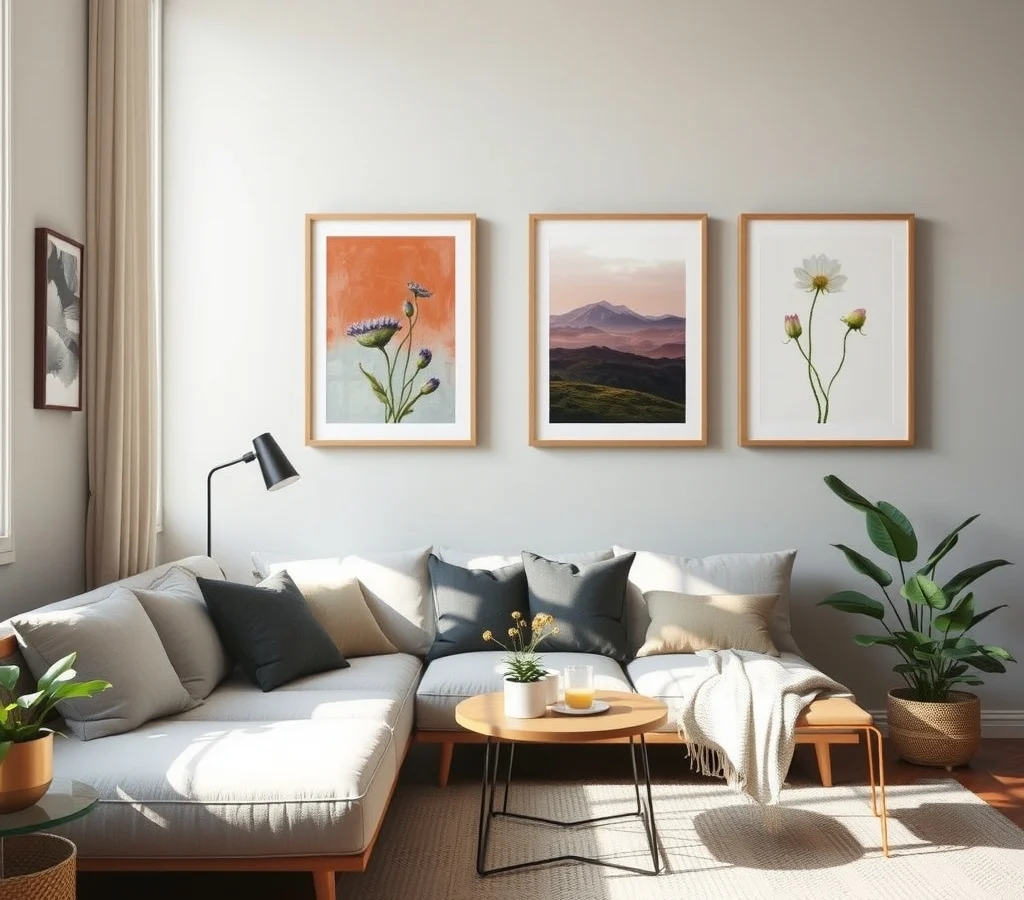
How to Decorate an Empty Wall Without Spending a Fortune
Standing in front of a bare wall can feel like looking at an unfinished canvas – there’s potential, but also a little uncertainty about where to begin. The good news is that a striking wall does not require a designer’s budget or a trip to a high‑end showroom. By mixing a few thoughtful ideas, you can turn that empty space into a focal point that reflects your style and respects your wallet. Below are seven approaches that each bring texture, color, or personality to a wall while keeping costs modest.
1. Curate a Thrift‑Store Gallery Wall
© 2026 AI Illustrator — Inspiration Only
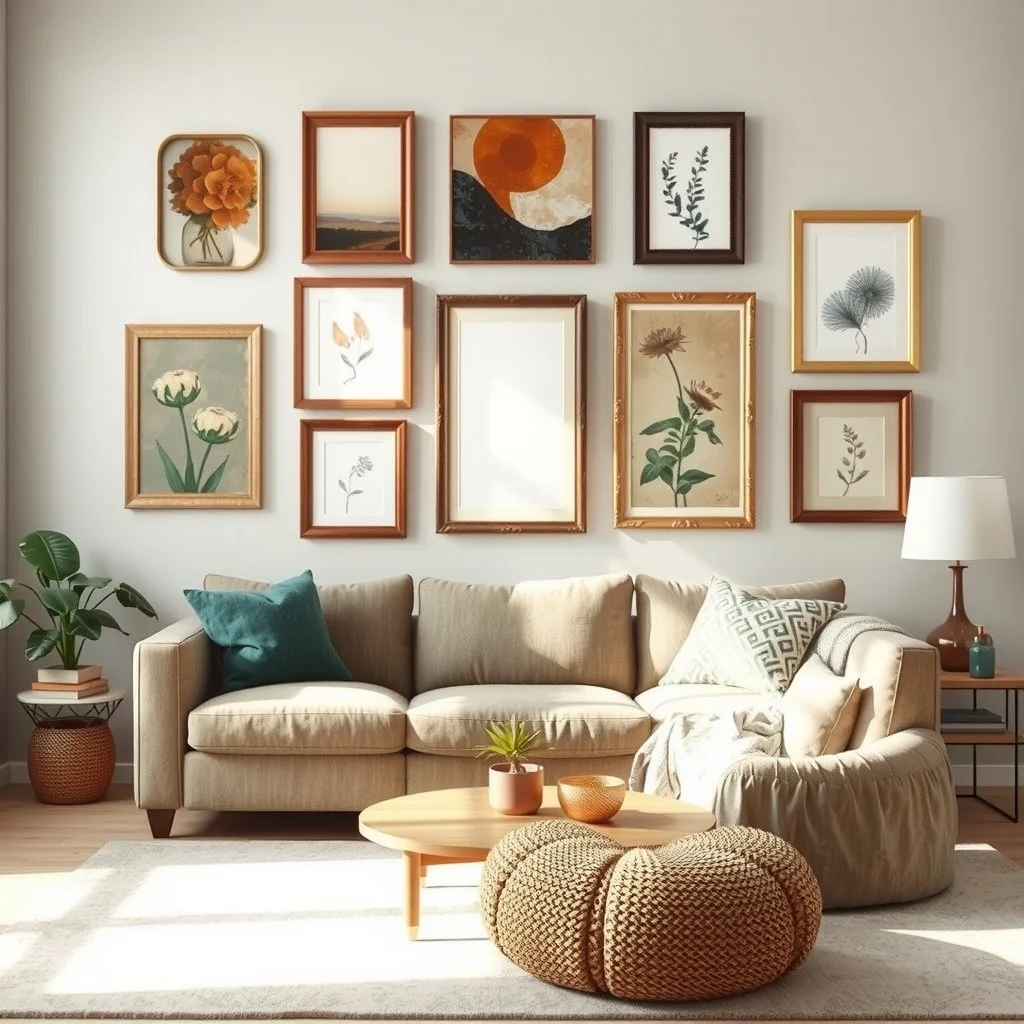
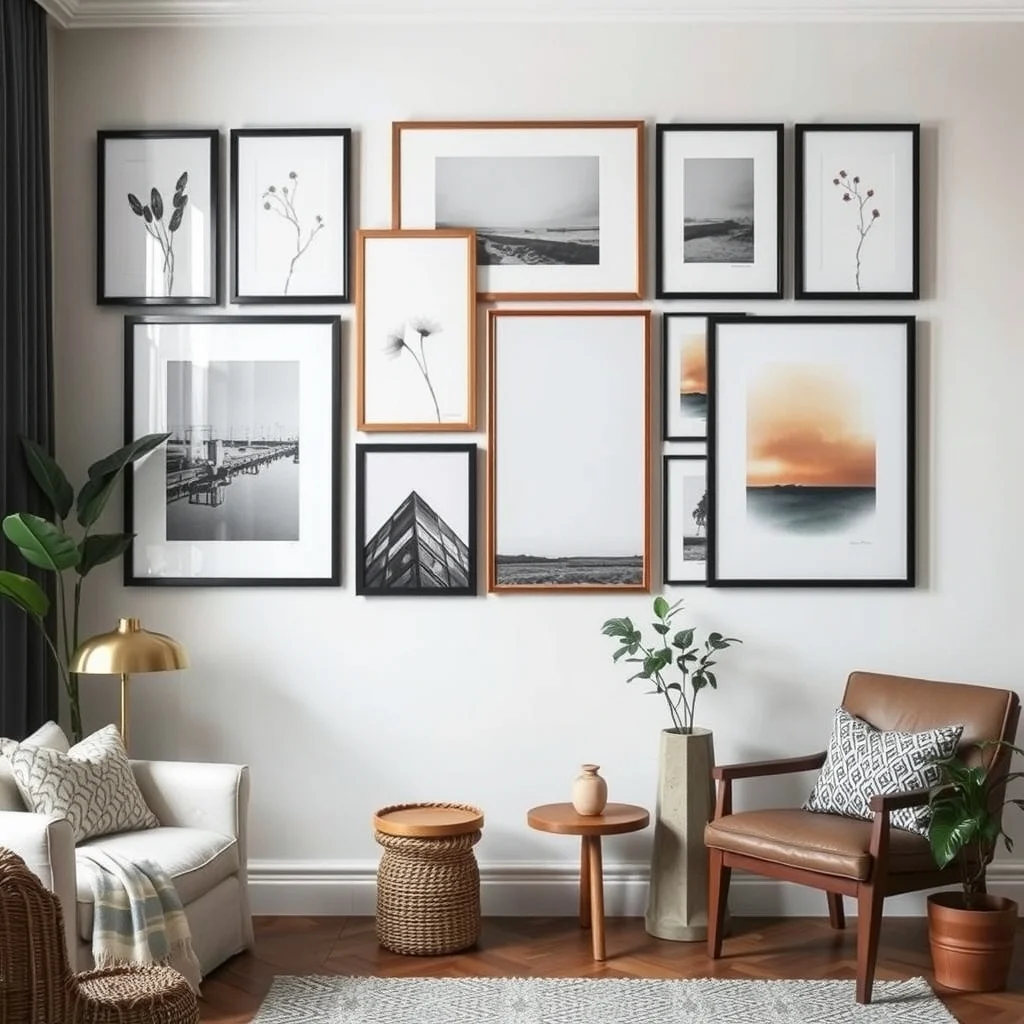
One of the quickest ways to add visual interest is to arrange a collection of frames that you’ve sourced from second‑hand shops or community sales. Look for a mix of sizes, from small 5‑inch squares to larger 12‑inch rectangles, and choose frames in complementary finishes such as brushed brass, reclaimed wood, or matte black. The variety creates a rhythm that feels intentional rather than random.
Which Home Style Fits Your Space?
Answer 5 quick questions to find your perfect interior style and inspiration.
After you’ve gathered the frames, lay them on the floor to experiment with composition before committing to nails. A common layout starts with a central anchor – perhaps a vintage portrait or a black‑and‑white photograph – and builds outward, balancing heavier pieces with lighter ones. This method allows you to see how the arrangement will sit against the wall’s height and the room’s natural light.
When you finally hang the pieces, use picture‑hanging hooks that spread the weight across the stud for stability. The trade‑off is that a gallery wall can become visually busy if the frames differ too dramatically in style; sticking to a unifying element, such as a consistent mat color or frame material, helps maintain cohesion.
2. Install Simple Floating Shelves for Curated Displays
© 2026 AI Illustrator — Inspiration Only
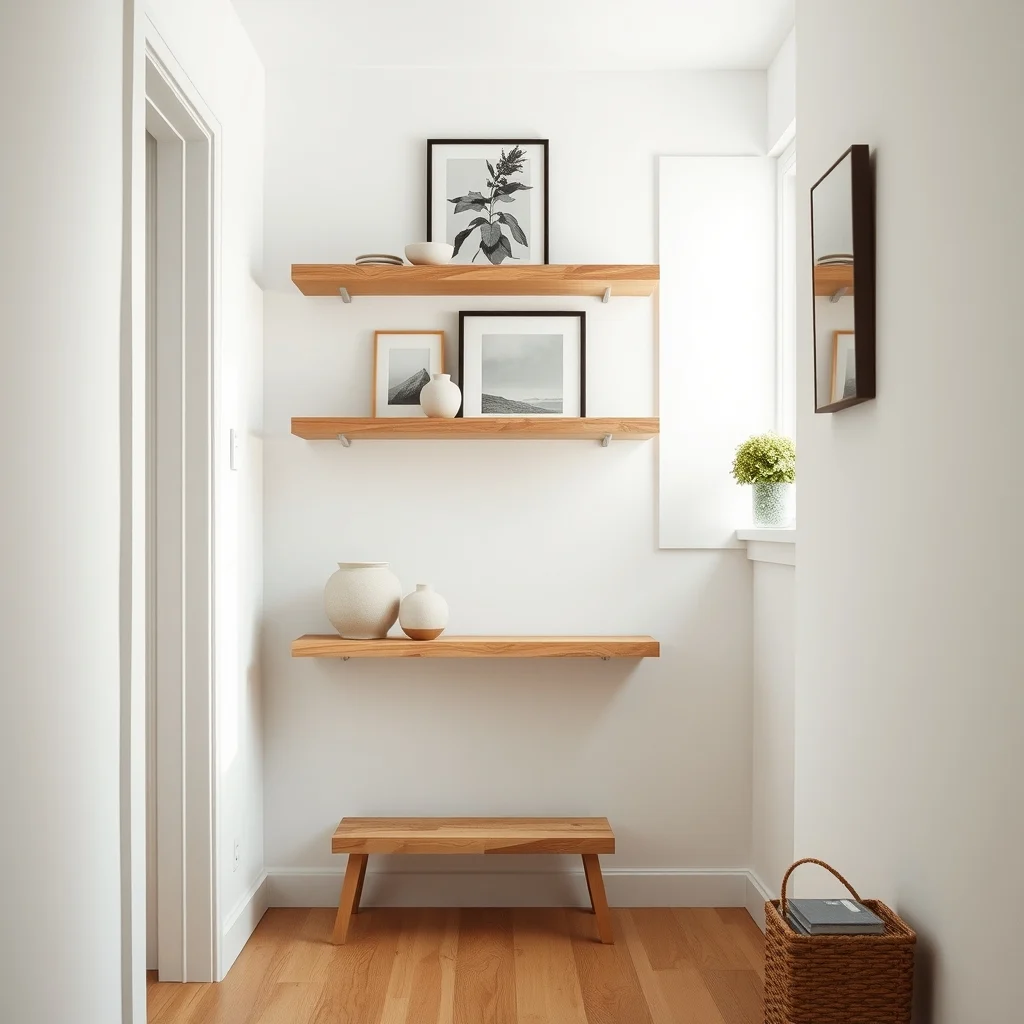
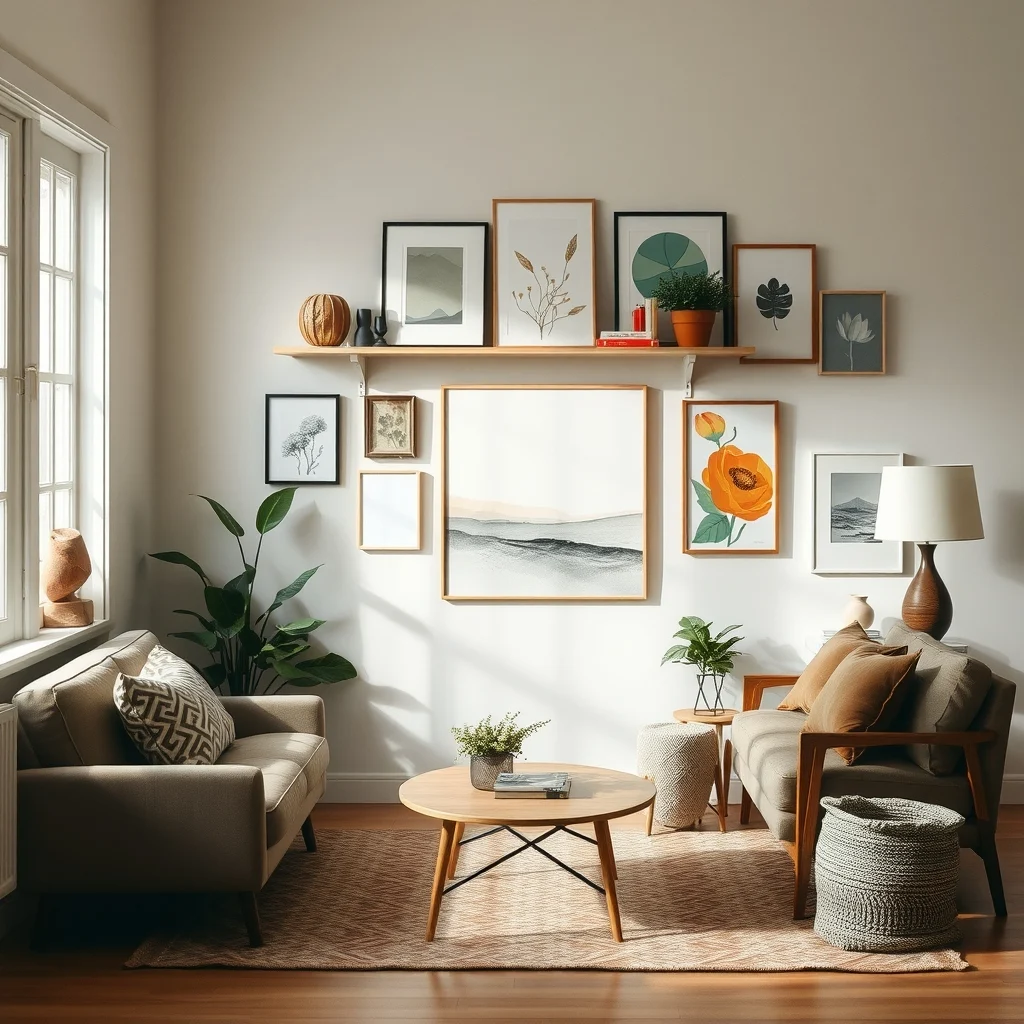
Floating shelves add depth without overwhelming a room, and a pair of basic wooden brackets can be found for under $20 at most hardware stores. Choose a shelf depth of about eight inches; this provides enough surface for a small sculpture, a stack of books, or a ceramic vase, while keeping the overall silhouette sleek.
Arrange items on the shelves in odd numbers – three objects on one shelf, five on the next – because asymmetrical groupings tend to feel more curated. Vary the heights of the pieces so the eye moves upward, and incorporate a mix of textures, such as a smooth glass bottle beside a rough‑hewn wooden box. The visual contrast keeps the display lively and prevents the shelves from looking like a static storage solution.
A practical consideration is weight capacity. Overloading a cheap floating shelf can cause it to pull away from the wall, so limit each shelf to items that collectively weigh less than the bracket’s rating. If you need to showcase heavier décor, consider a sturdier metal bracket or a wall‑mounted rail system.
3. Choose an Affordable Large‑Format Canvas Print
© 2026 AI Illustrator — Inspiration Only
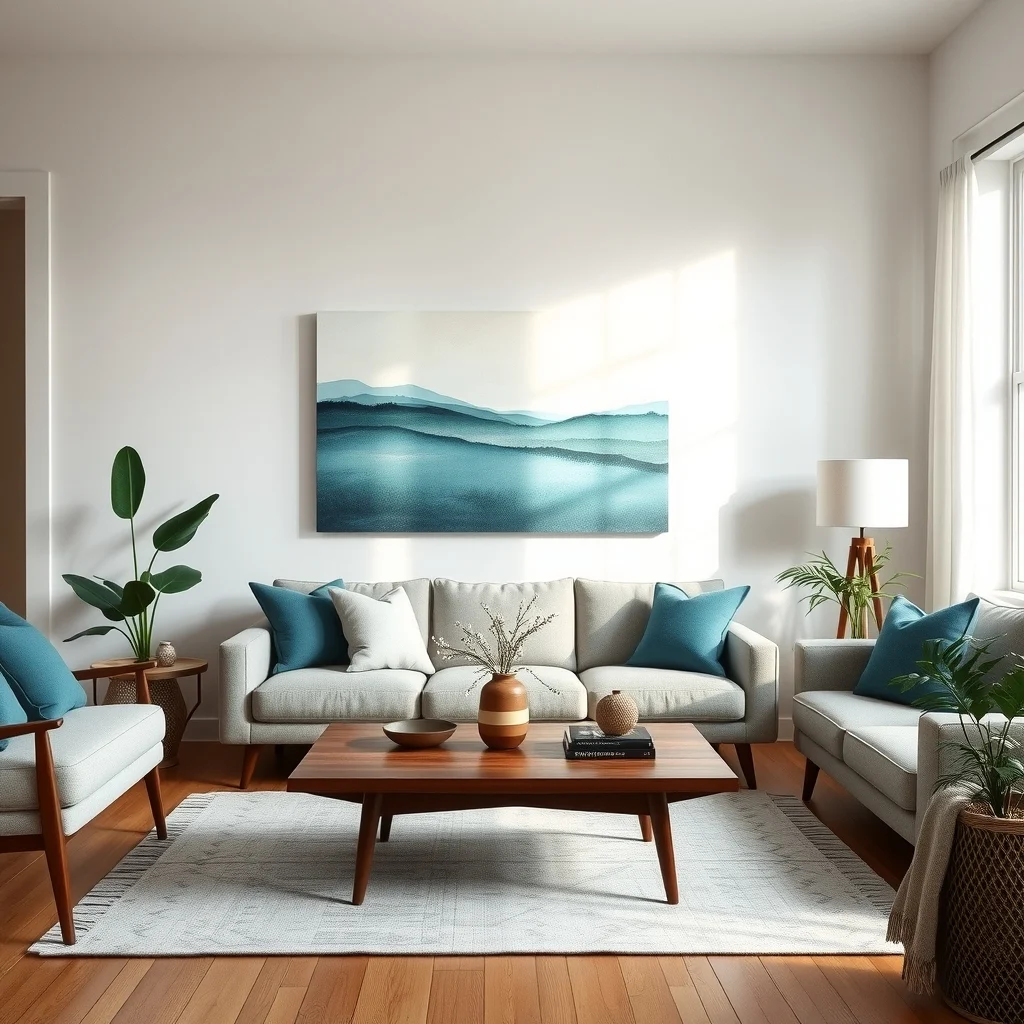
Large artwork instantly commands attention, and today many online retailers offer canvas prints in sizes up to 48 inches wide for under $100. Select a piece that echoes a color already present in the room – perhaps a muted teal that matches a sofa cushion or a warm ochre that ties in with a rug.
Because a single canvas occupies a lot of visual space, you can keep surrounding décor minimal. A thin picture rail or a simple molding can frame the print without adding bulk, and the canvas itself often comes with a pre‑stretched frame that eliminates the need for additional hardware.
The downside of a single statement piece is that it can dominate a room if the scale is not balanced with the wall’s dimensions. Measure the wall first; a good rule of thumb is that the artwork should cover roughly two‑thirds of the wall’s width, leaving enough margin to avoid a cramped look.
4. Hang a Fabric Wall Hanging for Soft Texture
© 2026 AI Illustrator — Inspiration Only
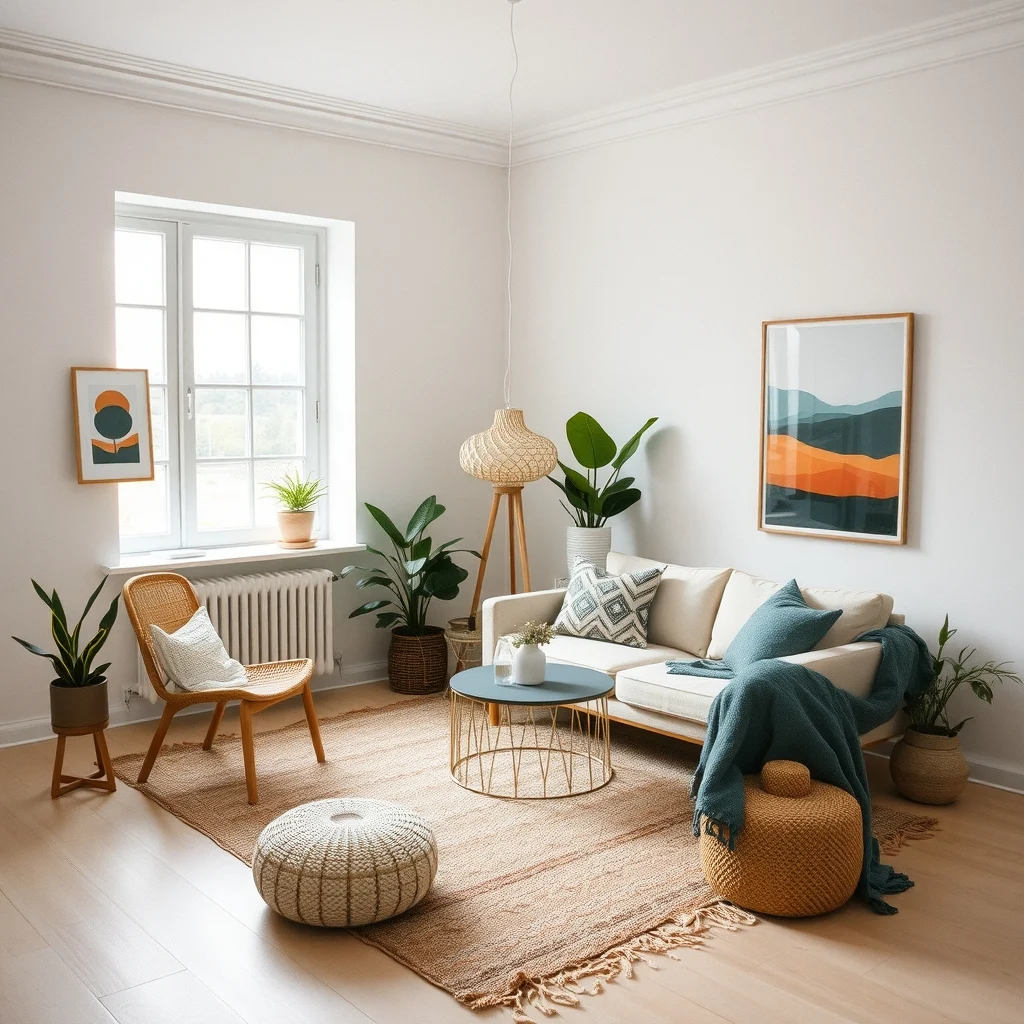
Fabric wall hangings bring a tactile element that paint or paper cannot provide. Look for a linen or cotton piece with a subtle pattern – a geometric grid, a soft stripe, or a muted botanical motif – and choose a size that reaches about eye level. The natural fibers add a gentle warmth that complements both modern and traditional interiors.
Installation is straightforward: a small rod or a set of decorative hooks at the top of the fabric allow you to slide the piece into place without the need for nails. Because the hanging is lightweight, you can reposition it easily if you decide to change the arrangement later on.
One limitation is that fabric can attract dust, especially in high‑traffic areas. A quick vacuum with a brush attachment every few weeks keeps it looking fresh, and occasional spot cleaning with a damp cloth prevents stains from setting.
5. Paint a Geometric Accent Directly on the Wall
© 2026 AI Illustrator — Inspiration Only
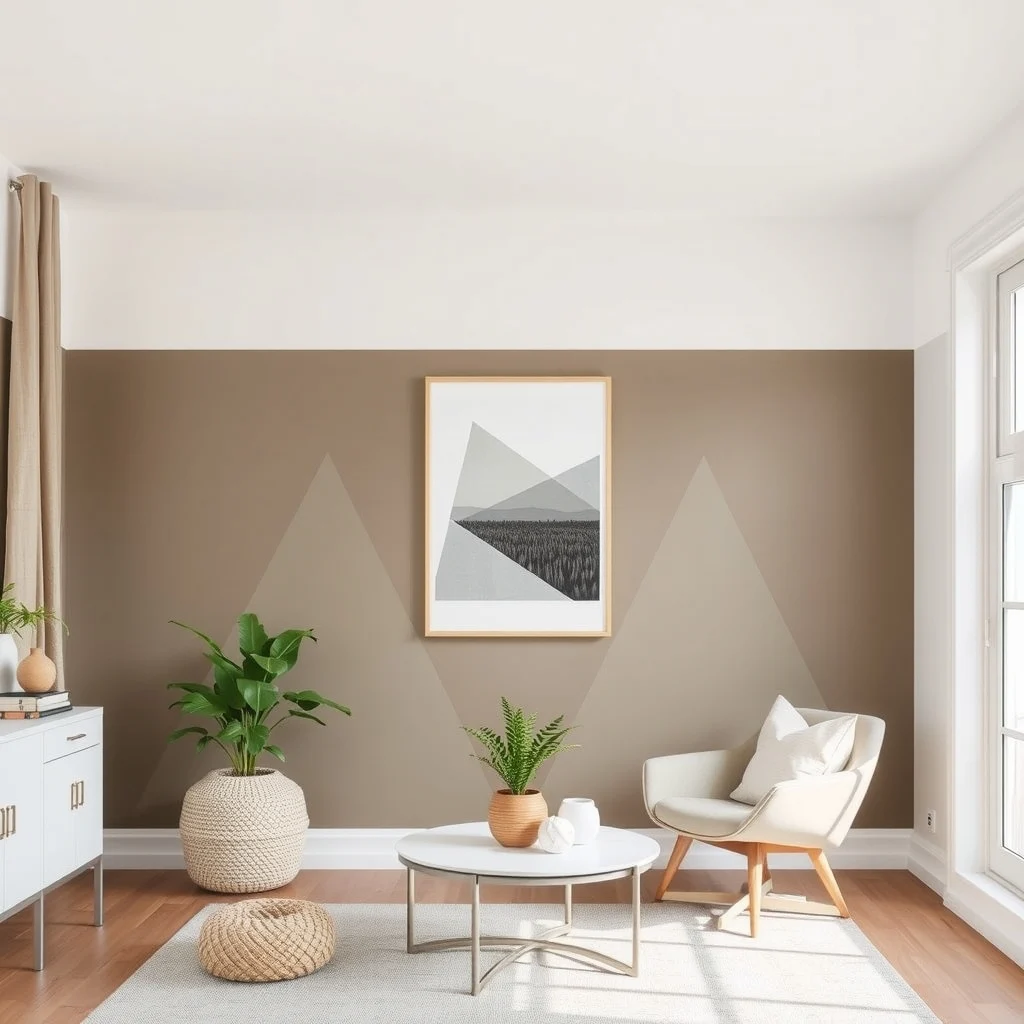
Geometric painting adds a custom feel without the cost of a commissioned mural. Using painter’s tape, outline a simple pattern – perhaps a series of overlapping triangles or a staggered chevron – and fill the shapes with two or three complementary paint colors. A matte finish works well in living rooms, while a low‑sheen enamel can hold up better in kitchens.
The process is forgiving; if a line is off, a fresh strip of tape can mask the mistake, and the surrounding wall color provides a built‑in buffer. Once the paint dries, remove the tape slowly to reveal crisp edges. The result is a bold backdrop that can frame a sofa or serve as a backdrop for a gallery wall.
Which Living Room Color Palette Fits You Best?
Discover the palette that reflects your style — take our free quick quiz and get instant decor inspiration!
Take the Quiz NowGeometric painting does require patience, and the initial time investment can be higher than buying a ready‑made piece. However, the cost of a few gallons of paint and a roll of tape is typically far less than a large artwork, and the design can be updated later with a fresh coat if your taste changes.
6. Use a Large Mirror to Expand the Space
© 2026 AI Illustrator — Inspiration Only
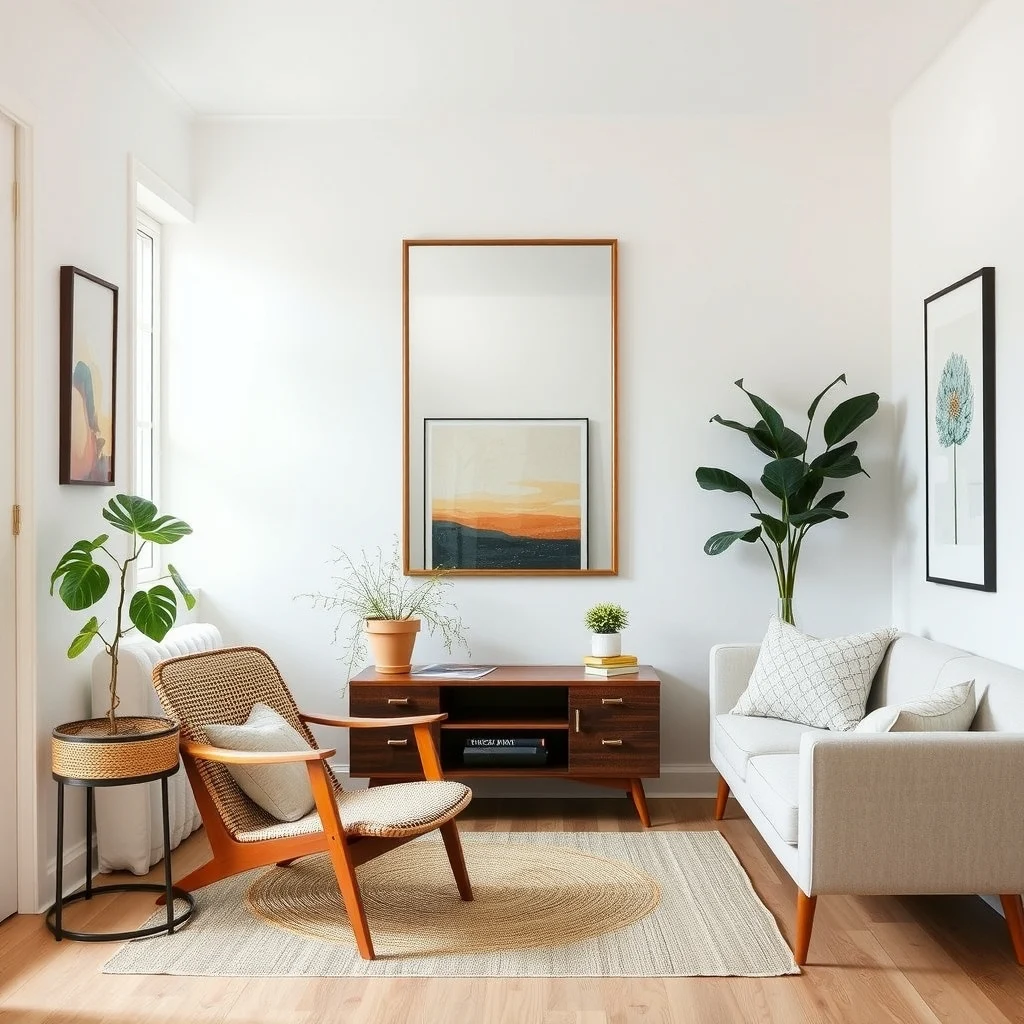
A well‑placed mirror can double the perceived size of a room, especially in narrow hallways or compact living areas. Choose a mirror with a frame that echoes an existing material in the space – for example, a reclaimed wood frame that matches a coffee table, or a thin metal border that reflects a contemporary lighting fixture.
Mount the mirror at a height where it reflects both the ceiling and the floor, creating a sense of depth. If the wall receives natural light, the mirror will bounce that light around, softening shadows and brightening the room without any additional bulbs.
The main consideration is safety; ensure the mirror is secured with appropriate wall anchors, especially if it’s a larger piece. In households with small children, opting for a tempered glass mirror reduces the risk of breakage.
7. Create a Living Wall with Hanging Planters
© 2026 AI Illustrator — Inspiration Only
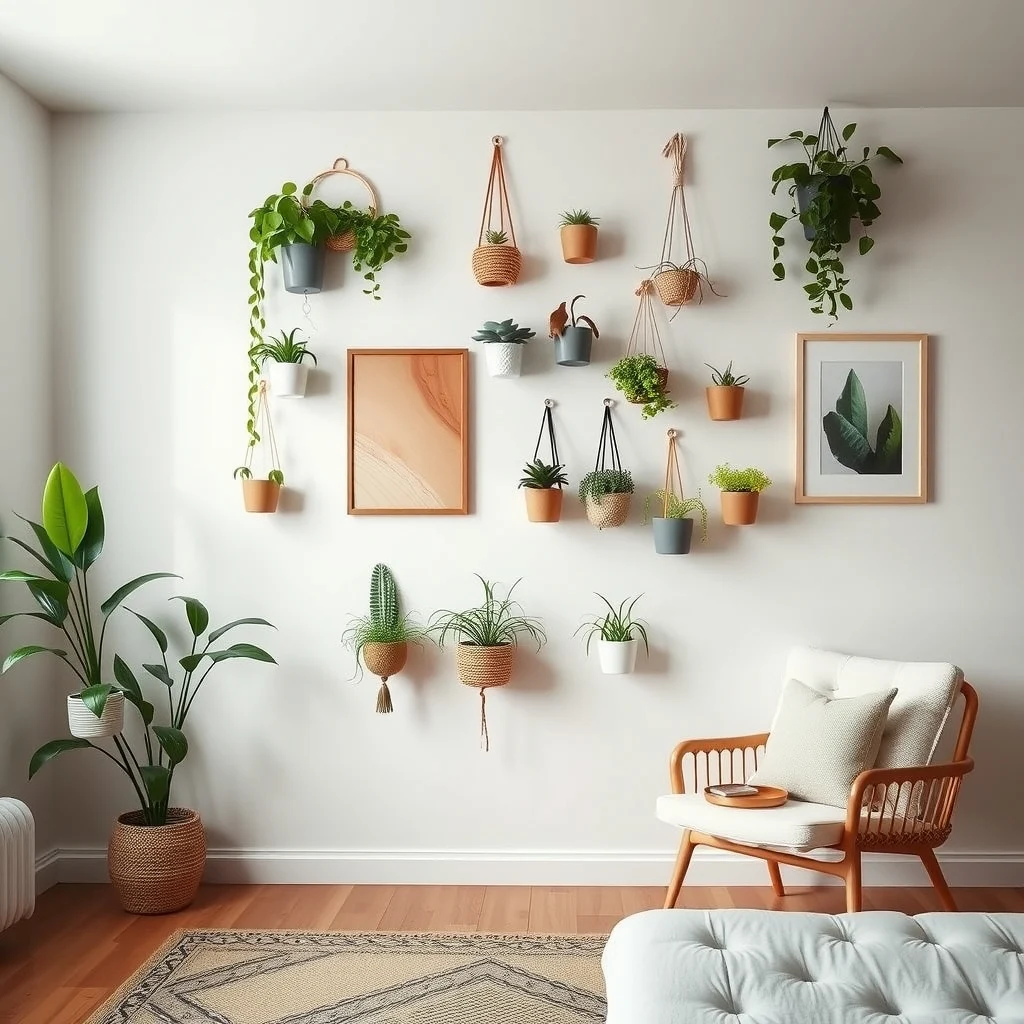
Plants add life, improve air quality, and introduce a splash of green that works with any décor style. Simple macramé hangers or metal wall‑mounted pots can hold small succulents, trailing pothos, or air‑plant arrangements for a fraction of the cost of a full‑size floor plant.
Arrange the planters at varying heights to mimic a natural canopy, and choose containers in neutral tones so the foliage remains the star. Because the planters are attached to the wall, they do not occupy floor space, making this a smart solution for apartments or rooms where space is at a premium.
Plants do require care; over‑watering can damage both the plant and the wall finish. Select low‑maintenance species and place a small tray beneath each pot to catch excess water, protecting the paint or wallpaper underneath.
Frequently Asked Questions
© 2026 AI Illustrator — Inspiration Only
How can I hang a gallery wall without damaging the plaster?
Use removable adhesive hooks designed for picture frames; they spread the load and leave no residue when removed. For heavier frames, locate wall studs and secure with small screws to ensure stability.
What is the best height for floating shelves?
Position shelves so the top edge sits about eye level for the average person, typically 57 to 60 inches from the floor. This height allows you to view the displayed items comfortably while keeping the shelves accessible.
Can I use a regular printer paper print for a large canvas?
For large formats, it’s better to order a canvas print from a service that uses archival‑grade ink; regular printer paper may pixelate and warp when stretched. The investment in a proper print ensures color fidelity and durability.
How often should I clean a fabric wall hanging?
Vacuum gently with a brush attachment once a month, and spot‑clean any stains with a damp cloth. Avoid soaking the fabric, as excessive moisture can cause shrinkage or damage the backing.
Are hanging planters safe for renters?
Yes, provided you use removable wall anchors that do not require drilling large holes. Lightweight metal or plastic hooks can support small pots without compromising the wall’s integrity, and they can be taken down easily when you move.
Final Thoughts
© 2026 AI Illustrator — Inspiration Only
Transforming an empty wall does not have to mean splurging on high‑end décor. By mixing thrifted frames, modest shelving, affordable prints, and a few DIY touches, you can create a layered, inviting backdrop that feels personal and polished. Each of the ideas above offers a balance of visual impact and practical considerations, so you can choose the approach that fits your space, your style, and your budget. With a little planning and a few thoughtful purchases, that blank wall will soon become a highlight of your home.