
Advertisement
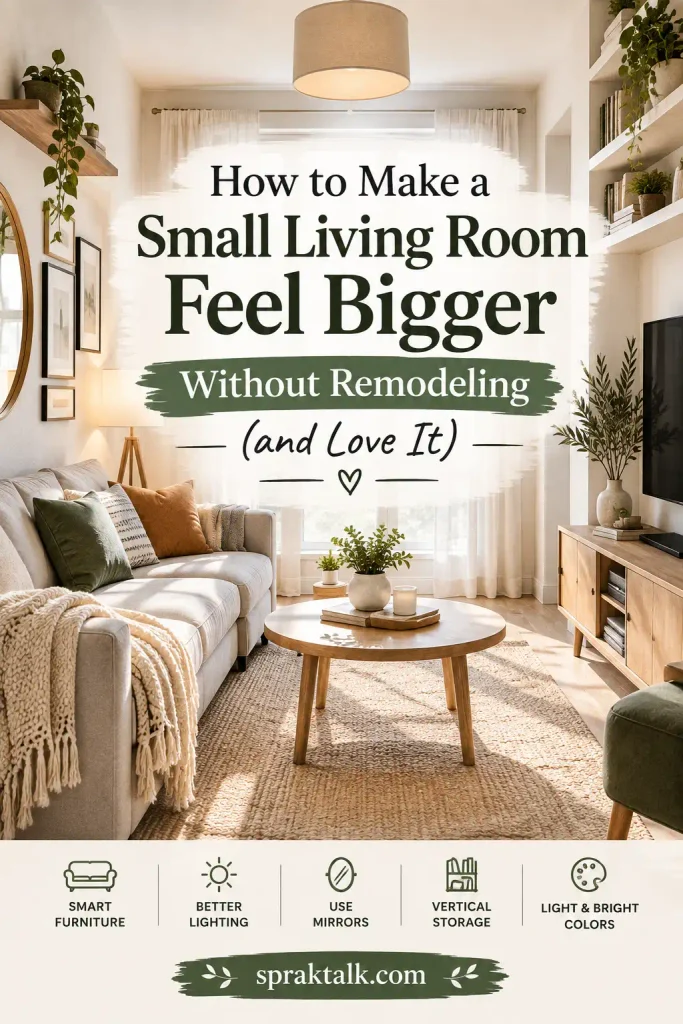
You don’t need a sledgehammer to make your tiny living room feel spacious. You need strategy. And a few sneaky decor moves that trick the eye and streamline your space. Ready to pull off a visual expansion without touching a single wall? Let’s max out every inch, zero drama.
1. Edit Like A Stylist: Less Stuff, More Space
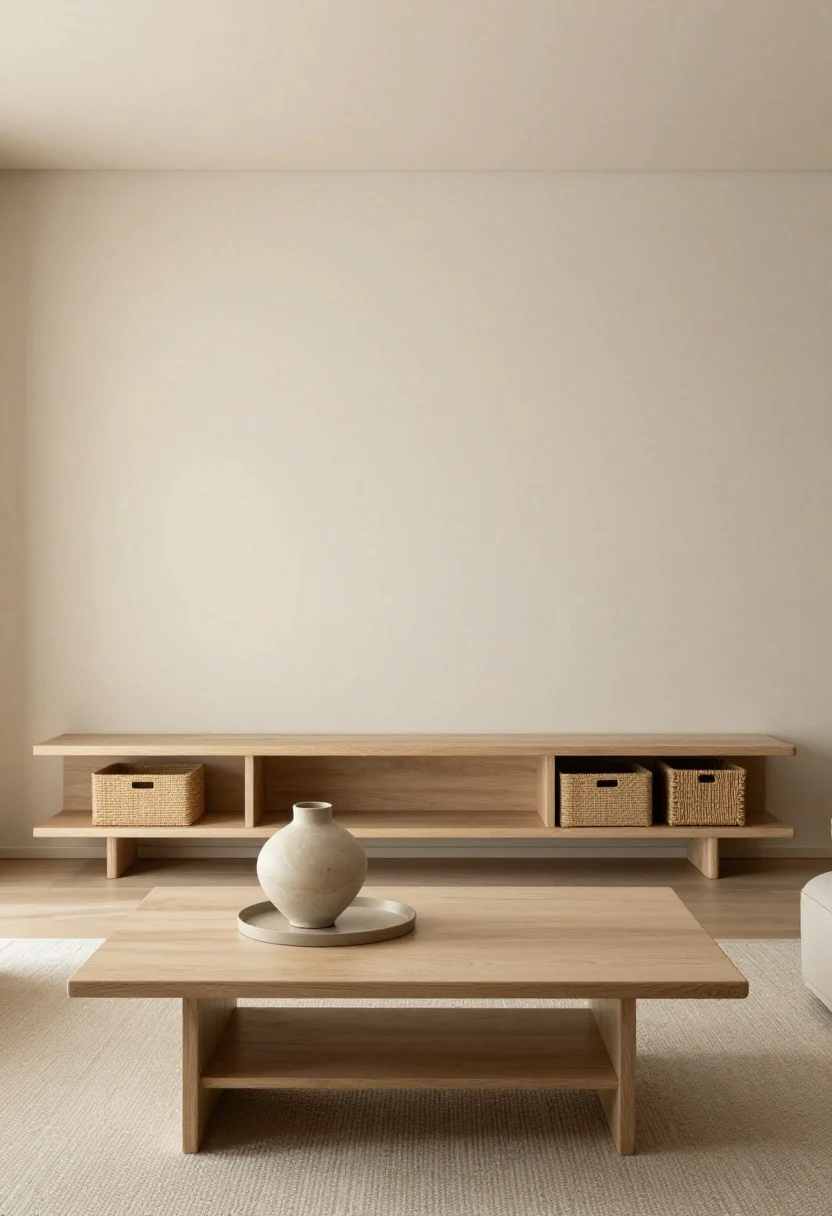
If your coffee table looks like a yard sale, start here. Editing is the quickest win for square-footage magic. Clear surfaces and simplify shapes to open up sightlines—your room will breathe, and so will you.
Smart Decluttering Moves
- One hero per surface. A single sculptural vase or a stacked tray set beats a dozen tiny trinkets.
- Float the floor. Expose as much floor as possible—tuck baskets under consoles and pick furniture with legs.
- Conceal, don’t reveal. Storage ottomans, lidded baskets, and media cabinets keep visual noise down.
What to shop for: Storage ottomans, nesting tables, woven baskets, slim consoles with drawers.
2. Light Like You Mean It: Layered Glow = Bigger Feel
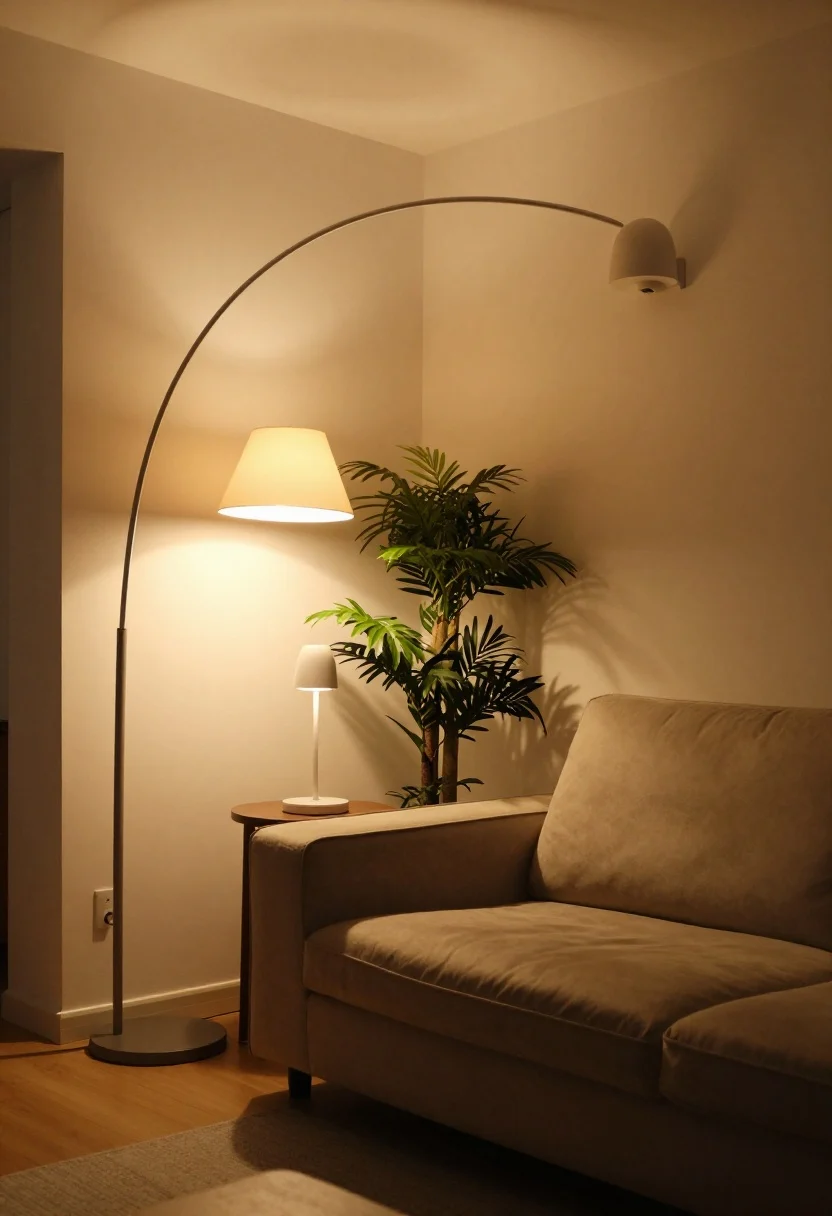
Lighting is your secret weapon. Overhead light alone can make a room feel flat and smaller, while layered lighting pulls the eye around and softens corners.
The Three-Layer Formula
- Ambient: Floor lamps or sconces to fill the room with soft, even light.
- Task: Table lamps near sofas and chairs for reading and laptop time.
- Accent: Picture lights, LED strips on shelves, or a small uplight behind a plant to erase dark voids.
Pro tip: Use warm-white bulbs (2700K–3000K). Cooler bulbs can feel sterile and highlight clutter, FYI.
What to shop for: Arc floor lamps, plug-in sconces, dimmable LED bulbs, slim table lamps.
3. Play The Scale Game: Right-Sized Furniture Wins
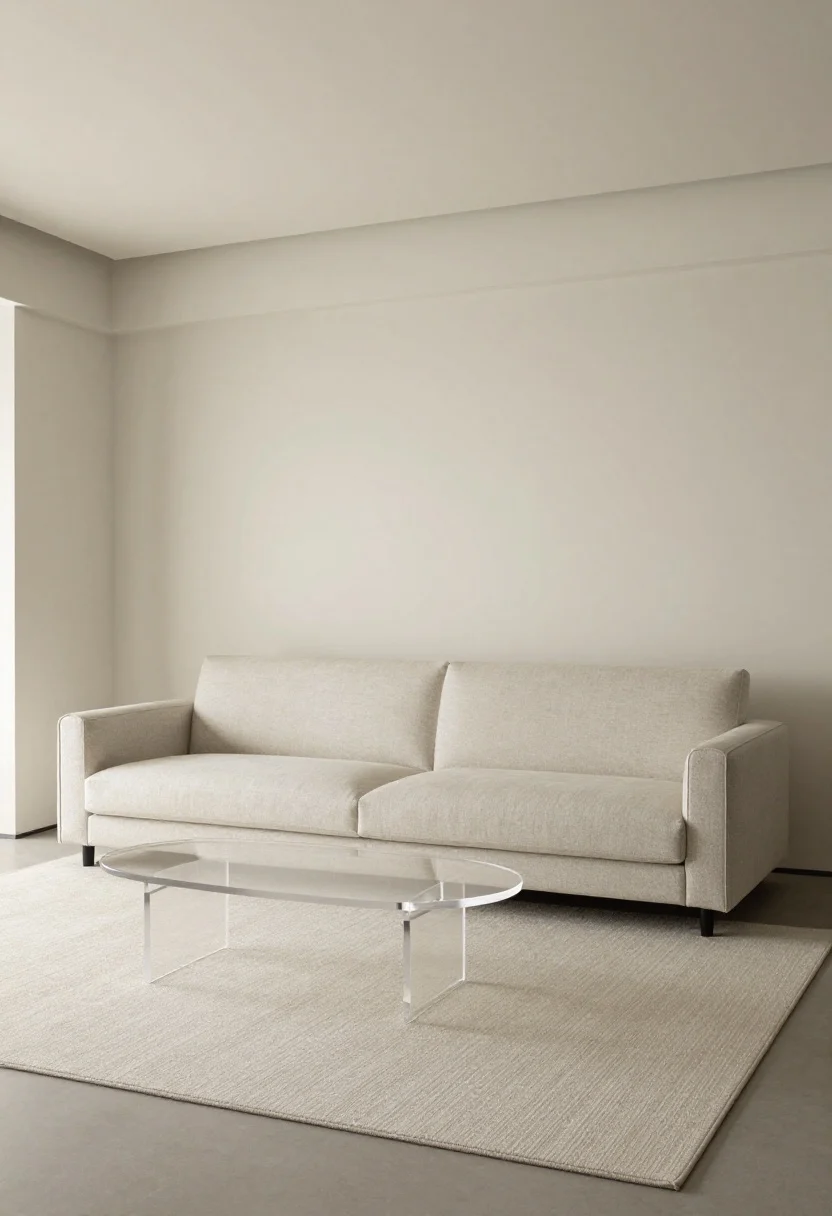
It’s tempting to go mini in a small room, but a bunch of tiny pieces read as clutter. Instead, choose fewer, slightly larger items with clean lines. Your space will feel calmer and more intentional.
Layout And Scale Tips
- Low-profile sofa: A sofa with a tight back and visible legs feels lighter than an overstuffed beast.
- One big rug: Use a rug large enough that the front legs of all major furniture sit on it. It visually unifies the zone.
- Optical air: Glass or acrylic coffee tables vanish in the best way, amplifying light and floor space.
- Fewer pieces: Sofa + accent chair + coffee table often beats a sofa + two chairs + side tables chaos.
What to shop for: Apartment sofas, armless accent chairs, acrylic or oval coffee tables, oversized area rugs.
4. Use Vertical Space: Eyes Up, Room Grows
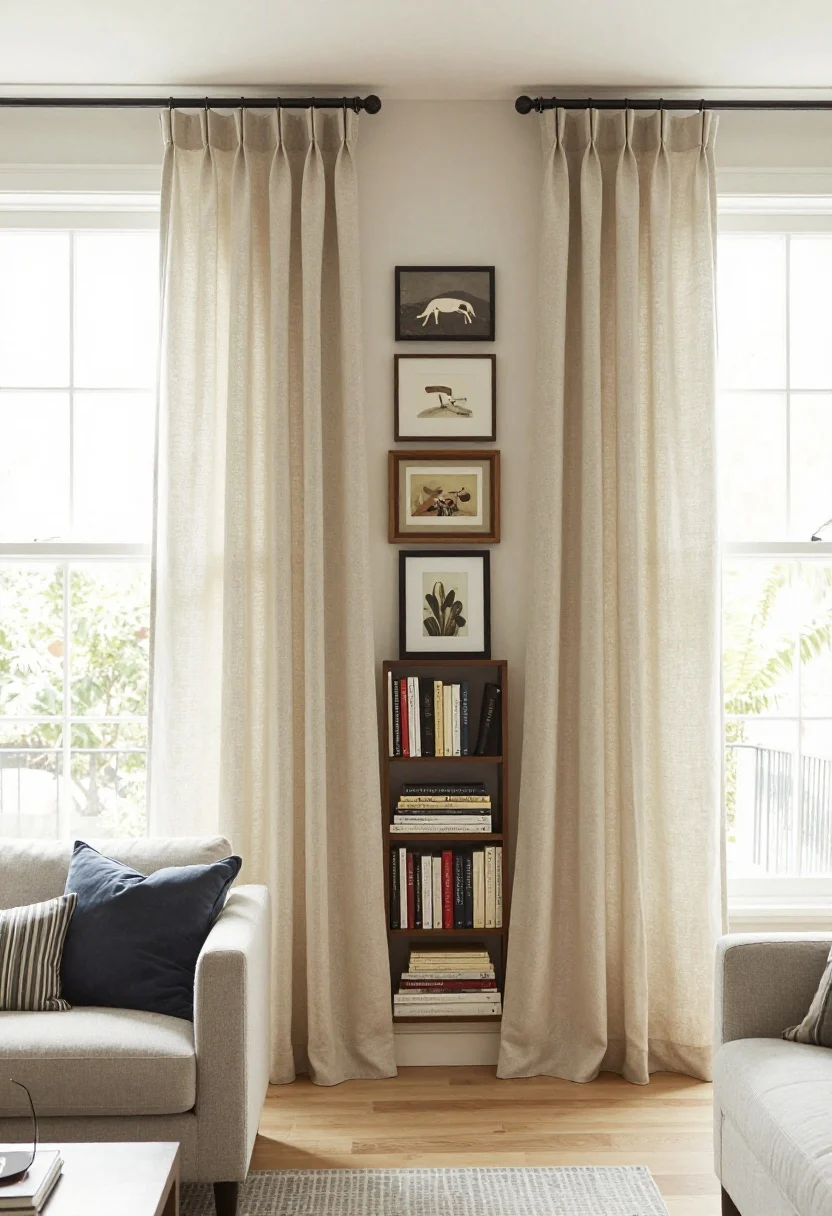
When you can’t go wider, go higher. Drawing attention upward tricks the brain into reading “bigger volume.” It’s design psychology 101—no tuition required.
Height-Boosting Tricks
- High-and-wide curtains: Mount rods 4–6 inches above the window frame and extend 8–12 inches wider on each side. Instant grandness.
- Tall bookcases: Flank the sofa with vertical shelves or a single statement étagère to pull the eye up.
- Stacked art: Hang art in a column or create a gallery wall that climbs, not sprawls.
Bonus: Leave a little negative space above the tallest item to keep it feeling airy, not cramped.
What to shop for: Extra-long curtain panels, slim tall bookcases, lightweight wall shelves.
5. Color, Pattern, And Mirrors: Optical Illusions That Work
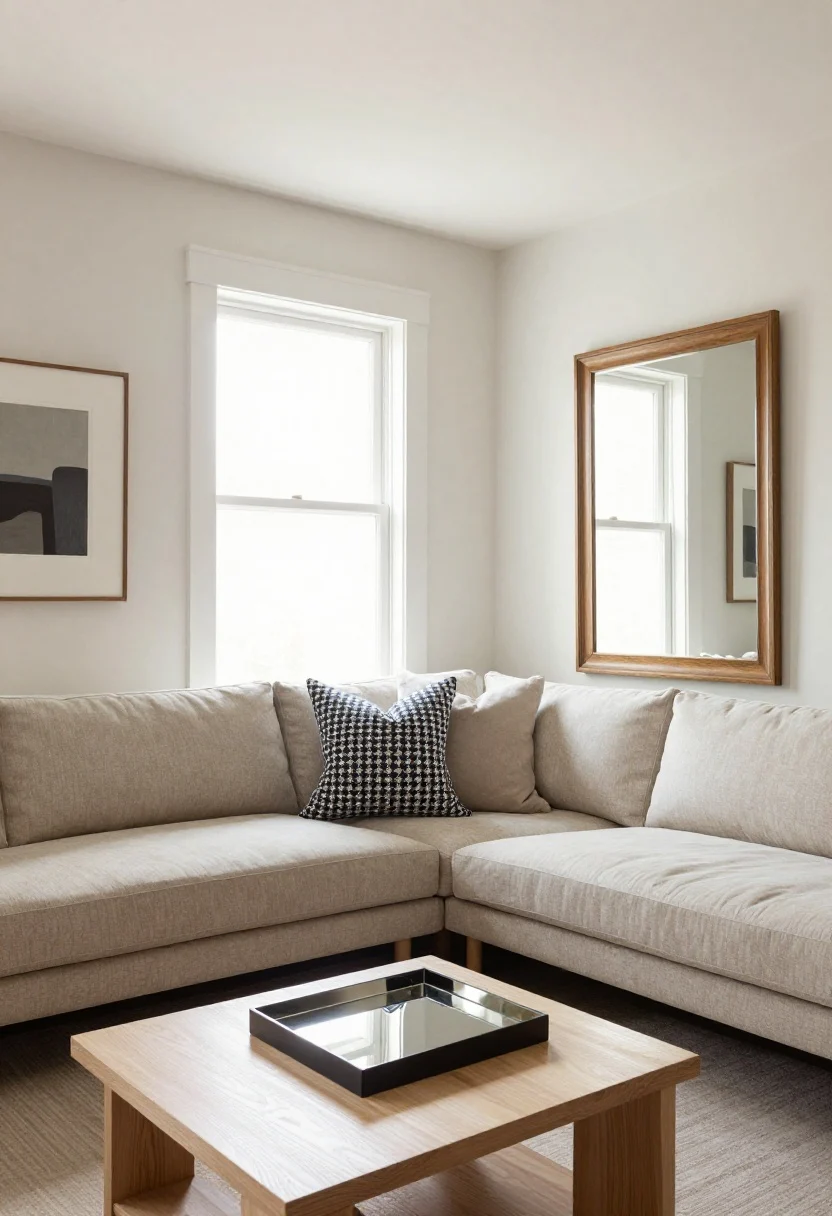
Color is your vibe-setter. Neutrals and mid-tones bounce light and feel fresh, but don’t fear deeper hues if you pair them thoughtfully. The goal: calm contrast, not chaotic noise.
Color Moves That Open A Room
- Light, warm walls: Soft white, creamy beige, or pale greige keep the shell spacious.
- Tone-on-tone layering: Keep big pieces in similar tones so the eye glides—think sand sofa, oat rug, pale wood.
- Limit busy patterns: One bold pattern per zone (like pillows or a single chair) is plenty, IMO.
Mirror Magic
- Opposite a window: Bounce daylight deeper into the room.
- Lean a tall mirror: Adds height and depth, plus a dose of glam.
- Mirrored accents: A mirrored tray on a coffee table reflects light without overwhelming.
What to shop for: Oversized wall mirrors, neutral pillow sets, textured throws in tone-on-tone palettes.
6. Zone Like An Architect: Define, Don’t Divide
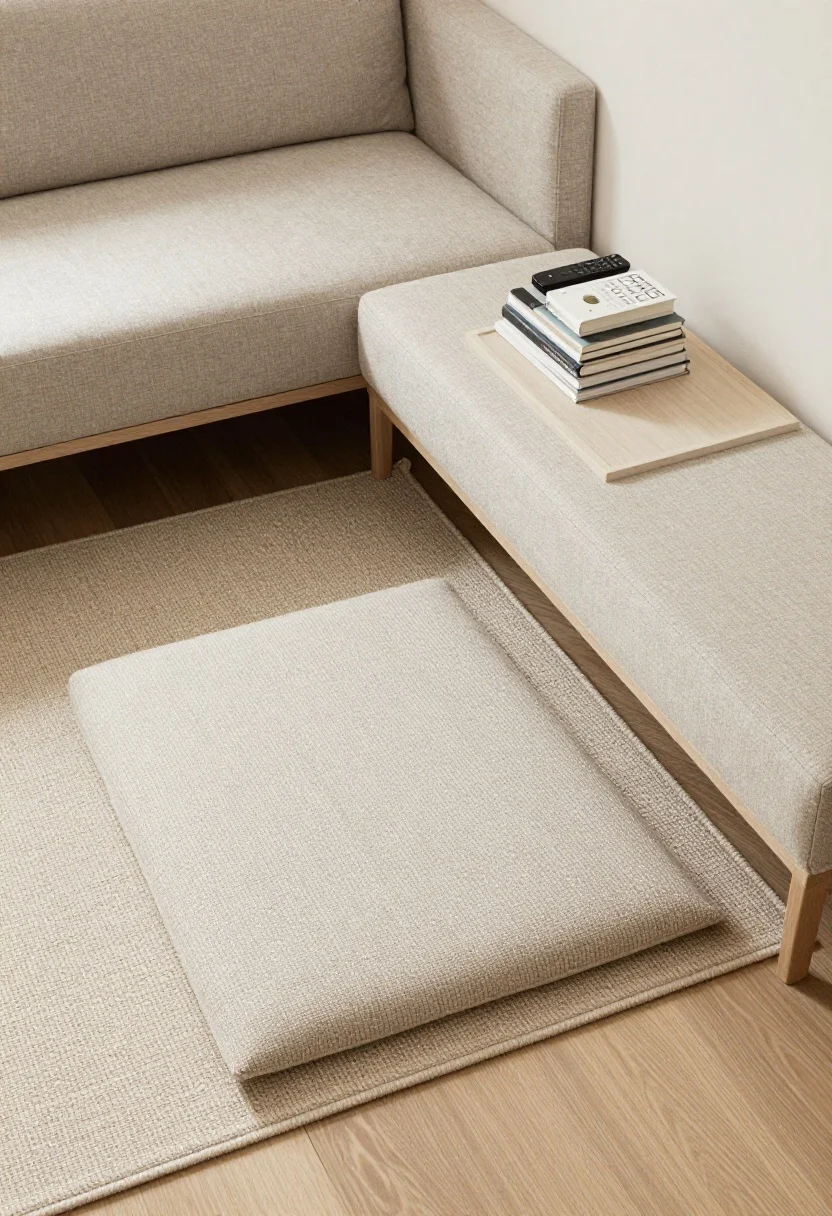
Even tiny rooms need zones. When each function has a clear spot, the whole space feels more intentional—and yes, bigger. The trick is to define areas without building barriers.
How To Create Zones Without Clutter
- Rug mapping: One main rug anchors the seating area; a small flatweave under a reading chair marks a mini nook.
- Floating furniture: Pull the sofa a few inches off the wall to suggest flow (and avoid that “everything shoved back” look).
- Open-backed pieces: A console or open shelf behind a sofa defines space while letting light pass through.
- Trays + stacks: Corral remotes and coasters on a tray; stack books to form mini “stations” without spreading out.
FYI: Clear pathways at least 30–36 inches wide keep movement natural. No stubbed toes, no spatial claustrophobia.
What to shop for: Flatweave rugs, narrow sofa consoles, open-back shelving units, decorative trays.
7. Texture, Materials, And Styling: Airy Layers, Not Visual Weight
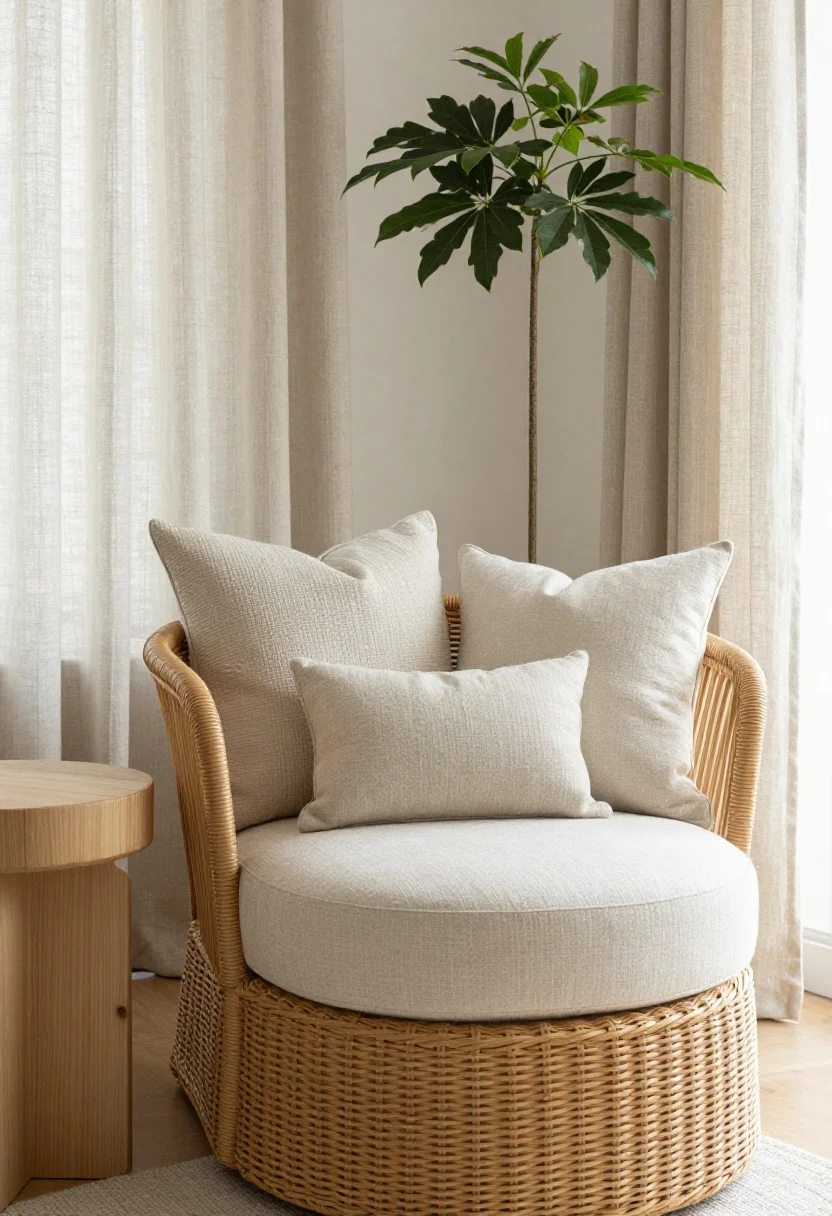
Want cozy without crowding? Lean into lightweight textures and curated styling. Think breezy, tactile, and intentional—like a well-dressed room that still lets you exhale.
Layering The Right Way
- Mix light materials: Linen, boucle, rattan, pale woods. They absorb and reflect light beautifully.
- Go round or oval: Circular forms (tables, ottomans, lampshades) soften tight corners and improve flow.
- Greenery with height: A tall, narrow plant in a slim planter draws the eye up without hogging floor space.
- Edit pillows: Two larger pillows per sofa side > five small ones. Cleaner lines, less visual chatter.
Styling rule of three: Group items by height—tall, medium, low—and keep finishes cohesive. Shiny + matte + natural is a winning trio.
What to shop for: Linen curtains, rattan accent chairs, oval ottomans, tall planters, textured pillow covers.
Practical Takeaways
- Clear floors, clear surfaces, clear mind—start by editing.
- Layer lighting and lift the eye with tall elements.
- Choose fewer, right-sized pieces and keep tones cohesive.
Quick Mini Makeover Checklist
- Mount curtains high and wide
- Swap bulky coffee table for glass/acrylic or oval
- Add one oversized rug to unify
- Place a mirror opposite your brightest window
- Introduce a dimmable floor lamp and a table lamp
- Corral surfaces with trays and reduce knickknacks
Small living rooms can be mighty. With smart edits and a few optical tricks, you’ll have a space that feels open, stylish, and super livable—no contractor needed.
FAQ
Q: What’s the best rug size for a small living room?
A: Generally, 5×8 or 6×9 works, but prioritize coverage. Aim for front legs of seating on the rug to anchor the space and make it feel larger.
Q: Should I paint the ceiling white to make the room taller?
A: Often yes, but consider a slightly lighter shade of your wall color for a soft, seamless effect. High contrast can visually chop the height.
Q: Can dark furniture work in a small room?
A: Absolutely—balance it with light walls, airy textiles, and reflective surfaces. Keep silhouettes slim and add a large rug to ground the look.
You’ve got this. Start with one or two changes, then build momentum—your “bigger” living room is a weekend away.
Shop the Look on Amazon
Disclosure: As an Amazon Associate, this site may earn from qualifying purchases.
These product categories fit this article and give readers an easy next step when they are ready to shop.
- Hidden storage — Conceals clutter and doubles as seating or table.
- Layered lighting — Adds ambient light without using table space.
- Visual lightness — Clear surfaces keep sightlines open and airy.
- Height boost — Mount high and wide to draw eyes upward.
- Light bounce — Reflects daylight to deepen and expand the room.